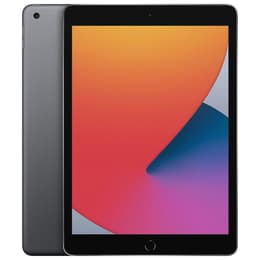
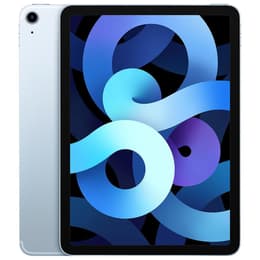


iPad 8 (2020, A12 series) Vs iPad Air 4 (2020, A14 series)

iPad 8 (2020, A12 series)
Starting at

Refurbished price:127.00

Versus €399.00 new

See options
iPad Air 4 (2020, A14 series)
Starting at

Refurbished price:273.00

Versus €679.00 new

See options

Ratings

The iPad (8th generation), released in September 2020, and the iPad Air (4th generation), also launched in late 2020, represent distinct tiers within Apple's tablet lineup. While both devices operate on iPadOS and offer a versatile tablet experience, the iPad Air 4th Gen introduces a more modern design, a more advanced processor, and enhanced display technology compared to the iPad 8th Gen.

Scores

Durability

Both tablets, being Apple products, benefit from a consistent software update policy, contributing to a respectable practical lifespan. However, their differing release timelines and internal components influence their long-term support and repairability.

  • Software Longevity: The iPad Air 4th Gen, with its newer processor, is expected to receive software updates for a slightly longer period than the iPad 8th Gen, potentially extending its usability by an additional year or so.
  • Repairability: Both models generally present challenges for repair due to the extensive use of adhesive, which can make battery replacement and screen repairs difficult. The iPad Air 4th Gen received a low repairability score from some experts, indicating that internal components are often hard to access without risking damage.
  • Expected Lifespan: Users can anticipate several years of reliable performance from either device, with the iPad Air 4th Gen potentially offering a longer period of optimal performance for demanding applications due to its more powerful internal hardware.

Year of Release

2020

2020

Compatible with latest Update

Yes

Yes

OS

iPadOS

iPadOS

Maximum Operating System supported

iPadOS 18

iPadOS 18

Performance

The performance capabilities of these two tablets differ primarily due to their internal processing units, impacting how smoothly they handle various tasks from everyday browsing to more intensive applications.

  • Processing Power: The iPad Air 4th Gen features a more advanced processing unit, which translates to noticeably faster performance for demanding applications, complex multitasking, and graphically intensive games. The iPad 8th Gen, while offering a significant performance boost over its predecessor, provides capable performance for general use, web browsing, and most productivity apps.
  • Multitasking and Responsiveness: The iPad Air 4th Gen, equipped with more RAM, handles switching between multiple applications and running several demanding processes simultaneously with greater fluidity. The iPad 8th Gen is suitable for everyday multitasking but may show slight delays when managing numerous complex applications concurrently.
  • Battery Behavior: Both models are designed to offer comparable battery life, typically providing up to 10 hours of web surfing on Wi-Fi or video playback. Actual battery performance can vary based on usage patterns and settings.

Memory (GB)

3 GB

4 GB

Processor

Apple A12 Bionic

Apple A14 Bionic

Screen quality

The visual experience on these tablets presents notable differences, particularly in display technology, size, and overall clarity, which can influence user interaction and content consumption.

  • Display Technology and Size: The iPad Air 4th Gen features a 10.9-inch Liquid Retina IPS LCD with a fully laminated display, offering a more immersive viewing experience with reduced reflections. The iPad 8th Gen has a 10.2-inch Retina IPS LCD, which is a clear and bright display but is not fully laminated, meaning there's a slight gap between the glass and the display panel.
  • Resolution and Clarity: Both tablets offer a pixel density of 264 pixels per inch (ppi), ensuring sharp text and clear images. The iPad Air 4th Gen has a resolution of 2360 x 1640 pixels, while the iPad 8th Gen has 2160 x 1620 pixels.
  • Advanced Display Features: The iPad Air 4th Gen includes True Tone technology, which automatically adjusts the display's white balance to match the ambient light, providing a more natural viewing experience. It also supports a wider color gamut (P3). The iPad 8th Gen lacks these advanced display features.

Resolution

2160 x 1620

2360 x 1640

True Tone

No

Yes

Pro-Motion

No

No

Screen type

Retina display

Liquid Retina display

Pixel density

264ppp

264ppp

Brightness

500 nits brightness

500 nits brightness

Sound quality

Speakers

Stereo speakers

Stereo speakers

Audiovisual

While tablets are not typically primary photography devices, their camera systems are important for video calls, document scanning, and occasional photo capture. There are distinct differences in the camera capabilities of these two models.

  • Rear Camera System: The iPad Air 4th Gen is equipped with a 12-megapixel wide camera that can record 4K video at up to 60 frames per second, offering more detail and flexibility for video content creation. The iPad 8th Gen features an 8-megapixel rear camera capable of 1080p video recording, suitable for basic photography and scanning.
  • Front Camera Performance: For video conferencing and selfies, the iPad Air 4th Gen has a 7-megapixel FaceTime HD camera, while the iPad 8th Gen has a 1.2-megapixel front camera. The higher resolution on the Air 4th Gen provides clearer visuals for video calls.
  • Audio Quality: Both devices feature stereo speakers, providing a decent audio experience for media consumption. The iPad Air 4th Gen also includes dual microphones for clearer audio input during calls or recordings.

Miscellaneous

Beyond core performance and display, several other features contribute to the overall user experience, including connectivity, accessory support, and physical design elements.

  • Connectivity and Ports: The iPad Air 4th Gen adopts a USB-C port, offering broader compatibility with accessories and faster data transfer speeds. The iPad 8th Gen retains the Lightning port. Both support Wi-Fi and Bluetooth, with the Air 4th Gen featuring Wi-Fi 6 and Bluetooth 5.0 for potentially faster and more stable wireless connections, compared to Wi-Fi 5 (802.11ac) and Bluetooth 4.2 on the iPad 8th Gen.
  • Biometric Security: The iPad Air 4th Gen integrates Touch ID into the top power button, allowing for a more expansive screen design. The iPad 8th Gen uses the traditional Home button with integrated Touch ID.
  • Accessory Support: The iPad Air 4th Gen supports the 2nd generation Apple Pencil, which attaches magnetically and charges wirelessly, and the Magic Keyboard. The iPad 8th Gen is compatible with the 1st generation Apple Pencil and the Smart Keyboard.
  • Design and Dimensions: The iPad Air 4th Gen features a more modern, squared-off design with thinner bezels, resembling the iPad Pro lineup. It is also slightly thinner and lighter than the iPad 8th Gen. The iPad 8th Gen maintains the classic iPad design with thicker bezels and a Home button.

Weight

490 g

460 g

Width

17.41 cm

17.85 cm

Height

25.06 cm

24.76 cm

Depth

0.75 cm

0.61 cm

Screen size (in)

10.2

10.9

Network

Wi-Fi

Wi-Fi + 4G

Carrier compatibility

Without SIM Port

Unlocked

Wi-Fi technology

Wi-Fi 6 802.11a/b/g/n/ac

Wi-Fi 6 802.11ax

Bluetooth Version

Bluetooth 4.2

Bluetooth 5.0

Face ID

No

No

Touch ID

Yes

Yes

Connector

Lightning connector

USB Type-C

User feedback often highlights the iPad 8th Gen as a reliable and capable tablet for general use, praised for its consistent performance for everyday tasks and media consumption. Common criticisms sometimes point to its dated design and less advanced display technology compared to newer models. The iPad Air 4th Gen, conversely, is frequently lauded for its modern design, powerful performance, and enhanced display, often being seen as a more premium experience without reaching the top-tier specifications of the Pro models. Some users have noted that while its battery life is good, it might not always outperform the base iPad in certain scenarios, and its camera, while improved, may still exhibit graininess in some conditions.

Users prioritizing a modern aesthetic, a more powerful processing experience for demanding applications, and compatibility with the latest accessories like the 2nd generation Apple Pencil and Magic Keyboard may find the iPad Air 4th Gen better suited to their needs. Its USB-C port also offers greater versatility for connecting peripherals. Conversely, individuals seeking a dependable tablet for web browsing, email, video streaming, and light productivity, who prefer the traditional Home button and are content with the 1st generation Apple Pencil, will find the iPad 8th Gen to be a solid choice. Both devices offer a gateway into the Apple ecosystem, and considering a quality-assured refurbished option for either model can be a sustainable choice for consumers.


See all articles

Our recent comparisons