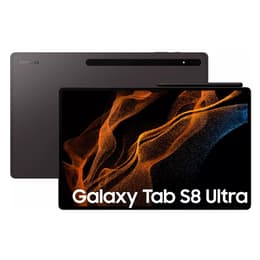
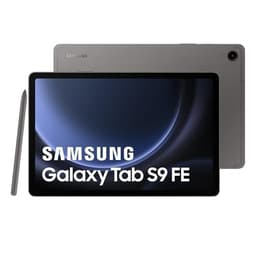


Galaxy Tab S8 (11.0", 2022) Vs Galaxy Tab S9 FE (10.9", 2023)

Galaxy Tab S8 (11.0", 2022)
Starting at

Refurbished price:332.00

Versus €745.19 new

See options
Galaxy Tab S9 FE (10.9", 2023)
Starting at

Refurbished price:402.00

Versus €499.00 new

See options

Ratings

The Samsung Galaxy Tab S8, released in 2022, and the Samsung Galaxy Tab S9 FE, launched in 2023, are two Android tablets from Samsung's diverse lineup. While both offer a premium tablet experience with S Pen support, they cater to slightly different user priorities. The Galaxy Tab S8, an 11.0-inch device, emphasizes high-end performance and a fluid display, whereas the 10.9-inch Galaxy Tab S9 FE, a more recent 'Fan Edition,' focuses on enhanced durability and a balanced feature set for everyday use.

Scores

Durability

The longevity of a tablet is influenced by its physical resilience and ongoing software support, with both models offering several years of practical use.

  • Software Support: The Galaxy Tab S8, launched with Android 12, is expected to receive four major Android OS updates and five years of security patches, extending its support until approximately 2027. The newer Galaxy Tab S9 FE, released with Android 13, also promises four major OS updates and five years of security updates, meaning its software support will extend a year longer than the Tab S8.
  • Physical Durability: A key differentiator is the ingress protection rating; the Galaxy Tab S9 FE features an IP68 rating, providing resistance against dust and water immersion. The Galaxy Tab S8 does not carry an official IP rating. Both tablets feature robust aluminum frames, contributing to their overall build quality.
  • Repairability: Both Samsung tablets generally offer a moderate level of repairability, consistent with many modern electronic devices. The practical lifespan for both devices is several years, with the Tab S9 FE having a slight edge in terms of extended software updates and its IP rating for accidental exposure.

Year of Release

2022

2023

Compatible with latest Update

Yes

Yes

OS

Android

Android

Performance

Performance is a critical aspect for tablets, impacting everything from app responsiveness to multitasking capabilities, and these two models present distinct profiles.

  • Processing Power: The Galaxy Tab S8 is equipped with a high-performance processor, enabling it to handle demanding applications, intensive multitasking, and graphically rich games with notable smoothness and responsiveness. The Galaxy Tab S9 FE features a capable processor that delivers smooth performance for everyday tasks, media consumption, light gaming, and productivity applications. Users engaging in very demanding applications or heavy multitasking may notice the Tab S8 offering a more fluid experience.
  • Memory and Storage: Both tablets offer various storage configurations, typically starting from 128GB and extending to 256GB, with the option to expand storage further via a microSD card. The Galaxy Tab S8 is available with up to 12GB of RAM, while the Galaxy Tab S9 FE offers up to 8GB of RAM, which can influence performance during extensive multitasking.
  • Battery Endurance: Both devices house an 8,000 mAh battery. The Galaxy Tab S8 has demonstrated excellent battery life, often lasting over 12 hours in continuous web surfing tests. The Galaxy Tab S9 FE also provides reliable battery performance, generally lasting through a full day of typical use.

Memory (GB)

8 GB

6 GB

Processor

Qualcomm SM8450 Snapdragon 8 Gen 1

Exynos 1380

Screen quality

The visual experience is central to tablet usage, and both devices offer clear displays, though with notable differences in technology and specifications.

  • Display Technology and Resolution: Both the Galaxy Tab S8 and Galaxy Tab S9 FE feature LCD panels. The Tab S8 boasts an 11-inch TFT LCD with a resolution of 2560 x 1600 pixels, resulting in a sharper image. The Tab S9 FE comes with a 10.9-inch IPS LCD display with a resolution of 2304 x 1440 pixels.
  • Refresh Rate and Smoothness: The Galaxy Tab S8 offers a 120Hz adaptive refresh rate, providing exceptionally smooth scrolling and fluid animations, which is particularly noticeable during gaming or fast-paced content. The Galaxy Tab S9 FE features a 90Hz refresh rate, which still delivers a smoother experience than standard 60Hz displays, enhancing general navigation and media consumption.
  • Brightness and Viewing Experience: The Galaxy Tab S8 generally offers higher peak brightness levels, which can be beneficial for outdoor visibility. While both screens provide vibrant colors, the higher resolution and refresh rate of the Tab S8 contribute to a more premium and immersive viewing experience for users prioritizing visual fidelity.

Resolution

1600 x 2560

1440 x 2304

Screen type

TFT LCD

IPS LCD

Pixel density

280ppp

250ppp

Audiovisual

For many users, a tablet's camera system is important for video calls, casual photography, and document scanning, and these tablets offer different capabilities.

  • Rear Camera System: The Galaxy Tab S8 features a dual-camera setup on the rear, consisting of a 13MP wide-angle lens and a 6MP ultra-wide-angle lens, offering more versatility for different photographic scenarios. It is capable of recording video in 4K resolution at 30 frames per second. The Galaxy Tab S9 FE has a single 8MP wide-angle rear camera, suitable for everyday photos and document capture, and records video in 1080p (FHD) resolution.
  • Front Camera Performance: Both tablets are equipped with a 12MP ultra-wide front-facing camera, which is well-suited for video conferencing and capturing wider group selfies. The front camera on the Galaxy Tab S9 FE is capable of recording 4K video, providing high-quality visuals for video calls.
  • Audio Experience: The Galaxy Tab S8 features a quad-speaker setup with Dolby Atmos support, generally providing a richer and more immersive audio experience for media consumption. The Galaxy Tab S9 FE comes with dual speakers, also supporting Dolby Atmos, offering clear audio for calls and entertainment.

Miscellaneous

Beyond core performance and display, several practical features contribute to the overall user experience and differentiate these two Samsung tablets.

  • Connectivity and Ports: The Galaxy Tab S8 supports Wi-Fi 6E, offering access to the latest and fastest Wi-Fi standard, and Bluetooth 5.2. Its USB-C port is a 3.2 generation, allowing for faster data transfer speeds and display output capabilities. The Galaxy Tab S9 FE supports Wi-Fi 6 and Bluetooth 5.3, providing reliable wireless connections. However, its USB-C port is a 2.0 generation, which means slower data transfer and typically no support for external display output.
  • Biometrics and Stylus: Both tablets include a side-mounted fingerprint sensor for secure unlocking. Both also come with an S Pen included in the box, enhancing productivity and creativity. The S Pen with the Galaxy Tab S8 offers Bluetooth features, while the S Pen included with the Galaxy Tab S9 FE functions without Bluetooth.
  • Design and Build: The Galaxy Tab S8 is slightly thinner and lighter, measuring 6.3mm in thickness and weighing around 503g (Wi-Fi model). The Galaxy Tab S9 FE is marginally thicker at 6.5mm and slightly heavier at 523g (Wi-Fi model). As mentioned, the Tab S9 FE also boasts an IP68 rating for dust and water resistance, a feature absent from the Tab S8.

Weight

507 g

524 g

Screen size (in)

11.0

10.9

Network

Wi-Fi + 5G

Wi-Fi

Carrier compatibility

Unlocked

Unlocked

Connector

USB Type-C

USB Type-C

Choosing between the Galaxy Tab S8 and the Galaxy Tab S9 FE depends on individual priorities and usage patterns. User feedback often praises the Galaxy Tab S8 for its robust performance, smooth 120Hz display, and versatile camera system, making it a strong contender for demanding tasks and entertainment. Some users, however, note its lack of an IP rating as a potential drawback. The Galaxy Tab S9 FE is frequently commended for its newer release, the inclusion of an IP68 rating for enhanced durability, and its overall suitability for general use, media consumption, and note-taking. Criticisms sometimes point to its less powerful processor and slower USB-C port compared to the Tab S8.

Users prioritizing raw processing power, a higher refresh rate display for a more fluid visual experience, and faster data transfer capabilities for productivity or creative work may find the Galaxy Tab S8 to be a more suitable option. Conversely, individuals seeking a more recent device with added durability against dust and water, primarily for general daily tasks, media consumption, and S Pen-enabled note-taking, without requiring top-tier processing power, might lean towards the Galaxy Tab S9 FE. Both models are available as quality-assured refurbished options, offering an eco-friendly alternative for consumers looking to make an informed and sustainable choice.

See all articles

Our recent comparisons







