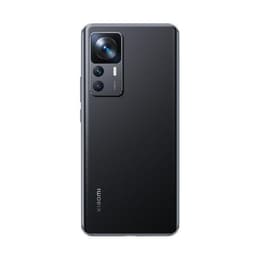
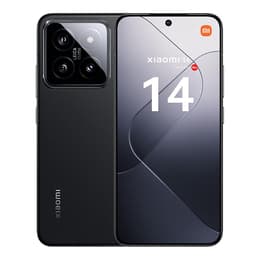


Xiaomi 12T Vs Xiaomi 14

Xiaomi 12T
Xiaomi 12T
Starting at

Refurbished price:140.00

Versus €649.00 new

See options
Xiaomi 14
Xiaomi 14
Starting at

Refurbished price:386.00

Versus €1,099.00 new

See options

Ratings

The Xiaomi 12T, released in October 2022, and the Xiaomi 14, launched globally in February 2024, represent different generations within Xiaomi's smartphone lineup. While both devices operate on the Android platform with Xiaomi's custom interface, the Xiaomi 14 introduces a more advanced processor, a refined camera system, and a more compact design, setting it apart from its predecessor.

Scores

Durability

When considering the long-term usability of a smartphone, factors like software support, physical resilience, and ease of repair are important. The Xiaomi 12T and Xiaomi 14 offer different profiles in these areas.

  • Software Longevity: The Xiaomi 12T was launched with Android 12 and was promised three major Android OS updates, with Android 15 being its final software version, alongside four years of security patches. In contrast, the newer Xiaomi 14, launched with Android 14 and HyperOS, is expected to receive four major Android OS updates and five years of security updates, extending its functional lifespan for a longer period.
  • Physical Durability: The Xiaomi 12T features Gorilla Glass 5 on its display and a plastic frame, offering a reasonable level of protection against everyday bumps and scratches. The Xiaomi 14, however, steps up with Gorilla Glass Victus on the front and an aluminum frame, coupled with an IP68 rating for dust and water resistance, indicating a higher degree of protection against environmental elements.
  • Repairability Aspects: The Xiaomi 14 has a moderate repairability score, with components like the battery and screen being accessible, though adhesive use can make disassembly challenging. Information regarding the specific repairability score for the Xiaomi 12T is less readily available, but generally, Xiaomi devices aim for a balance in repair accessibility.

Year of Release

2022

2023

Compatible with latest Update

Yes

Yes

OS

Android

Android

Foldable

No

No

Performance

The performance capabilities of the Xiaomi 12T and Xiaomi 14 reflect their respective generations, impacting how smoothly they handle applications and multitasking.

  • Processing Power: The Xiaomi 12T is equipped with a processor that capably handles demanding applications and provides a smooth experience for most users, including mobile gaming, with good thermal stability. The Xiaomi 14, featuring a newer generation processor, offers enhanced speed and efficiency, resulting in faster app loading times, more fluid multitasking, and superior performance in graphically intensive games and complex tasks.
  • Battery Behavior: The Xiaomi 12T houses a larger battery capacity, which, combined with its efficient processor, generally provides a full day of use for many users, and some report it can last up to two days with moderate usage. The Xiaomi 14, despite having a slightly smaller battery, is noted by users for its efficient power management and fast charging capabilities, often lasting a full day even with heavy use. Both devices support rapid wired charging, with the Xiaomi 12T offering 120W and the Xiaomi 14 providing 90W, significantly reducing downtime.
  • System Responsiveness and Multitasking: Both phones offer a responsive user interface. The Xiaomi 12T, with its ample RAM, manages multiple applications effectively. The Xiaomi 14, with its more powerful processor and potentially higher RAM configurations, delivers a consistently snappy experience, even with numerous applications running simultaneously, ensuring a high level of fluidity in daily interactions.

Memory (GB)

8 GB

16 GB

Screen quality

The visual experience on a smartphone is largely defined by its display, and both the Xiaomi 12T and Xiaomi 14 offer high-quality screens with distinct characteristics.

  • Display Technology and Clarity: Both devices feature AMOLED displays, known for their deep blacks and vibrant colors. The Xiaomi 12T offers a 6.67-inch AMOLED panel with a resolution that provides sharp visuals. The Xiaomi 14, with its 6.36-inch LTPO AMOLED display, presents a slightly higher resolution and pixel density, contributing to even finer detail and clarity, particularly noticeable in text and high-resolution content.
  • Brightness and Outdoor Visibility: The Xiaomi 12T's display can reach a peak brightness suitable for most indoor and outdoor conditions. The Xiaomi 14 significantly surpasses this with a higher peak brightness, making its screen exceptionally legible even in bright sunlight, which is beneficial for outdoor use.
  • Refresh Rate and Smoothness: Both phones feature a 120Hz refresh rate, ensuring smooth scrolling and fluid animations. The Xiaomi 14's LTPO technology allows for an adaptive refresh rate, which can dynamically adjust from 1Hz to 120Hz, potentially contributing to better power efficiency while maintaining visual smoothness.

Resolution

1220 x 2712

1200 x 2670

Screen type

AMOLED

LTPO OLED

Audiovisual

The camera systems on the Xiaomi 12T and Xiaomi 14 are designed to capture different types of photographic experiences, with the newer model emphasizing advanced features and partnerships.

  • Main Camera Capabilities: The Xiaomi 12T features a 108MP main camera with optical image stabilization (OIS), capable of producing detailed and vibrant photos in various lighting conditions, including good low-light performance when using its dedicated night mode. The Xiaomi 14 boasts a triple 50MP camera system, co-engineered with Leica, including a main sensor with OIS, an ultrawide lens, and a telephoto lens with optical zoom. This setup is praised for its exceptional detail, dynamic range, and color science, offering a more versatile and professional-grade photography experience.
  • Ultrawide and Telephoto Lenses: The Xiaomi 12T includes an 8MP ultrawide camera and a 2MP macro camera, which offer additional photographic perspectives. The Xiaomi 14 significantly upgrades these auxiliary lenses, providing a 50MP ultrawide and a 50MP telephoto lens with 3.2x optical zoom, allowing for higher quality wide-angle shots and more effective zoomed-in photography.
  • Video Recording and Audio: Both devices support 4K video recording with their main cameras. The Xiaomi 12T offers good video stabilization. The Xiaomi 14 extends its video capabilities with support for up to 8K recording and improved front camera video quality, alongside enhanced microphone quality for calls and recordings. Users generally report good speaker output for media consumption on both devices.

Main camera

108 megapixels

50 megapixels

Front camera

20 megapixels

32 megapixels

Miscellaneous

Beyond core performance and display, several practical features contribute to the overall user experience of the Xiaomi 12T and Xiaomi 14.

  • Connectivity and Ports: Both smartphones support 5G connectivity for fast mobile data. The Xiaomi 12T includes Wi-Fi 6 and Bluetooth 5.3. The Xiaomi 14 upgrades to Wi-Fi 7 and Bluetooth 5.4, offering potentially faster and more stable wireless connections. Both devices utilize a USB-C port for charging and data transfer.
  • Biometric Security: Both the Xiaomi 12T and Xiaomi 14 feature an under-display optical fingerprint sensor for secure and convenient unlocking. The Xiaomi 14 also incorporates face recognition for additional security and convenience.
  • Design and Handling: The Xiaomi 12T has a slightly larger form factor and a plastic frame, contributing to a solid but somewhat heavier feel. The Xiaomi 14, with its more compact dimensions and aluminum frame, offers a more premium in-hand feel and is generally lighter, making it easier for one-handed use.

Weight

220 g

188 g

Screen size (in)

6.67

6.36

Network

5G

5G

SIM card

Dual Physical SIM

Dual Physical SIM

Carrier compatibility

Unlocked

Unlocked

User feedback for the Xiaomi 12T often highlights its strong battery life, rapid charging, and capable main camera as significant advantages. Many appreciate its smooth performance for everyday tasks and gaming, considering it a well-rounded device for its segment. Criticisms sometimes point to the plastic frame and the quality of its auxiliary cameras compared to the main sensor. Some users have also expressed concerns about the consistency and timeliness of software updates.

The Xiaomi 14 receives praise for its exceptional camera system, particularly its Leica-tuned optics, and its powerful processing capabilities that ensure a very fluid user experience. Its bright, high-resolution display and fast charging are also frequently lauded. Some users, however, have noted that while battery life is good, it might not always match the longevity of devices with larger batteries, especially under very heavy use. There have also been occasional mentions of software quirks within HyperOS, though these are often seen as areas for future improvement.

Users prioritizing an extended software support timeline, a more compact form factor, and a highly versatile, professional-grade camera system may find the Xiaomi 14 to be a more suitable choice. Its enhanced durability features also cater to those seeking a more robust device. Conversely, individuals who value a larger battery capacity, still strong performance for daily use, and are content with a slightly older software update policy might lean towards the Xiaomi 12T. Both devices offer a compelling experience, and considering a quality-assured refurbished option for either model can be an eco-friendly alternative for consumers.
See all articles

Our recent comparisons







