

Galaxy Tab A9 (8.7", 2023) Vs iPad Air 7 (2025, M3 series)

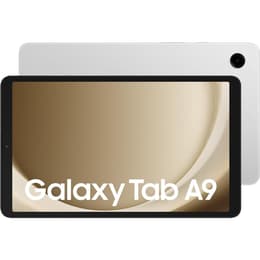
Galaxy Tab A9 (8.7", 2023)
Starting at

Refurbished price:153.00

Versus €255.86 new

See options
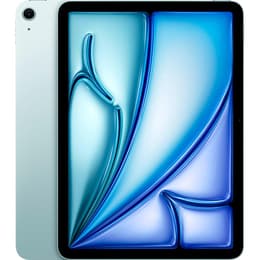
iPad Air 7 (2025, M3 series)
Starting at

Refurbished price:438.00

Versus €729.00 new

See options

Ratings

The Samsung Galaxy Tab A9, released in late 2023, and the Apple iPad Air (M3 Series), launched in early 2025, represent distinct approaches to the tablet experience. While the Galaxy Tab A9 focuses on portability and essential functionality within the Android ecosystem, the iPad Air (M3 Series) offers a more powerful and versatile platform running iPadOS, designed for demanding tasks and creative workflows. These differences extend across their core specifications, influencing their suitability for various user needs.

Scores

Durability

The longevity of a tablet is influenced by its release timeline, software support, and physical durability.

  • Release Timeline: The Galaxy Tab A9 was released in October 2023, making it an established option. The iPad Air (M3 Series) followed in March 2025, benefiting from a more recent hardware generation.
  • Software Longevity: The Galaxy Tab A9 launched with Android 13 and is expected to receive two major Android updates, likely extending support to Android 15. In contrast, Apple typically provides 6-8 years of full iPadOS support for its devices, with security updates potentially extending to 7-10 years, suggesting a longer software lifespan for the iPad Air (M3 Series).
  • Durability and Repairability: Both devices feature robust builds, with the Galaxy Tab A9 sporting a metal body and the iPad Air (M3 Series) an aluminum frame. While specific repairability scores vary, Apple's ecosystem generally offers extensive support for parts and service, potentially making the iPad Air a more sustainable choice for long-term maintenance.

Year of Release

2023

2025

Compatible with latest Update

Yes

Yes

OS

Android

iPadOS

Performance

Performance is a key differentiator, impacting how smoothly applications run and how efficiently tasks are handled on each tablet.

  • Processing Power: The Galaxy Tab A9 is equipped with a processor suitable for everyday tasks like web browsing, media consumption, and light gaming. The iPad Air (M3 Series), powered by its advanced chip, delivers significantly higher performance, enabling seamless multitasking, demanding applications, and graphics-intensive gaming with greater responsiveness.
  • Multitasking and Responsiveness: Users of the Galaxy Tab A9 will find it capable for basic multitasking, though performance may vary with numerous apps open simultaneously. The iPad Air (M3 Series) excels in this area, allowing users to run multiple complex applications concurrently without noticeable slowdowns, making it well-suited for productivity and creative work.
  • Storage and RAM: The Galaxy Tab A9 offers storage options up to 128GB and up to 8GB of RAM, with expandable storage via microSD. The iPad Air (M3 Series) provides a wider range of internal storage configurations, from 128GB up to 1TB, and comes with 8GB of unified memory, which contributes to its robust performance in handling large files and complex projects.

Memory (GB)

4 GB

8 GB

Screen quality

The visual experience is largely defined by the display technology, resolution, and overall screen quality of each device.

  • Display Technology and Clarity: The Galaxy Tab A9 features an 8.7-inch TFT LCD with a resolution of 1340 x 800 pixels, providing a clear viewing experience for general use. The iPad Air (M3 Series) comes with a Liquid Retina IPS LCD display, available in 11-inch and 13-inch sizes, offering higher resolutions (2360x1640 or 2732x2048 pixels) and enhanced clarity with P3 wide color and True Tone technology.
  • Brightness and Outdoor Visibility: The Galaxy Tab A9 offers a typical brightness of around 459 nits, which is adequate for indoor use and usable in bright, but not direct, sunlight. The iPad Air (M3 Series) provides higher brightness levels, with the 11-inch model reaching 500 nits and the 13-inch model up to 600 nits, improving visibility in various lighting conditions, including outdoors.
  • Refresh Rate and Smoothness: Both tablets feature a standard 60Hz refresh rate. While this is sufficient for most everyday tasks, the iPad Air's more powerful processing ensures that animations and scrolling appear consistently smooth, even with a 60Hz panel.

Resolution

800 x 1340

2360 x 1640

Screen type

TFT LCD

Liquid Retina display

Pixel density

180ppp

264ppp

Audiovisual

The camera systems on these tablets cater to different user expectations, from basic capture to more advanced photography and video conferencing.

  • Camera System Capabilities: The Galaxy Tab A9 includes an 8MP rear camera and a 2MP front camera, suitable for casual photos and video calls. The iPad Air (M3 Series) features a more capable 12MP Wide rear camera and a 12MP front camera with Center Stage, designed for higher-quality imaging and improved video conferencing.
  • Photography and Video Performance: The Galaxy Tab A9's cameras are functional for basic needs, though user reviews indicate limitations in challenging lighting conditions and overall image quality. The iPad Air (M3 Series) offers enhanced photography with features like Smart HDR 4 and autofocus with Focus Pixels, and supports 4K video recording at up to 60 frames per second, providing clearer and more detailed footage.
  • Audio for Media and Calls: The Galaxy Tab A9 comes with stereo speakers and Dolby Atmos support, offering a decent audio experience for media consumption. The iPad Air (M3 Series) provides impressive speaker quality and its front camera's Center Stage feature enhances video calls by keeping the user framed.

Miscellaneous

Beyond core specifications, several practical elements contribute to the overall user experience and device utility.

  • Connectivity Options: The Galaxy Tab A9 supports Wi-Fi 802.11 and Bluetooth 5.3, with an LTE variant available for mobile data. The iPad Air (M3 Series) offers more advanced connectivity with Wi-Fi 6E and Bluetooth 5.3, alongside optional 5G cellular capabilities, ensuring faster and more reliable wireless connections.
  • Ports and Accessories: Both tablets feature a USB-C port for charging and data transfer. The iPad Air (M3 Series) also supports a range of advanced accessories, including the Apple Pencil Pro and Magic Keyboard, expanding its functionality for creative and productivity tasks. The Galaxy Tab A9 does not support an active stylus.
  • Biometric Security and Design: The Galaxy Tab A9 offers face unlock for convenient security. The iPad Air (M3 Series) integrates Touch ID into its top button for secure authentication. The Galaxy Tab A9 is a compact 8.7-inch device weighing around 332g, while the iPad Air (M3 Series) is available in 11-inch (461g) and 13-inch (617g) models, both featuring a slim 6.1mm profile.

Weight

332 g

460 g

Width

21,1 cm

178.5 cm

Height

12,47 cm

247.6 cm

Depth

0,8 cm

6.1 cm

Screen size (in)

8.7

11

Network

Wi-Fi

Wi-Fi

Carrier compatibility

Without SIM Port

Without SIM Port

User sentiment for the Galaxy Tab A9 often highlights its compact size and solid performance for its segment, making it a practical choice for basic tablet needs. Users appreciate its metal build and expandable storage. However, some criticisms point to its battery life, which can be inconsistent depending on usage, and the limitations of its camera system.

The iPad Air (M3 Series) receives praise for its exceptional speed and responsiveness, particularly for demanding applications and multitasking. Users frequently commend its vibrant display and the robust ecosystem of accessories. Recurring concerns, however, include varied reports on battery life, with some users noting faster drain during intensive use, and occasional heat generation.

Users prioritizing a highly portable and budget-conscious device for media consumption, light browsing, and basic tasks may find the Galaxy Tab A9 well-suited to their needs. Its expandable storage is a notable advantage for those with extensive media libraries. Conversely, users who require a powerful tablet for creative work, advanced productivity, or a longer software support timeline will likely lean towards the iPad Air (M3 Series). Its superior processing power and accessory compatibility make it a strong contender for those seeking a more versatile and high-performance device. Both tablets offer distinct advantages, and considering a quality-assured refurbished option can provide an eco-friendly alternative for either model.

See all articles

Our recent comparisons