
iPad

Compare models
Differences at a glance
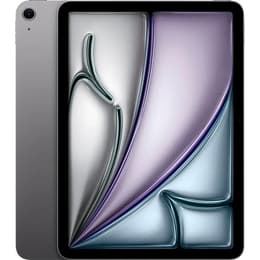
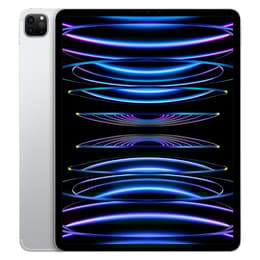
The iPad Air 2025 M3 Series, released in March 2025, and the iPad Pro 2022 M2 Series, launched in October 2022, represent distinct tiers within Apple's tablet lineup. Both devices operate on iPadOS, offering a consistent software experience, but they cater to different user needs through variations in their core hardware and feature sets. The primary distinctions lie in their processing power, display technology, and advanced capabilities designed for specific workflows.
Colour
Storage (GB)
When considering the longevity of these devices, their respective release dates play a significant role in anticipated software support and overall practical lifespan.
Year of Release
Compatible with latest Update
OS
Maximum Operating System supported
Both the iPad Air 2025 and the iPad Pro 2022 are equipped with powerful Apple silicon, offering robust performance for a wide range of tasks, though there are generational differences in their capabilities.
Processor
The visual experience on both tablets is high-quality, but the iPad Pro 2022 offers more advanced display technologies, particularly in its larger model.
Resolution
True Tone
Pro-Motion
Screen type
Pixel density
Brightness
Speakers
Both tablets offer capable camera systems for everyday use, but the iPad Pro 2022 includes more advanced features tailored for professional workflows.
Beyond core performance and display, several other features contribute to the overall user experience and differentiate these two iPad models.
Weight
Width
Height
Depth
Screen size (in)
Network
Carrier compatibility
Wi-Fi technology
Bluetooth Version
Face ID
Touch ID
Connector
The iPad Air 2025 M3 Series and the iPad Pro 2022 M2 Series each offer compelling features, catering to different user priorities. User sentiment often highlights the iPad Pro's display and advanced capabilities as its strongest assets. Many users praise the iPad Pro 2022 for its ProMotion display, which provides a smoother visual experience, and its superior audio system. The inclusion of Face ID and Thunderbolt connectivity are also frequently cited advantages for the Pro model.
Conversely, some users find the iPad Pro's advanced features to be overkill for their needs, and its higher specifications might not be fully utilized in everyday tasks. The iPad Air 2025, with its M3 chip, is often lauded for offering a significant performance boost that brings it closer to the Pro line, making it a powerful device for most users without the premium features of the Pro. Its landscape-oriented front camera is also a practical improvement for video calls.
Users prioritizing a fluid visual experience, advanced camera features like LiDAR and ProRes video capture, and the fastest possible data transfer speeds via Thunderbolt will find the iPad Pro 2022 M2 Series well-suited to their needs. This device is particularly beneficial for creative professionals, video editors, and those who frequently engage in graphically intensive tasks. For users who value the latest processor generation, a slightly longer software support window, and a highly capable tablet for productivity, media consumption, and light creative work, the iPad Air 2025 M3 Series presents a strong option. It offers excellent performance for most applications and is a more balanced choice for general use and students. Considering a quality-assured refurbished option for either model can be an eco-friendly alternative to extend the life cycle of these powerful devices.