

Compare models
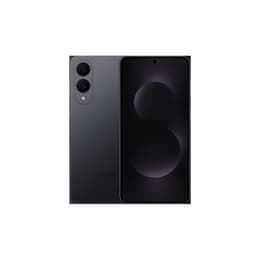
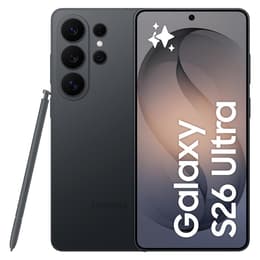
Galaxy S25 Edge Vs Galaxy S26 Ultra
- 1-year minimum warranty
- Free delivery on all orders
- Free 30-day returns
Differences at a glance
The Samsung Galaxy S25 Edge (2025) and the Samsung Galaxy S26 Ultra (2026) represent two distinct approaches to modern smartphone engineering within Android's flagship ecosystem. While both models run on Google's operating system paired with Samsung's custom interface, they prioritize entirely different physical profiles and capabilities. The Galaxy S25 Edge focuses on an exceptionally slim, lightweight form factor, whereas the Galaxy S26 Ultra emphasizes maximum hardware performance, an expanded screen real estate, and versatile camera versatility.
Available Models
Colour
Storage
Scores
Durability
When examining longevity and durability, both devices offer robust build quality and extended software support timelines, though their release dates and physical designs introduce distinct structural trade-offs.
- Software support duration: The Galaxy S26 Ultra benefits from a later release year and a more extended official software update window, while the Galaxy S25 Edge launched a year prior and operates on an earlier software generation baseline.
- Build and repairability: The Galaxy S25 Edge features an ultra-slim titanium chassis requiring compact internal engineering, whereas the Galaxy S26 Ultra utilizes a slightly thicker armor aluminum frame designed to house a larger battery and more complex cooling structures.
- Expected lifespan: Both models deliver long-term daily reliability, though users seeking extended operating system version upgrades will find the newer flagship naturally aligns with a longer active support lifecycle.
Year of Release
2025
2026
Compatible with latest Update
Yes
Yes
OS
Android
Android
Foldable
No
No
Performance
Under everyday conditions, both devices handle demanding tasks, multitasking, and resource-heavy applications with seamless fluidity, though their internal power profiles and endurance vary significantly.
- Storage and memory configurations: Both models offer baseline storage starting at spacious capacities paired with generous random access memory, ensuring smooth switching between multiple background applications.
- Battery behavior and endurance: The Galaxy S26 Ultra features a larger physical battery capacity and faster wired charging speeds, whereas the slimmer body of the Galaxy S25 Edge houses a smaller battery cell that requires more frequent replenishment during heavy daily workloads.
- System responsiveness: The Galaxy S26 Ultra incorporates an advanced current-generation processor configuration that handles intensive gaming and heavy productivity apps with greater thermal efficiency, while the Galaxy S25 Edge provides responsive performance for standard daily communication and media streaming.
Screen quality
Display characteristics differ notably in physical dimensions and viewing area, even though both models deliver sharp visual clarity and vibrant color reproduction.
- Display technology and resolution: Both smartphones utilize high-resolution dynamic organic light-emitting diode panels that produce deep blacks, high contrast ratios, and sharp text rendering for reading and media consumption.
- Screen dimensions and workspace: The Galaxy S26 Ultra offers a larger display canvas well-suited for document viewing and multitasking, whereas the Galaxy S25 Edge provides a slightly more compact screen size that balances visibility with easier single-handed reach.
- Outdoor visibility and refresh rate: Both screens support adaptive high refresh rates for smooth scrolling and feature high peak brightness levels to maintain clear legibility under direct sunlight.
Resolution
1440 x 3120
1440 x 3120
Audiovisual
Media creation and audio-visual playback capabilities vary widely between the two models due to differing physical lens arrays and internal speaker architectures.
- Camera system versatility: The Galaxy S26 Ultra includes a comprehensive quad-lens array featuring advanced periscope telephoto hardware for distant subjects, while the Galaxy S25 Edge relies on a streamlined dual-camera setup centered around a primary wide sensor and an ultra-wide option.
- Low-light and video performance: The Galaxy S26 Ultra excels in challenging lighting conditions through enhanced computational processing and specialized stabilization, whereas the Galaxy S25 Edge captures balanced everyday photos and clear video suitable for casual sharing.
- Media consumption output: Both devices deliver clear stereo sound output for calls and video playback, though the larger chassis of the Galaxy S26 Ultra provides slightly deeper acoustic resonance for movies and music.
Miscellaneous
Practical daily usability elements, connectivity features, and physical dimensions define how each device integrates into varied travel or professional routines.
- Connectivity and standards: Both smartphones support fast wireless standards, fifth-generation cellular connectivity, and modern Bluetooth protocols for reliable accessory pairing.
- Physical dimensions and handling: The Galaxy S25 Edge stands out for its remarkably thin profile and lightweight build that reduces pocket bulk, while the Galaxy S26 Ultra carries a heavier, wider footprint to accommodate its expanded screen and robust internal battery.
- Security and authentication: Both models utilize responsive under-display biometric fingerprint sensors and secure facial recognition features for quick device unlocking.
Weight
163 g
214 g
Screen size (in)
6.7
6.9
Network
5G
5G
SIM card
Physical SIM + eSIM
Physical SIM + eSIM
Carrier compatibility
Unlocked
Unlocked
Connector
USB-C
USB-C
What the community thinks
User feedback from online communities highlights distinct preferences for each device based on daily handling habits. Owners of the Galaxy S25 Edge frequently praise its exceptionally thin profile and light weight, noting how comfortable it feels to carry throughout the day. At the same time, some users observe that its slim battery capacity necessitates midday recharges during intensive use. Conversely, users of the Galaxy S26 Ultra commend its reliable battery endurance and versatile camera range, though certain discussions point out its bulky footprint and heavier weight in smaller pockets.
Users prioritizing maximum pocketability, a lightweight build, and a slim profile will find the Galaxy S25 Edge well-suited to their needs. Meanwhile, users prioritizing extended battery longevity, advanced photographic zoom capabilities, and a larger workspace will lean toward the Galaxy S26 Ultra. Choosing a quality-assured refurbished option through sustainable platforms like Back Market provides an eco-friendly way to acquire either model while supporting responsible electronics consumption. Ultimately, the right choice depends on whether physical slimness or maximum hardware versatility matches your daily routine.