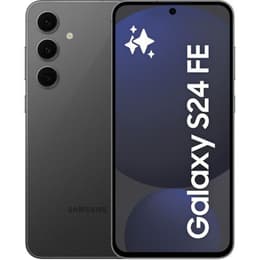
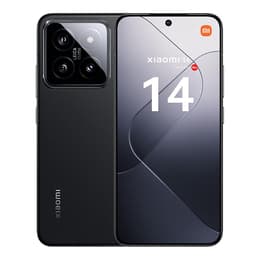


Galaxy S24 FE Vs Xiaomi 14

Galaxy S24 FE
Galaxy S24 FE
Starting at

Refurbished price:329.00

Versus €991.15 new

See options
Xiaomi 14
Xiaomi 14
Starting at

Refurbished price:384.00

Versus €1,099.00 new

See options

Ratings

The Samsung Galaxy S24 FE, released in October 2024, and the Xiaomi 14, launched globally in February 2024, are both contemporary Android smartphones designed to offer a comprehensive user experience. While the Galaxy S24 FE focuses on integrating flagship features into a more accessible package, the Xiaomi 14 emphasizes a compact form factor with high-end specifications, particularly in its camera system. Both devices run on the Android operating system, with Samsung's One UI and Xiaomi's HyperOS providing distinct user interfaces and feature sets.

Scores

Durability

When considering the long-term usability of these devices, their release timelines and software support policies are key factors.

  • Software Longevity: The Samsung Galaxy S24 FE stands out with an impressive commitment to software support, offering seven generations of Android OS upgrades and seven years of security updates from its global launch date. This means the device is expected to receive updates until 2031. [15, 38, 39] The Xiaomi 14, while also receiving regular updates, typically follows a shorter update cycle compared to Samsung's extended policy.
  • Physical Durability: Both smartphones incorporate robust build materials. The Galaxy S24 FE features Corning Gorilla Glass Victus+ on the front and Gorilla Glass 5 on the back, complemented by an aluminum frame, contributing to its overall durability and resistance to everyday wear. [17, 41] It also carries an IP68 rating for dust and water resistance, allowing submersion in fresh water up to 1.5 meters for 30 minutes. [17, 42] The Xiaomi 14's display is protected by Gorilla Glass Victus 2 and features a flat glass rear with an aluminum frame. [5, 34]
  • Expected Lifespan: Users prioritizing extended software support and a longer practical lifespan from a software perspective may find the Galaxy S24 FE more appealing due to its seven-year update commitment. Both devices offer solid physical durability for daily use.

Year of Release

2024

2023

OS

Android

Android

Foldable

No

No

Performance

The performance of a smartphone is largely determined by its internal components and how efficiently they handle various tasks.

  • Processing Power: The Xiaomi 14 is equipped with a current-generation processor, enabling it to handle demanding applications and multitasking with notable smoothness. [19, 34] The Samsung Galaxy S24 FE features an underclocked version of a flagship-grade processor, which still delivers balanced performance for everyday use and can smoothly run resource-intensive applications and AI features. [1, 16, 18]
  • System Responsiveness: Users of the Xiaomi 14 report a fast and fluid experience across various applications, including gaming. [6] The Galaxy S24 FE also offers a snappy and smooth user experience, with its processor proving capable for most tasks. [24, 30]
  • Storage and Multitasking: The Xiaomi 14 offers a wider range of storage options, extending up to 1TB, and comes with up to 16GB of RAM, which can benefit extensive multitasking and storage-heavy users. [8, 13] The Galaxy S24 FE is available with 8GB of RAM and storage options up to 512GB, which is ample for most users. [3, 4]

Memory (GB)

8 GB

16 GB

Screen quality

The visual experience on a smartphone is heavily influenced by its display technology and specifications.

  • Display Technology and Clarity: Both devices feature AMOLED display technology, known for deep blacks and vibrant colors. The Samsung Galaxy S24 FE utilizes a 6.7-inch Dynamic AMOLED 2X display with a 1080x2340 pixel resolution, providing clear visuals. [1, 12] The Xiaomi 14 has a slightly smaller 6.36-inch LTPO AMOLED display with a higher resolution of 1200x2670 pixels, resulting in a higher pixel density for sharper images and text. [5, 9, 10]
  • Brightness and Refresh Rate: The Xiaomi 14 offers a significantly higher peak brightness of 3000 nits, ensuring excellent visibility even in bright outdoor conditions. [9, 10] The Galaxy S24 FE has an advertised peak brightness of 1900 nits, though some tests show a lower measured brightness, which might impact outdoor readability compared to devices with higher peak brightness. [1, 12] Both phones feature a 120Hz refresh rate, contributing to smooth scrolling and responsive interactions. [1, 10, 11] The Xiaomi 14's display is LTPO, allowing for an adaptive refresh rate from 1Hz to 120Hz, which can contribute to power efficiency. [5]
  • Viewing Experience: The larger screen of the Galaxy S24 FE may appeal to users who prioritize immersive media consumption, while the Xiaomi 14's higher pixel density and superior peak brightness offer a more detailed and vibrant viewing experience, particularly in varied lighting.

Resolution

1080 x 2340

1200 x 2670

Screen type

Dynamic AMOLED 2X

LTPO OLED

Audiovisual

The camera systems on both smartphones offer distinct capabilities for capturing photos and videos.

  • Rear Camera System: The Xiaomi 14 features a versatile triple 50MP camera system, developed in collaboration with Leica, including a 50MP main sensor, a 50MP ultrawide lens, and a 50MP telephoto lens with 3.2x optical zoom. [6, 13, 29] This setup is praised for its ability to capture detailed images with consistent color and good low-light performance. [28, 32] The Samsung Galaxy S24 FE comes with a triple camera setup consisting of a 50MP main camera with optical image stabilization (OIS), a 12MP ultrawide lens, and an 8MP telephoto lens with 3x optical zoom and OIS. [1, 2] While its main camera performs well in good lighting, the ultrawide and telephoto lenses can sometimes produce softer details. [23, 24]
  • Video Recording and Front Camera: Both devices support high-resolution video recording, with the Galaxy S24 FE capable of 8K at 30fps. [1, 22] The Xiaomi 14 also offers strong video capabilities, including 4K 60fps on both front and rear cameras. [27] For selfies, the Galaxy S24 FE has a 10MP front camera, which some reviews note lacks autofocus. [2, 25] The Xiaomi 14 features a 32MP front camera. [13]
  • Photography Experience: Users prioritizing a highly versatile and consistent camera experience across all lenses, especially with strong low-light performance and detailed telephoto shots, may lean towards the Xiaomi 14. The Galaxy S24 FE offers a capable main camera for everyday photography and 8K video recording.

Miscellaneous

Beyond core specifications, several practical elements contribute to the overall user experience of these smartphones.

  • Connectivity and Ports: Both devices support modern connectivity standards, including 5G and advanced Wi-Fi protocols. The Galaxy S24 FE supports Wi-Fi 6E, while the Xiaomi 14 supports Wi-Fi 7, offering potentially faster and more stable wireless connections. [3, 8] Both phones feature a USB Type-C port for charging and data transfer. [1, 8]
  • Biometrics and Sensors: Both smartphones incorporate in-display optical fingerprint sensors for secure unlocking. [4, 13] They also include a range of sensors such as accelerometers, gyroscopes, and compasses for various functionalities. [11, 13]
  • Design and Handling: The Xiaomi 14 is a more compact device, measuring 152.8 x 71.5 x 8.2 mm and weighing 193g, making it potentially easier for one-handed use and pocketability. [5, 8] The Samsung Galaxy S24 FE is larger at 162.0 x 77.3 x 8.0 mm and heavier at 213g, offering a more expansive screen but a less compact feel. [17]

Weight

213 g

188 g

Screen size (in)

6.7

6.36

Network

5G

5G

SIM card

Dual Physical SIM

Dual Physical SIM

Carrier compatibility

Unlocked

Unlocked

The Samsung Galaxy S24 FE and the Xiaomi 14 each present a compelling set of features, catering to slightly different user preferences. User feedback for the Galaxy S24 FE often praises its appealing design, excellent battery life, and the inclusion of advanced AI features from its flagship counterparts. [2, 18, 24] Many users appreciate its strong performance for daily tasks and the long-term software support. [15, 21] However, some criticisms include the camera's performance in specific scenarios, particularly the ultrawide and telephoto lenses, and the display's measured brightness not always matching its advertised peak. [1, 23, 24]

The Xiaomi 14 receives significant acclaim for its powerful processor, exceptional camera system developed with Leica, and impressive battery longevity coupled with very fast charging speeds. [19, 20, 29] Its compact form factor, while still offering a large display, is also a frequent point of praise. [20, 34] Some users, however, might find Xiaomi's HyperOS to have an overwhelming volume of features. [19]

Users prioritizing extensive software longevity, a larger display for media, and a balanced performance for everyday use with integrated AI features may find the Samsung Galaxy S24 FE to be a suitable choice. Conversely, individuals seeking a more compact device with a top-tier camera system, superior display brightness, and rapid charging capabilities will likely find the Xiaomi 14 aligns better with their needs. Both devices offer a quality-assured refurbished option, providing a sustainable choice for consumers.

See all articles

Our recent comparisons






