

Compare models

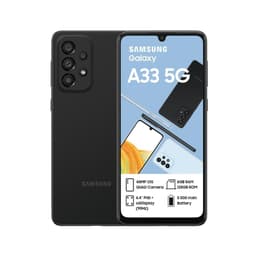
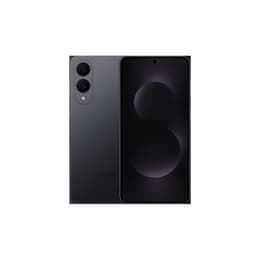
Galaxy A33 5G Vs Galaxy S25 Edge

  • 1-year minimum warranty
  • Free delivery on all orders
  • Free 30-day returns
Galaxy A33 5G
Starting at

Refurbished price:€164.00

Versus €389.00 new

See options
Galaxy S25 Edge
Starting at

Refurbished price:€488.00

Versus €1,275.21 new

See options

Differences at a glance

The Samsung Galaxy A33 5G (2022) and the Samsung Galaxy S25 Edge (2025) represent different tiers and release eras within Samsung's smartphone lineup. While the Galaxy A33 5G serves as a reliable mid-range option focused on everyday reliability, the Galaxy S25 Edge introduces a modern flagship build emphasizing an ultra-slim profile. These devices differ significantly in processing power, display technology, and software generations, though both run on the Android operating system with Samsung's custom interface.

Available Models

Colour

Storage

Scores

Durability

When examining hardware longevity and software support, both devices provide extended timelines suited for long-term usage, though their release years create distinct differences in remaining support windows.

  • Software Support Window: The Galaxy S25 Edge benefits from a later release date and newer operating system foundation, granting it extended software upgrade longevity compared to the older Galaxy A33 5G.
  • Build Longevity: The Galaxy S25 Edge utilizes a titanium frame and specialized glass protection, whereas the Galaxy A33 5G relies on a plastic frame with standard glass protection, though both feature solid water and dust resistance ratings.
  • Expected Practical Lifespan: Users selecting either device can anticipate reliable multi-year operation, with the newer model retaining active security patches further into the future.

Year of Release

2022

2025

Compatible with latest Update

Yes

Yes

OS

Android

Android

Foldable

No

No

Performance

Daily operation and multitasking capabilities vary noticeably between these models, driven by differences in internal processing hardware and memory capacity.

  • Multitasking and App Handling: The Galaxy S25 Edge handles demanding applications and heavy multitasking smoothly with its generous memory allocation, while the Galaxy A33 5G manages everyday tasks, social media, and casual browsing reliably.
  • Storage Configurations: Both devices offer ample internal storage capacities for media and applications, though the Galaxy A33 5G includes expandable storage support via a card slot, a feature omitted on the Galaxy S25 Edge.
  • Battery Behavior: The Galaxy A33 5G features a larger battery capacity paired with a modest processor, easily lasting through a full day of standard use, whereas the ultra-slim design of the Galaxy S25 Edge houses a smaller battery that may require more frequent charging under heavy workloads.

Screen quality

Visual output and display responsiveness differ substantially, offering distinct media consumption experiences depending on user preferences.

  • Display Technology: The Galaxy S25 Edge features a vibrant Dynamic AMOLED display with a higher resolution and smoother high refresh rate, while the Galaxy A33 5G utilizes a standard Super AMOLED panel with a lower 90Hz refresh rate.
  • Outdoor Visibility: Peak brightness levels on the Galaxy S25 Edge ensure clear legibility under direct sunlight, whereas the Galaxy A33 5G remains adequately bright for typical outdoor conditions.
  • Screen Size: The Galaxy S25 Edge provides a larger viewing area for media consumption compared to the more compact footprint of the Galaxy A33 5G.

Resolution

1080 x 2400

1440 x 3120

Audiovisual

Photography and audio-visual output reflect the positioning of each device, ranging from versatile multi-lens mid-range setups to high-resolution flagship systems.

  • Camera System Capabilities: The Galaxy S25 Edge employs a high-resolution main sensor paired with an ultra-wide lens to deliver sharp detail in diverse lighting conditions, while the Galaxy A33 5G utilizes a quad-lens setup that handles casual everyday photography adequately.
  • Video and Audio Output: Both models support stable high-definition video recording with digital stabilization, and both feature stereo speakers for clear media playback without requiring external headphones.
  • Call Quality: Integrated microphone arrays with background noise cancellation ensure clear voice transmission during calls on either device.

Miscellaneous

Physical dimensions, handling characteristics, and connectivity standards dictate how each phone fits into daily routines.

  • Handling and Weight: The Galaxy S25 Edge highlights an exceptionally thin profile and lightweight titanium build for comfortable pocketability, whereas the Galaxy A33 5G features a slightly thicker plastic body.
  • Connectivity Options: Both smartphones support fast 5G cellular networks, modern Wi-Fi standards, and Bluetooth connectivity for wireless accessories.
  • Security Sensors: Both models integrate responsive fingerprint recognition securely beneath or within the display frame for quick unlocking.

Weight

186 g

163 g

Screen size (in)

6.4

6.7

Network

5G

5G

SIM card

Dual Physical SIM

Physical SIM + eSIM

Carrier compatibility

Unlocked

Unlocked

What the community thinks

User discussions and community feedback indicate that buyers appreciate the Galaxy A33 5G for its dependable everyday battery longevity and practical storage flexibility, though some note that its charging speeds and loading times feel modest by modern standards. Conversely, users frequently praise the Galaxy S25 Edge for its striking ultra-slim aesthetic and responsive flagship performance, while noting that its thinner battery capacity demands careful power management during intensive usage days. Choosing between the two depends heavily on individual priorities. Users prioritizing a lightweight profile, immersive display, and rapid multitasking will find the Galaxy S25 Edge well-suited to their needs. Meanwhile, users prioritizing a reliable daily battery span and sustainable tech choices can look into quality-assured refurbished options for the Galaxy A33 5G as an eco-friendly alternative.









