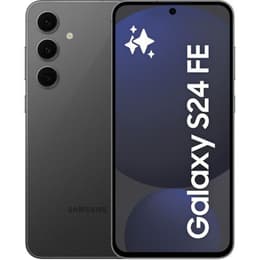

Galaxy S24 FE Vs iPhone 15

Galaxy S24 FE
Galaxy S24 FE
Starting at

Refurbished price:329.00

Versus €991.15 new

See options
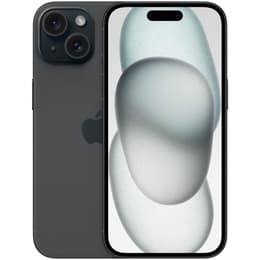
iPhone 15
iPhone 15
Starting at

Refurbished price:397.00

Versus €879.00 new

See options

Ratings

The Samsung Galaxy S24 FE, released in October 2024, and the Apple iPhone 15, launched in September 2023, represent distinct approaches to the modern smartphone experience. While both devices offer premium features, they cater to different user preferences through their respective operating systems and hardware philosophies. The Galaxy S24 FE operates on Android, emphasizing a larger display and a versatile camera system, whereas the iPhone 15 runs on iOS, focusing on a streamlined user experience and robust ecosystem integration. Key differentiators include screen technology, camera capabilities, and overall design.

Scores

Durability

When considering the long-term usability of a smartphone, factors such as software support, physical resilience, and ease of repair play a significant role.

  • Release Timeline: The Samsung Galaxy S24 FE was released in October 2024, making it a more recent device compared to the iPhone 15, which launched in September 2023. This difference in release dates can influence the duration of future software support.
  • Software Longevity: The Galaxy S24 FE is expected to receive up to seven major Android upgrades, offering substantial software longevity. The iPhone 15, running on iOS, is known for its extended software support, with compatibility expected for several years, including iOS 26.
  • Physical Durability: Both devices feature robust construction. The Galaxy S24 FE incorporates Gorilla Glass Victus+ on both its front and rear panels, providing enhanced protection against drops and scratches. The iPhone 15 utilizes a Ceramic Shield front cover and a color-infused glass back, offering considerable resilience. Both phones also carry an IP68 rating for dust and water resistance, indicating protection against immersion in water up to 6 meters for 30 minutes.
  • Repairability: The Galaxy S24 FE has demonstrated a strong repairability score of 8.5 out of 10, with components like the battery and cameras being relatively accessible for replacement. The iPhone 15 initially received a lower repairability score, but subsequent software changes and design adjustments have improved its score to 7 out of 10, making certain repairs more feasible.

Year of Release

2024

2023

OS

Android

iOS

Foldable

No

No

Performance

The performance of a smartphone is crucial for daily tasks, from navigating applications to engaging in demanding multimedia activities.

  • Processing Power: The Galaxy S24 FE is equipped with a current-generation processor that handles both light and intensive tasks efficiently, ensuring smooth operation and thermal management. The iPhone 15 features a powerful chip designed to deliver responsive performance across applications, gaming, and multitasking.
  • Multitasking and Responsiveness: With 8GB of RAM, the Galaxy S24 FE provides ample capacity for multitasking, allowing users to switch between numerous applications without noticeable slowdowns. The iPhone 15, with 6GB of RAM, is optimized for efficient memory management within its operating system, contributing to a fluid and responsive user experience even with multiple apps running simultaneously.
  • Storage Options: Both devices offer a range of internal storage configurations to suit varying user needs. The Galaxy S24 FE is available with 128GB, 256GB, and 512GB options. Similarly, the iPhone 15 comes with 128GB, 256GB, and 512GB storage capacities. Neither device supports expandable storage.
  • Battery Behavior: The Galaxy S24 FE houses a 4700mAh battery, which contributes to its long battery life, often lasting through a full day of heavy use. The iPhone 15 is equipped with a 3349mAh battery, providing sufficient power for typical daily usage, with user tests indicating over 16 hours of battery life.

Memory (GB)

8 GB

6 GB

Screen quality

The display is a primary interface for smartphone interaction, and both devices offer high-quality viewing experiences with distinct characteristics.

  • Display Technology and Size: The Samsung Galaxy S24 FE features a larger 6.7-inch Dynamic AMOLED 2X display, known for its vibrant colors and deep blacks. The iPhone 15 comes with a 6.1-inch Super Retina XDR OLED display, which also delivers excellent color accuracy and contrast.
  • Resolution and Clarity: The Galaxy S24 FE offers a 1080x2340 pixel resolution (FHD+), resulting in clear and detailed visuals. The iPhone 15 has a resolution of 2556x1179 pixels, providing a pixel density of approximately 460 pixels per inch, ensuring sharp text and images.
  • Brightness Levels: For outdoor visibility, the Galaxy S24 FE has a peak brightness of 1900 nits, though typical measured brightness is around 659 nits. The iPhone 15 boasts a typical brightness of 1000 nits, a peak HDR brightness of 1600 nits, and an impressive peak outdoor brightness of 2000 nits, making it highly visible even in direct sunlight.
  • Refresh Rate: The Galaxy S24 FE offers a 120Hz refresh rate, contributing to smoother scrolling and more fluid animations, which can enhance the gaming and general navigation experience. In contrast, the iPhone 15 maintains a standard 60Hz refresh rate.

Resolution

1080 x 2340

1179 x 2556

Screen type

Dynamic AMOLED 2X

Super Retina XDR OLED

Audiovisual

Camera capabilities are a significant consideration for many users, and both devices offer advanced systems for capturing photos and videos.

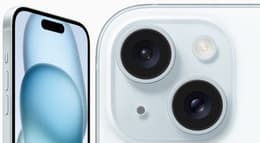
  • Rear Camera System: The Samsung Galaxy S24 FE features a versatile triple-camera setup on the rear, including a 50MP main sensor with optical image stabilization (OIS), a 12MP ultra-wide lens, and an 8MP telephoto lens capable of 3x optical zoom with OIS. The iPhone 15 employs a dual-camera system, highlighted by a 48MP main camera with sensor-shift optical image stabilization and a 12MP ultra-wide camera. It also offers a 2x 'optical quality' telephoto zoom achieved by cropping the main sensor.
  • Photography Performance: The Galaxy S24 FE's main camera delivers detailed images with vibrant colors in good lighting conditions, though low-light and portrait shots have been noted as average compared to flagship models. The iPhone 15's 48MP main camera produces highly detailed 24MP photos by default, with strong low-light performance and accurate color reproduction.
  • Video Recording: The Galaxy S24 FE supports video recording up to 8K resolution at 30 frames per second (fps), and 4K video at up to 120fps, with effective image stabilization. The iPhone 15 offers 4K video recording at up to 60fps across all its cameras, with features like Cinematic mode and Action mode for enhanced video capture.
  • Front Camera and Audio: For selfies and video calls, the Galaxy S24 FE includes a 10MP front camera. The iPhone 15 features a 12MP TrueDepth front camera, which also supports advanced features like Face ID. Both devices offer stereo speakers, with the Galaxy S24 FE providing decent loudness, while the iPhone 15 delivers a balanced audio experience for media consumption.

Miscellaneous

Beyond core performance and display, several practical elements contribute to the overall user experience of these smartphones.

  • Connectivity Standards: Both the Galaxy S24 FE and the iPhone 15 support modern connectivity options, including 5G for fast cellular data, and the latest Wi-Fi standards for robust wireless internet access. The Galaxy S24 FE supports Wi-Fi 6E and Bluetooth 5.3. The iPhone 15 supports Wi-Fi 6 and Bluetooth 5.3.
  • Charging and Ports: The Galaxy S24 FE features a USB Type-C port for charging and data transfer, and supports proprietary fast charging. The iPhone 15 also transitioned to a USB Type-C port, offering improved charging and data transfer speeds compared to previous iPhone models.
  • Biometric Security and Sensors: The Galaxy S24 FE includes an in-display fingerprint sensor for secure unlocking and authentication. The iPhone 15 relies on Face ID, its advanced facial recognition system, for biometric security. Both devices incorporate a range of sensors such as accelerometers, gyroscopes, proximity sensors, and ambient light sensors for various functionalities.
  • Physical Design and Handling: The Galaxy S24 FE measures 162 x 77.3 x 8mm and weighs 213 grams, offering a substantial feel in hand. The iPhone 15 is more compact and lighter at 147.6 x 71.6 x 7.8mm and 171 grams, making it easier for one-handed use for some users. Both phones feature flat edges and curved corners for a comfortable grip.

Weight

213 g

171 g

Screen size (in)

6.7

6.1

Network

5G

5G

SIM card

Dual Physical SIM

Physical SIM + eSIM

Carrier compatibility

Unlocked

Unlocked

Connector

USB-C

USB-C

The Samsung Galaxy S24 FE and iPhone 15 each present compelling options, tailored to different user priorities. Users frequently praise the Galaxy S24 FE for its strong performance, extended battery life, and vibrant display, often highlighting its comprehensive feature set for its segment. However, some users have noted that its low-light camera performance and speaker quality could be improved. Conversely, the iPhone 15 receives acclaim for its consistent performance, capable camera system, the integration of the Dynamic Island, and the convenience of its new USB-C port. Common criticisms include the absence of an always-on display, the lack of a dedicated telephoto lens, and a standard 60Hz refresh rate.

Users prioritizing a larger, high-refresh-rate display and a dedicated optical telephoto camera may find the Samsung Galaxy S24 FE well-suited to their needs, especially if they prefer the Android ecosystem and its customization options. Its robust battery life also makes it a strong contender for heavy users. On the other hand, individuals who value a more compact device, a highly optimized software experience, and a camera system known for its consistent image processing and video capabilities, particularly within the iOS ecosystem, may lean toward the iPhone 15. Its strong outdoor display brightness and long-term software support are also significant advantages. Both devices offer a quality-assured refurbished option, providing an eco-friendly alternative for consumers seeking to make sustainable choices.

See all articles

Our recent comparisons







