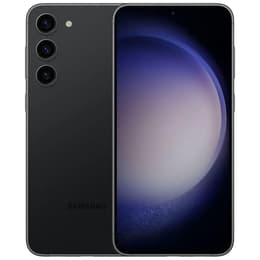
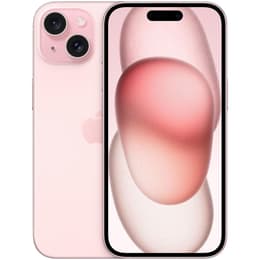

Galaxy S23+ Vs iPhone 15

Galaxy S23+
Galaxy S23+
Starting at

Refurbished price:300.00

Versus €1,337.64 new

See options
iPhone 15
iPhone 15
Starting at

Refurbished price:399.00

Versus €879.00 new

See options

Ratings

The Samsung Galaxy S23 Plus, released in February 2023, and the iPhone 15, launched in September 2023, represent two distinct approaches to the modern smartphone experience. While both devices offer premium features and robust performance, they differ in their operating systems, design philosophies, and specific hardware capabilities. The Galaxy S23 Plus operates on Android, offering a customizable interface, whereas the iPhone 15 runs on iOS, known for its integrated ecosystem and streamlined user experience. Key differentiators include screen size, camera configurations, and battery endurance.

Scores

Durability

When considering the long-term usability of a smartphone, factors like software support and physical resilience are important. The Galaxy S23 Plus and iPhone 15 offer different timelines for software updates and varying degrees of repairability.

  • Software Longevity: The iPhone 15 launched with iOS 17 and is compatible with iOS 18, with expectations of continued support for several years, potentially up to iOS 26. [1, 9, 13] The Galaxy S23 Plus, released with Android 13, has received updates to Android 14 and is expected to receive further Android versions, with a beta for Android 16 already rolling out to the S23 lineup. [3, 8] This indicates a commitment to ongoing software enhancements for both devices.
  • Physical Durability: Both phones feature robust construction. The Galaxy S23 Plus incorporates Gorilla Glass Victus 2 on both its front and back, paired with an aluminum frame. [14, 17] The iPhone 15 uses a Ceramic Shield front and a color-infused glass back, also with an aluminum design. [2, 10] Both devices carry an IP68 rating for dust and water resistance, allowing submersion up to 6 meters for 30 minutes for the iPhone 15, and up to 1.5 meters for 30 minutes for the Galaxy S23 Plus. [9, 13, 17]
  • Repairability: The iPhone 15 series has seen improvements in repairability, with iFixit granting it a score of 7 out of 10, a notable increase from its initial rating, partly due to enhanced parts serialization accessibility in iOS 18. [5, 33, 38] Specific repairability scores for the Galaxy S23 Plus are not as widely publicized, but generally, Android devices can offer varied repair experiences depending on the specific model and component availability.

Year of Release

2023

2023

Compatible with latest Update

Yes

Yes

OS

Android

iOS

Foldable

No

No

Performance

The performance of a smartphone is crucial for daily tasks, from navigating applications to demanding multimedia use. Both the Galaxy S23 Plus and the iPhone 15 deliver responsive experiences, though their underlying architectures differ.

  • Everyday Responsiveness: The iPhone 15 is powered by a current-generation processor that ensures smooth operation across applications and efficient multitasking. [2, 4, 7] The Galaxy S23 Plus features a powerful processor designed for demanding tasks, providing a fluid user experience and handling intensive applications without noticeable slowdowns. [3, 15]
  • Battery Behavior: The Galaxy S23 Plus is equipped with a 4700 mAh battery, often providing users with up to two days of use on a single charge, or around 8-10 hours of screen-on time for heavy users. [18, 20, 23, 32] The iPhone 15 has a 3349 mAh battery, which typically offers around 6.5 to 10 hours of usage, depending on the intensity of tasks. [34, 39, 41]
  • Storage and Multitasking: The iPhone 15 is available with 128GB, 256GB, or 512GB of internal storage and 6GB of RAM, supporting efficient app switching and background processes. [4, 9, 27] The Galaxy S23 Plus offers 256GB or 512GB storage options and comes with 8GB of RAM, which contributes to its ability to manage multiple applications simultaneously and handle larger files. [3, 8, 24]

Memory (GB)

8 GB

6 GB

Screen quality

The display is a primary interface for smartphone interaction, and both devices offer high-quality viewing experiences with distinct characteristics.

  • Display Technology and Clarity: The iPhone 15 features a 6.1-inch Super Retina XDR OLED display, providing deep blacks and vibrant colors with a resolution of 2556x1179 pixels, resulting in a sharp 460 pixels per inch. [1, 2, 7, 13] The Galaxy S23 Plus sports a larger 6.6-inch Dynamic AMOLED 2X display with a Full HD+ resolution of 2340x1080 pixels, offering rich colors and good detail. [3, 6, 17, 24]
  • Brightness and Outdoor Visibility: Both phones offer excellent brightness levels for outdoor use. The iPhone 15 can reach a typical brightness of 1000 nits and a peak outdoor brightness of 2000 nits, ensuring content remains visible even in bright sunlight. [1, 2, 13] The Galaxy S23 Plus also boasts a peak brightness of 1750 nits, providing strong visibility in various lighting conditions. [17, 20]
  • Refresh Rate and Smoothness: The iPhone 15 features a standard 60Hz refresh rate, which provides a consistent visual experience. [1, 9] In contrast, the Galaxy S23 Plus offers a dynamic 120Hz refresh rate, allowing for smoother scrolling and more fluid animations, which can enhance the perception of responsiveness. [17, 20, 24]

Resolution

1080 x 2340

1179 x 2556

Screen type

Dynamic AMOLED 2X

Super Retina XDR OLED

Audiovisual

Both the Galaxy S23 Plus and the iPhone 15 are equipped with advanced camera systems designed to capture high-quality photos and videos in various scenarios.

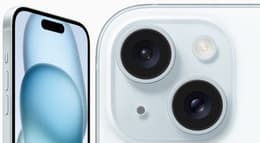
  • Rear Camera Systems: The iPhone 15 features a dual-camera setup with a 48MP main sensor that includes sensor-shift optical image stabilization and a 2x telephoto option enabled by its quad-pixel sensor, alongside a 12MP ultra-wide lens. [2, 9, 13, 27, 43] The Galaxy S23 Plus offers a versatile triple-camera system, comprising a 50MP wide-angle primary camera with optical image stabilization, a 12MP ultra-wide camera, and a 10MP telephoto lens capable of 3x optical zoom. [6, 8, 12, 17]
  • Low-Light and Photography Features: The iPhone 15 benefits from features like Photonic Engine, Deep Fusion, and Night mode, which enhance detail and color in challenging lighting. [2, 13, 27] The Galaxy S23 Plus utilizes 'Nightography' for improved low-light photos and videos, an AI Image Enhancer, and Expert RAW for more control over image processing. [21, 36, 40]
  • Video Recording and Audio: Both devices support high-resolution video recording. The iPhone 15 can record 4K video at up to 60 frames per second and includes Cinematic mode for depth-of-field effects. [27] The Galaxy S23 Plus is capable of 8K video recording at 30 frames per second. [6] Both phones offer stereo speakers for an immersive audio experience during media consumption. [27, 29]

Main camera

50 megapixels

48 megapixels

Front camera

12 megapixels

12 megapixels

Miscellaneous

Beyond core features, several practical elements contribute to the overall user experience and daily functionality of these smartphones.

  • Connectivity and Ports: Both the Galaxy S23 Plus and iPhone 15 support 5G connectivity and Wi-Fi 6 for fast wireless internet. [9, 13, 17, 24] They also feature Bluetooth 5.3 for connecting to accessories. [1, 13, 24] A significant change for the iPhone 15 is the adoption of a USB-C port, replacing the proprietary Lightning connector, though its data transfer speeds are limited to USB 2.0. [1, 27, 44] The Galaxy S23 Plus also uses a USB-C port, supporting USB 3.2 for faster data transfer. [24, 30]
  • Biometric Security: The iPhone 15 relies on Face ID for secure facial recognition. [13, 27] The Galaxy S23 Plus incorporates an in-display ultrasonic fingerprint sensor for biometric authentication. [8, 17]
  • Design and Handling: The iPhone 15 measures 147.6 x 71.6 x 7.8 mm and weighs 171 grams, offering a compact and lightweight feel. [2, 22, 27] The Galaxy S23 Plus is a larger device at 157.8 x 76.2 x 7.6 mm and weighs 196 grams, providing a more expansive screen while maintaining a relatively slim profile. [14, 17, 24] Both devices feature aluminum frames. [2, 14]

Weight

196 g

171 g

Screen size (in)

6.6

6.1

Network

5G

5G

SIM card

Physical SIM + eSIM

eSIM

Carrier compatibility

Unlocked

Unlocked

The Samsung Galaxy S23 Plus and iPhone 15 each present a compelling package, catering to different user preferences and priorities. User feedback often highlights the Galaxy S23 Plus's strong battery life and its vibrant, high refresh rate display as significant advantages. [15, 18, 20, 32] Some users appreciate the flexibility and customization offered by the Android operating system and Samsung's One UI. Criticisms, when present, sometimes point to its larger size being less ideal for one-handed use compared to smaller devices. [20]

For the iPhone 15, common praise centers on its integrated iOS ecosystem, consistent performance, and the quality of its camera system, particularly its computational photography capabilities. [2, 13, 27] The introduction of the Dynamic Island and the switch to USB-C have also been well-received. [1, 43, 44] Some users have noted that the standard iPhone 15's battery life, while decent, may not match the endurance of its larger counterparts or some Android flagships. [34, 39, 41]

Users prioritizing a larger display, a higher refresh rate for smoother visuals, and potentially longer battery life for extended use may find the Galaxy S23 Plus well-suited to their needs. Conversely, users who value a more compact device, a highly integrated software experience, and advanced computational photography features might lean toward the iPhone 15. Both devices offer robust performance and capable cameras, making the choice often come down to ecosystem preference and specific display and battery requirements. For those seeking a more sustainable choice, considering a quality-assured refurbished option for either model can be an eco-friendly alternative.

See all articles

Our recent comparisons







