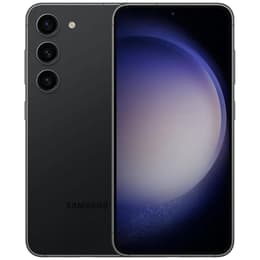
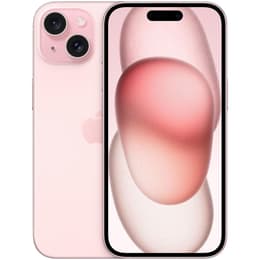

Galaxy S23 Vs iPhone 15

Galaxy S23
Galaxy S23
Starting at

Refurbished price:249.00

Versus €959.00 new

See options
iPhone 15
iPhone 15
Starting at

Refurbished price:398.00

Versus €879.00 new

See options

Ratings

The Samsung Galaxy S23, released in February 2023, and the iPhone 15, launched in September 2023, represent flagship smartphones from their respective manufacturers. While both devices offer premium experiences, they cater to different user preferences through their distinct operating systems and hardware philosophies. The Galaxy S23 operates on Android, offering a customizable interface, whereas the iPhone 15 runs on iOS, known for its streamlined user experience. Key differentiators include their camera systems, display refresh rates, and overall ecosystem integration.

Scores

Durability

When considering the longevity of these devices, several factors come into play, including their release timelines, software support, and physical durability.

  • Release Timeline & Software Support: The Samsung Galaxy S23 was released in February 2023, making it slightly older than the iPhone 15, which launched in September 2023. Samsung typically provides four years of operating system updates and five years of security updates for the Galaxy S23 series. Apple generally offers five to seven years of major iOS updates and extended security patches for its iPhones, suggesting the iPhone 15 may receive software support for a slightly longer duration, potentially until 2035.
  • Physical Durability: Both devices are built with robust materials. The Galaxy S23 features Gorilla Glass Victus 2 for screen protection, while the iPhone 15 incorporates Ceramic Shield. Both models also carry an IP68 rating for dust and water resistance, indicating protection against submersion.
  • Repairability: The Galaxy S23 features design elements like battery pull tabs that can simplify battery replacement, contributing to a generally good repairability assessment. The iPhone 15 series initially received a lower repairability score, though improvements in iOS 18 for parts serialization could potentially enhance its repairability over time.

Year of Release

2023

2023

Compatible with latest Update

Yes

Yes

OS

Android

iOS

Foldable

No

No

Performance

Both smartphones offer robust performance, but they approach it with different hardware configurations and optimizations for their respective operating systems.

  • System Responsiveness: The Galaxy S23 handles demanding applications and multitasking smoothly, providing a fluid user experience. The iPhone 15 also delivers strong performance, ensuring apps launch quickly and run efficiently, even with intensive tasks.
  • Storage Options: Both devices are available with 128GB, 256GB, and 512GB internal storage options. The Galaxy S23's 256GB and 512GB variants utilize a faster storage standard compared to its 128GB model.
  • Battery Behavior: The Galaxy S23 is equipped with a 3900 mAh battery, while the iPhone 15 features a 3349 mAh battery. Both are designed to provide a full day of use for most users, with the iPhone 15 offering up to 20 hours of video playback. For heavy users, the Galaxy S23 may offer slightly longer usage on a single charge.

Memory (GB)

8 GB

6 GB

Screen quality

The display is a primary interaction point, and both devices offer high-quality viewing experiences with some notable differences.

  • Display Technology & Clarity: The Samsung Galaxy S23 features a Dynamic AMOLED 2X display, known for its vibrant colors and deep blacks. The iPhone 15 utilizes a Super Retina XDR OLED display, also offering excellent contrast and color accuracy. Both devices have 6.1-inch displays. The Galaxy S23 offers a resolution of 2340 x 1080 pixels (approximately 425 ppi), while the iPhone 15 has a slightly higher resolution of 2556 x 1179 pixels (approximately 460 ppi), providing a marginally sharper image.
  • Brightness Levels: The Galaxy S23 can reach a peak brightness of up to 1750 nits, ensuring good visibility in bright conditions. The iPhone 15 surpasses this with a peak outdoor brightness of up to 2000 nits, making it exceptionally bright for outdoor viewing.
  • Refresh Rate & Features: The Galaxy S23 boasts an adaptive refresh rate of up to 120Hz, which contributes to smoother scrolling and more fluid animations. The iPhone 15 maintains a standard 60Hz refresh rate. The iPhone 15 incorporates the Dynamic Island, an interactive area around the front camera that displays alerts and live activities.

Resolution

1080 x 2340

1179 x 2556

Screen type

Dynamic AMOLED 2X

Super Retina XDR OLED

Audiovisual

Both smartphones are capable photography tools, each with distinct camera setups and features that appeal to different photographic styles.

  • Camera System: The Galaxy S23 features a versatile triple-camera system on the rear, comprising a 50MP main sensor, a 12MP ultrawide lens, and a 10MP telephoto lens with 3x optical zoom. The iPhone 15 has an advanced dual-camera system, including a 48MP main sensor that offers a 2x telephoto option through sensor cropping, and a 12MP ultrawide lens. Both devices include a 12MP front-facing camera.
  • Photography Performance: The Galaxy S23 is praised for its detailed photos and strong low-light performance, particularly for night shots, and its ability to capture distant objects with its dedicated telephoto lens. The iPhone 15's main camera offers improved detail and overall performance, with users noting its natural color reproduction.
  • Video Recording & Audio: The Galaxy S23 supports 8K video recording at up to 30 frames per second, while the iPhone 15 records up to 4K at 60 frames per second, including Cinematic mode. Both offer good microphone quality for calls and recording, and stereo speakers for media consumption.

Main camera

50 megapixels

48 megapixels

Front camera

12 megapixels

12 megapixels

Miscellaneous

Beyond core features, several practical elements differentiate the user experience of these two devices.

  • Connectivity: Both the Galaxy S23 and iPhone 15 support 5G networks, ensuring fast mobile data speeds. They also feature modern Wi-Fi standards (Wi-Fi 6 for iPhone 15, Wi-Fi 6E for S23) and Bluetooth 5.3 for wireless accessories.
  • Port Types: The iPhone 15 marks a significant change by adopting a USB-C port, aligning with the Galaxy S23, which also uses USB-C. This transition means both devices offer a universal charging and data transfer solution.
  • Biometric Security: The Galaxy S23 utilizes an under-display fingerprint sensor for secure unlocking. The iPhone 15 relies on Face ID, Apple's facial recognition system, for biometric authentication.
  • Physical Characteristics: The Galaxy S23 measures 146.3 x 70.9 x 7.6 mm and weighs 168 grams. The iPhone 15 is slightly larger and heavier at 147.6 x 71.6 x 7.8 mm and 171 grams. Both feature an aluminum frame and glass back.

Weight

167 g

171 g

Screen size (in)

6.1

6.1

Network

5G

5G

SIM card

Physical SIM + eSIM

Physical SIM + eSIM

Carrier compatibility

Unlocked

Unlocked

Users often praise the Samsung Galaxy S23 for its versatile camera system, particularly the inclusion of a dedicated telephoto lens and its 120Hz refresh rate display, which provides a smoother visual experience. Some common criticisms revolve around its battery life, which, while capable, might require more frequent charging for very heavy users compared to some competitors.

The iPhone 15 is frequently lauded for its powerful performance, the integration of the Dynamic Island, and its consistent camera output with natural color science. User feedback sometimes points to the 60Hz refresh rate as a potential drawback when compared to devices offering higher refresh rates.

Users prioritizing a highly customizable Android experience with a dedicated telephoto camera and a smoother display refresh rate may find the Galaxy S23 well-suited to their needs. Conversely, users who value a streamlined operating system, robust performance, and a consistent camera experience with the added functionality of the Dynamic Island may lean toward the iPhone 15. Both devices offer compelling features, and choosing between them often comes down to individual preferences for operating system and specific hardware priorities. For those seeking a more sustainable choice, quality-assured refurbished options for both models are available, providing an eco-friendly alternative.

See all articles

Our recent comparisons







