

iPhone 15 Vs iPhone 15 Plus

iPhone 15
iPhone 15
Starting at
€438.00
€879.00 new
See options
iPhone 15 Plus
iPhone 15 Plus
Starting at
€454.00
€979.00 new
See options

Ratings

The iPhone 15 and iPhone 15 Plus, both released in September 2023, represent Apple's standard-tier smartphone offerings for their generation. While sharing the same core internal components and advanced camera system, their primary differences lie in physical size, display area, and battery capacity, catering to different preferences for device footprint and endurance.

Scores

Durability

Both the iPhone 15 and iPhone 15 Plus benefit from the same software support timeline and a design focused on repairability.

  • Software Longevity: Both devices launched with iOS 17 and are compatible with iOS 18 and later versions, with Apple typically providing 5-6 years of major software updates. This ensures both models will receive new features and security patches for an extended period.
  • Repairability: Initially, the iPhone 15 series received a repairability score of 4 out of 10 due to parts pairing requirements. However, with improvements in Repair Assistant features, the series was later promoted to a score of 7 out of 10, indicating better potential for independent repairs compared to some predecessors.
  • Expected Lifespan: Given their recent release in late 2023, both the iPhone 15 and iPhone 15 Plus are expected to offer several years of reliable performance and software support, aligning with Apple's standard product lifecycle.

Year of Release

2023

2023

Compatible with latest Update

Yes

Yes

OS

iOS

iOS

Foldable

No

No

Performance

Both iPhone 15 models are equipped with the same powerful processor, ensuring consistent performance across the range.

  • Processor Capabilities: The iPhone 15 and iPhone 15 Plus both feature the A16 Bionic chip. This processor, previously seen in the iPhone 14 Pro models, delivers efficient performance for daily tasks, demanding applications, and graphics-intensive gaming.
  • System Responsiveness: With 6GB of LPDDR5 RAM, both devices handle multitasking smoothly, allowing users to switch between applications without noticeable delays. The A16 Bionic chip contributes to a fluid overall system experience.
  • Storage Options: Users can choose from 128GB, 256GB, or 512GB internal storage configurations for either model, offering ample space for apps, photos, and videos.
  • Battery Behavior: The iPhone 15 typically offers a full day of use, with up to 20 hours of video playback and up to 80 hours of audio playback. The iPhone 15 Plus, thanks to its larger physical size, houses a more substantial 4383 mAh battery, providing significantly extended endurance, often lasting up to two days for many users. It offers up to 26 hours of video playback and up to 100 hours of audio playback.

Memory

6 GB

6 GB

Screen quality

The main distinctions in screen quality between the iPhone 15 and iPhone 15 Plus revolve around physical size and overall viewing area, while maintaining consistent display technology.

  • Display Technology and Clarity: Both models feature a Super Retina XDR OLED display, offering vibrant colors, deep blacks, and excellent contrast with a typical contrast ratio of 2,000,000:1. The resolution is 2556x1179 pixels for the iPhone 15 and 2796x1290 pixels for the iPhone 15 Plus, both delivering approximately 460 pixels per inch for sharp visuals.
  • Brightness Levels: Both displays support a typical brightness of up to 1000 nits, a peak HDR brightness of 1600 nits, and an impressive peak outdoor brightness of up to 2000 nits, ensuring good visibility even in direct sunlight.
  • Screen Size and Viewing Experience: The iPhone 15 has a 6.1-inch display, offering a compact and easy-to-handle experience. The iPhone 15 Plus features a larger 6.7-inch display, providing a more expansive canvas for media consumption, gaming, and productivity.
  • Refresh Rate: Both devices feature a standard 60Hz refresh rate. While fluid for most content, users accustomed to higher refresh rates might notice a difference in smoothness.

Resolution

1179 x 2556

1290 x 2796

Screen type

Super Retina XDR OLED

Super Retina XDR OLED

Audiovisual

The camera systems on both the iPhone 15 and iPhone 15 Plus are identical, offering significant upgrades in image capture capabilities.

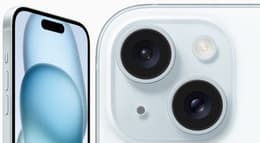
  • Advanced Dual-Camera System: Both phones feature an advanced dual-camera system consisting of a 48MP Main camera with an ƒ/1.6 aperture and sensor-shift optical image stabilization, alongside a 12MP Ultra Wide camera with a 120° field of view and ƒ/2.4 aperture. The Main camera's quad-pixel sensor enables a 2x optical quality telephoto option.
  • Photography Performance: The 48MP main sensor allows for super-high-resolution photos, producing detailed 24MP and 48MP images, and excels in everyday and low-light conditions with the Photonic Engine. Both models also support next-generation portraits with Focus and Depth Control.
  • Video Recording Quality: Both devices are capable of 4K video recording at various frame rates (24, 25, 30, or 60 fps) with Dolby Vision HDR support up to 60 fps, and Cinematic mode up to 4K HDR at 30 fps. They also support slo-motion video at 1080p at 120 fps.

Main camera

48 megapixels

48 megapixels

Front camera

12 megapixels

12 megapixels

Miscellaneous

Beyond the core performance, both iPhone 15 models share many practical features and design elements.

  • Connectivity and Port Type: Both devices support 5G cellular connectivity, Wi-Fi 6 (802.11ax), and Bluetooth 5.3. A notable change is the adoption of a USB-C port, replacing the Lightning connector, which enables more universal charging and data transfer, though speeds are limited to USB 2.0.
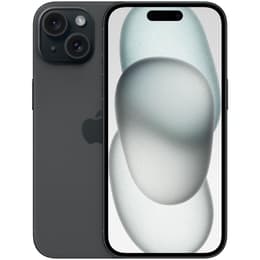
  • Design and Durability: Both phones feature an aluminum design with a color-infused glass back and a Ceramic Shield front cover, offering enhanced durability. They also carry an IP68 rating for splash, water, and dust resistance, allowing submersion up to 6 meters for 30 minutes.
  • User Interface and Sensors: Both the iPhone 15 and 15 Plus incorporate the Dynamic Island for interactive alerts and activities. They rely on Face ID for secure authentication.
  • Physical Dimensions: The iPhone 15 is more compact and lighter at 147.6 x 71.6 x 7.8 mm and 171 grams. The iPhone 15 Plus is larger and heavier, measuring 160.9 x 77.8 x 7.8 mm and weighing 201 grams, providing a larger footprint for users who prefer a bigger device.

Weight

171 g

201 g

Screen size (in)

6.1

6.7

Network

5G

5G

SIM card

Physical SIM + eSIM

Physical SIM + eSIM

Carrier compatibility

Unlocked

Unlocked

Connector

USB-C (USB 2)

USB-C

The iPhone 15 and iPhone 15 Plus offer a cohesive experience, primarily differing in their physical size and battery endurance. User feedback often praises the improved camera quality, the transition to USB-C for broader compatibility, and the reliable performance delivered by the A16 Bionic chip.

Common praise points for both devices include their vibrant Super Retina XDR OLED displays, even at a 60Hz refresh rate, which users generally find smooth for everyday interaction. The iPhone 15 Plus frequently receives commendation for its exceptional battery life, often outperforming even Pro Max models in endurance tests. Some users have noted concerns about early heating issues with the iPhone 15, though these appear to have settled for many over time, and a persistent criticism is the absence of a higher refresh rate display.

For users seeking a more compact and lighter device that still delivers powerful performance and a capable camera system, the iPhone 15 is an excellent choice. It suits those who prioritize one-handed use and ease of carrying. For individuals who prefer a larger screen for media consumption, gaming, or productivity, and for whom extended battery life is a top priority, the iPhone 15 Plus stands out as the more suitable option. Its larger display and greater battery capacity make it ideal for heavy users or those who frequently travel.

When considering these devices, exploring quality-assured refurbished options can provide an eco-friendly alternative, extending the life cycle of these well-regarded smartphones and offering a sustainable choice for your next device.