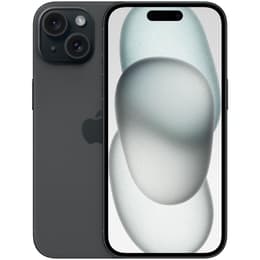
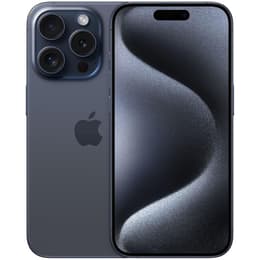


iPhone 15 Vs iPhone 15 Pro

iPhone 15
iPhone 15
Starting at
€438.00
€879.00 new
See options
iPhone 15 Pro
iPhone 15 Pro
Starting at
€524.00
€1,239.00 new
See options

Ratings

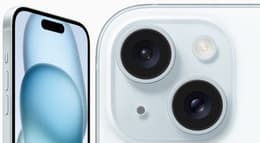
The iPhone 15 and iPhone 15 Pro, both released in September 2023, represent Apple's standard and premium smartphone offerings for that year. While they share a similar aesthetic and the intuitive iOS operating system, the Pro model distinguishes itself with a more powerful processor, a versatile camera system, advanced display technology, and different build materials. Both devices incorporate the new USB-C charging port, but the Pro variant also supports Apple Intelligence features, catering to users with more demanding needs.

Scores

Durability

When considering longevity, both iPhone 15 models offer robust software support and similar durability features, though the Pro model incorporates a premium build.

  • Software Updates: Both the iPhone 15 and iPhone 15 Pro launched with iOS 17 and are expected to receive a minimum of five years of major software updates from their release, with security updates potentially extending to seven years. This ensures continued access to new features and security enhancements for an extended period.
  • Build Materials: The iPhone 15 features an aluminium design with a Ceramic Shield front and a colour-infused glass back, offering solid everyday durability. The iPhone 15 Pro, however, utilizes an aerospace-grade titanium frame, which provides a high strength-to-weight ratio, making it both durable and lighter than previous Pro models' stainless steel, along with a textured matte glass back and Ceramic Shield front. Both models also share an IP68 rating for splash, water, and dust resistance.
  • Repairability: Initially, both models faced criticism for parts pairing, which complicated independent repairs. However, the iPhone 15 later received a revised repairability score of 7 out of 10, as it became easier to install and calibrate parts from other identical iPhones. The iPhone 15 Pro, despite having an improved removable back glass design, still presents challenges with battery replacement often requiring display removal, and issues with parts pairing for components like the LiDAR sensor, leading to a lower repairability score of 4 out of 10 from some reviewers.

Year of Release

2023

2023

Compatible with latest Update

Yes

Yes

OS

iOS

iOS

Foldable

No

No

Performance

The core performance differences between these two smartphones stem from their respective internal processors and memory configurations.

  • Processing Power: The iPhone 15 is powered by the A16 Bionic chip, which was previously featured in the iPhone 14 Pro models. This chip efficiently handles everyday tasks, demanding applications, and many modern games with smooth responsiveness. In contrast, the iPhone 15 Pro features the A17 Pro chip, Apple's first 3-nanometer processor, which offers enhanced CPU and GPU speeds, specifically a redesigned GPU with hardware-accelerated ray tracing for more realistic graphics in games and intensive applications.
  • Multitasking and Longevity: The iPhone 15 comes with 6GB of RAM, providing ample capacity for most multitasking scenarios. The iPhone 15 Pro includes 8GB of RAM, which, combined with the A17 Pro chip, offers greater headroom for highly demanding professional applications, intensive gaming, and ensures the device maintains its swift performance for a longer duration.
  • Storage and Battery Efficiency: Both models offer 128GB, 256GB, and 512GB storage options, with the iPhone 15 Pro additionally offering a 1TB variant for extensive media and app storage. In terms of battery, the iPhone 15 offers up to 20 hours of video playback, while the iPhone 15 Pro provides up to 23 hours of video playback on a single charge. This indicates that despite the iPhone 15 Pro having a slightly smaller battery capacity in milliampere-hours, its more efficient A17 Pro chip and display technology can contribute to similar or better real-world battery performance.

Memory

6 GB

8 GB

Screen quality

Both iPhones deliver high-quality visual experiences, but the Pro model introduces key enhancements for users seeking a more advanced display.

  • Display Technology and Clarity: Both the iPhone 15 and iPhone 15 Pro feature a 6.1-inch Super Retina XDR OLED display, delivering vibrant colors, deep blacks, and a sharp resolution of 2556 by 1179 pixels at 460 pixels per inch. This ensures excellent clarity for reading text, viewing photos, and watching videos.
  • Brightness for Outdoor Use: Both displays offer impressive brightness levels, reaching up to 1000 nits typical, 1600 nits peak for HDR content, and a notable 2000 nits peak brightness when used outdoors. This allows for clear visibility even in bright sunlight.
  • Refresh Rate and Advanced Features: A primary differentiator is the refresh rate. The iPhone 15 maintains a standard 60Hz refresh rate. The iPhone 15 Pro, however, incorporates ProMotion technology, enabling an adaptive refresh rate that can scale up to 120Hz. This results in noticeably smoother scrolling, more fluid animations, and a more responsive feel during gaming or fast-paced content. The Pro model also features an Always-On display, keeping important information visible at a glance while conserving power. Both devices include the Dynamic Island, which adaptively displays alerts and activities.

Resolution

1179 x 2556

1179 x 2556

Screen type

Super Retina XDR OLED

LTPO Super Retina XDR OLED

Audiovisual

Both iPhone 15 models offer advanced photography capabilities, but the Pro version integrates a more sophisticated camera system designed for professional-grade imaging and video.

  • Main Camera Systems: The iPhone 15 features an advanced dual-camera system with a 48MP Main camera (ƒ/1.6 aperture) that uses sensor-shift optical image stabilization and offers a 2x telephoto option through its quad-pixel sensor. The iPhone 15 Pro elevates this with a Pro camera system, also featuring a 48MP Main camera (ƒ/1.78 aperture) with second-generation sensor-shift optical image stabilization, allowing for super-high-resolution 24MP and 48MP photos, and customizable default lens options.
  • Ultra Wide and Telephoto Capabilities: Both phones include a 12MP Ultra Wide camera, providing a broad 120-degree field of view for expansive shots. For optical zoom, the iPhone 15 offers 2x optical zoom in and 2x optical zoom out, providing a 4x optical zoom range and up to 10x digital zoom. The iPhone 15 Pro significantly expands this with a dedicated 12MP 3x Telephoto lens (ƒ/2.8 aperture) featuring optical image stabilization, which delivers a 6x optical zoom range (3x in, 2x out) and up to 15x digital zoom. The Pro model also includes a LiDAR scanner, enhancing low-light autofocus and enabling advanced augmented reality experiences.
  • Video Recording and Additional Features: Both models are capable of 4K Dolby Vision video recording at various frame rates up to 60 frames per second. The iPhone 15 Pro further supports ProRes video recording, offering higher quality and more flexible post-production options, and can capture spatial video for future viewing on devices like the Apple Vision Pro. Both phones benefit from computational photography features such as Photonic Engine, Deep Fusion, Smart HDR, and next-generation portraits with Focus and Depth Control. The front-facing 12MP TrueDepth camera on both devices ensures high-quality selfies and video calls.

Main camera

48 megapixels

48 megapixels

Front camera

12 megapixels

12 megapixels

Miscellaneous

Beyond core features, several practical elements differentiate the standard iPhone 15 from its Pro counterpart, influencing daily usability and specialized tasks.

  • Connectivity and Port Speed: Both devices support 5G cellular networks, Wi-Fi 6, and Bluetooth 5.3, along with a second-generation Ultra Wideband chip for enhanced spatial awareness. A significant shared upgrade is the adoption of the USB-C port, replacing the Lightning connector. However, the iPhone 15's USB-C port operates at USB 2.0 speeds (up to 480 Mb/s), while the iPhone 15 Pro's USB-C port supports much faster USB 3 speeds (up to 10 Gb/s). The iPhone 15 Pro also includes Wi-Fi 6E for potentially faster wireless connections with compatible routers and Thread networking technology.
  • Physical Design and Controls: The iPhone 15 retains the traditional Ring/Silent switch. The iPhone 15 Pro introduces a new customizable Action Button, replacing the mute switch, which can be programmed for various functions like launching the camera, voice memos, or accessibility features. In terms of physical dimensions, the iPhone 15 weighs 171 grams and measures 147.6 x 71.6 x 7.8 mm. The iPhone 15 Pro, despite its titanium frame, weighs 187 grams and is slightly more compact in width and length but thicker at 146.6 x 70.6 x 8.3 mm.
  • Advanced Sensor Integration: Both models incorporate Face ID for secure authentication. The iPhone 15 Pro uniquely includes a LiDAR scanner, which enhances depth sensing for improved augmented reality experiences, faster autofocus in low-light conditions, and enabling advanced features in professional camera apps. The Pro models are also exclusively compatible with Apple Intelligence features, offering advanced on-device AI capabilities that the standard iPhone 15 does not support.

Weight

171 g

187 g

Screen size (in)

6.1

6.1

Network

5G

5G

SIM card

Physical SIM + eSIM

Physical SIM + eSIM

Carrier compatibility

Unlocked

Unlocked

Connector

USB-C (USB 2)

USB-C

The iPhone 15 and iPhone 15 Pro, both strong contenders in Apple's smartphone lineup, cater to different user priorities. Users consistently praise the iPhone 15 for bringing premium features like the Dynamic Island and an improved 48MP main camera to a broader audience, along with the convenience of USB-C connectivity. Its overall smooth performance for everyday tasks and casual photography makes it a reliable choice for many.

The iPhone 15 Pro, on the other hand, receives commendation for its substantial performance boost from the A17 Pro chip, its versatile and advanced camera system with a dedicated telephoto lens and ProRes video capabilities, the smoother 120Hz ProMotion display, and the customizable Action Button. Its compatibility with Apple Intelligence further solidifies its position for users seeking cutting-edge AI features.

However, criticisms for the iPhone 15 often point to its 60Hz display and USB 2.0 data transfer speeds, which can feel dated compared to competing devices and the Pro model. For the iPhone 15 Pro, concerns have been raised regarding its repairability due to parts pairing and the fragility of its titanium finish, which some users found prone to scratches.

For students, general users, or those upgrading from an older iPhone who prioritize a modern experience, good camera, and solid battery life without needing the absolute latest in performance or display fluidity, the iPhone 15 is a well-suited choice. Professionals, content creators, mobile gamers, or users who demand the highest performance, superior photography and videography tools, and advanced display features like a high refresh rate and Always-On functionality will find the iPhone 15 Pro better aligned with their needs. Opting for a quality-assured refurbished option for either device can provide an eco-friendly alternative, allowing consumers to make an informed and sustainable choice while still enjoying premium technology.