

Compare models
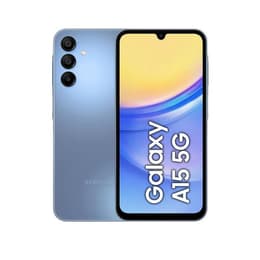
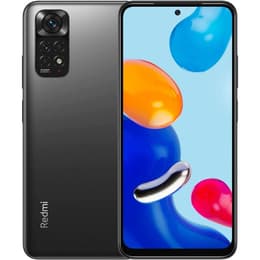
Galaxy A15 5G Vs Xiaomi Redmi Note 11
- 1-year minimum warranty
- Free delivery on all orders
- Free 30-day returns
Differences at a glance
The Samsung Galaxy A15 5G (released in December 2023) and the Xiaomi Redmi Note 11 (released in January 2022) are both smartphones designed for everyday use. While the Redmi Note 11 arrived earlier, the Galaxy A15 5G offers more recent hardware and software support. Both devices run on the Android operating system, but they differ in their core processing capabilities and long-term software commitment, which can influence user experience and device longevity.
Available Models
Colour
Storage (GB)
Scores
Durability
The expected lifespan of a smartphone is significantly influenced by its release date and the manufacturer's commitment to software updates. The Galaxy A15 5G, being a newer device, benefits from a longer support window.
- Release Timeline: The Samsung Galaxy A15 5G was released in December 2023, making it a more recent model compared to the Xiaomi Redmi Note 11, which launched in January 2022. This difference in release dates directly impacts their software support cycles.
- OS Support Duration: Samsung has committed to providing four generations of Android OS upgrades and five years of security updates for the Galaxy A15 5G. This means it will receive updates until Android 18 and security patches until 2028. The Redmi Note 11, launched with Android 11, typically receives fewer major OS updates and security patches from Xiaomi, generally around 2-3 OS updates and 3-4 years of security updates.
- Repairability: Both devices feature plastic frames and backs, which can offer some resilience to minor impacts. The Galaxy A15 5G's construction includes a plastic back that can appear like glass, offering a balance of aesthetics and durability. The Redmi Note 11 has a glass front with Gorilla Glass 3 protection, and a plastic back. User reports suggest the Galaxy A15 5G has a repairability score of 8.5/10, indicating a relatively straightforward repair process for common components.
Year of Release
2023
2022
Compatible with latest Update
Yes
No
OS
Android
Android
Foldable
No
No
Performance
The performance of these smartphones is driven by their internal components, affecting how smoothly applications run and how efficiently they handle daily tasks.
- Processor Capabilities: The Samsung Galaxy A15 5G is equipped with a MediaTek Dimensity 6100+ processor, which is a 6nm chipset designed for mid-range 5G devices. This processor is capable of handling everyday tasks like web browsing and social media apps smoothly, and can manage casual games. The Xiaomi Redmi Note 11 features a Qualcomm Snapdragon 680 4G processor, also built on a 6nm process. This processor provides reliable performance for daily use and multitasking.
- System Responsiveness and Multitasking: The Galaxy A15 5G, with its newer processor, generally offers a more responsive experience, handling demanding apps and multitasking with greater ease. Users of the Redmi Note 11 report that it handles everyday tasks and multitasking effectively.
- Storage and RAM: Both devices offer various RAM and storage configurations, with the Galaxy A15 5G available with up to 8GB of RAM and 256GB of internal storage, expandable via microSD. The Redmi Note 11 comes with up to 6GB of RAM and 128GB of storage, also expandable. The Galaxy A15 5G's storage is UFS 2.2, which contributes to faster loading speeds.
Screen quality
Both smartphones feature vibrant displays, but there are differences in their technology and brightness that impact the viewing experience.
- Display Technology and Clarity: The Samsung Galaxy A15 5G features a 6.5-inch Super AMOLED display with a 1080x2340 pixel resolution, offering deep blacks and vibrant colors. The Xiaomi Redmi Note 11 has a 6.43-inch AMOLED DotDisplay with a 1080x2400 pixel resolution, also providing rich color representation.
- Brightness Levels: The Galaxy A15 5G's display can reach 800 nits in high brightness mode (HBM), ensuring good visibility outdoors. The Redmi Note 11 offers a peak brightness of 1000 nits, with a typical HBM of 700 nits, which also contributes to clear viewing in bright conditions.
- Refresh Rate: Both devices feature a 90Hz refresh rate, providing a smoother scrolling experience and more fluid animations compared to standard 60Hz displays.
Resolution
1080 x 2340
1080 x 2400
Screen type
Super AMOLED
AMOLED
Audiovisual
The camera systems on both phones are designed to capture everyday moments, with some distinctions in their capabilities and features.
- Rear Camera System: The Samsung Galaxy A15 5G features a triple camera setup with a 50MP main wide-angle lens, a 5MP ultrawide lens, and a 2MP macro lens. The 50MP main camera uses pixel binning to produce 12.5MP images with sharp details. The Xiaomi Redmi Note 11 also has a quad-camera system, including a 50MP main wide-angle lens, an 8MP ultrawide lens, a 2MP macro lens, and a 2MP depth sensor.
- Photography Performance: The Galaxy A15 5G's primary camera produces good images with slightly oversaturated colors, and it lacks optical image stabilization (OIS). The Redmi Note 11's 50MP main sensor also aims for detailed shots.
- Front Camera and Video: Both phones are equipped with a 13MP front-facing camera for selfies. Both devices can record video at 1080p resolution at 30 frames per second.
Main camera
50 megapixels
50 megapixels
Front camera
13 megapixels
13 megapixels
Miscellaneous
Beyond core specifications, several practical elements contribute to the overall user experience and daily convenience of these smartphones.
- Connectivity: The Samsung Galaxy A15 5G supports 5G connectivity, offering faster mobile data speeds. It also includes Wi-Fi 802.11 a/b/g/n/ac, Bluetooth 5.3, and NFC for mobile payments. The Xiaomi Redmi Note 11 supports 4G connectivity, Wi-Fi 802.11 a/b/g/n/ac, and Bluetooth 5.0.
- Ports and Sensors: Both devices feature a USB-C port for charging and data transfer, and a 3.5mm headphone jack. They both include a side-mounted fingerprint sensor for secure unlocking. The Redmi Note 11 also has an IR blaster, which can be used to control home appliances.
- Build and Handling: The Galaxy A15 5G measures 160.1 x 76.8 x 8.4 mm and weighs 200g. The Redmi Note 11 is slightly lighter and more compact at 159.87 x 73.87 x 8.09 mm and 179g. Both have a plastic back and frame.
Weight
200 g
179 g
Screen size (in)
6.5
6.43
Network
5G
4G
SIM card
Dual Physical SIM
Dual Physical SIM
Carrier compatibility
Unlocked
Unlocked
What the community thinks
The Samsung Galaxy A15 5G and Xiaomi Redmi Note 11 cater to users seeking reliable smartphone functionality, though they offer different strengths. Users often praise the Galaxy A15 5G for its strong software support commitment, with Samsung promising four OS upgrades and five years of security updates, which is a significant advantage for long-term use. Its Super AMOLED display is also frequently highlighted for its vibrant colors and clarity. Some users, however, note that while its performance is competent for daily tasks, it may not be ideal for very demanding applications or intensive gaming.
The Xiaomi Redmi Note 11 is often appreciated for its bright AMOLED display and fast charging capabilities. Its inclusion of an IR blaster is a practical feature that many users find convenient for controlling home electronics. However, a common consideration for the Redmi Note 11 is its shorter software update cycle compared to more recent devices, which could impact its long-term usability and security.
Users prioritizing extended software longevity and a more recent hardware platform may find the Samsung Galaxy A15 5G better suited to their needs. Its 5G connectivity also offers an advantage for those in areas with compatible networks. Conversely, users who value a slightly lighter device, faster charging out of the box, and features like an IR blaster might lean towards the Xiaomi Redmi Note 11. Both devices offer a solid foundation for everyday smartphone use, and choosing between them often comes down to these specific priorities. For those considering either model, exploring quality-assured refurbished options can be an eco-friendly alternative to extend the life cycle of these devices.