
Galaxy S23 Vs iPhone 16

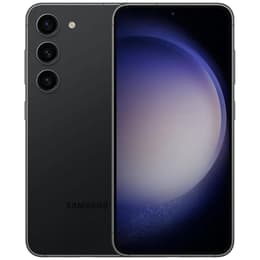
Galaxy S23
Galaxy S23
Starting at

Refurbished price:249.00

Versus €959.00 new

See options
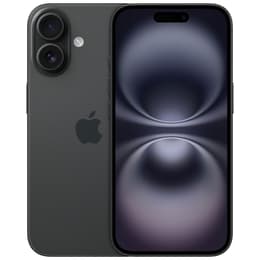
iPhone 16
iPhone 16
Starting at

Refurbished price:549.00

Versus €879.00 new

See options

Ratings

The Samsung Galaxy S23, released in February 2023, and the Apple iPhone 16, launched in September 2024, represent distinct approaches to flagship smartphone design and functionality. While both offer premium mobile experiences, they cater to different user preferences through their respective operating systems and hardware philosophies. Key differentiators include their display refresh rates, camera system configurations, and long-term software support strategies.

Scores

Durability

The expected lifespan and ongoing support for a smartphone are important considerations for many users. Both the Galaxy S23 and iPhone 16 offer robust build quality and commitment to software updates, though their timelines differ.

  • Release and Software Support: The Galaxy S23, released in February 2023, typically receives 4-5 years of major Android operating system updates and 5 years of security updates from Samsung. The iPhone 16, launched in September 2024, benefits from Apple's longer software support, generally extending to 5-7 years of iOS updates, providing a longer period of access to new features and security patches.
  • Repairability: The iPhone 16 has an improved repairability score of 7 out of 10 from iFixit, a significant increase over its predecessor, due to design changes that make battery replacements and internal access easier. The Galaxy S23 also demonstrates good repairability, with the S23 Ultra receiving a 9 out of 10 from PBKReviews and the base S23 scoring 8.2 points in French environmental legislation guidelines, partly due to features like battery pull tabs.
  • Physical Durability: Both devices feature strong materials designed to withstand daily use. The Galaxy S23 incorporates Gorilla Glass Victus 2 for screen protection and an Armor Aluminum frame. The iPhone 16 utilizes a Ceramic Shield front cover and a color-infused glass back with an aluminum design. Both models are rated IP68 for water and dust resistance, offering protection against immersion.

Year of Release

2023

2024

Compatible with latest Update

Yes

Yes

Foldable

No

No

Performance

Both the Galaxy S23 and iPhone 16 deliver strong performance for everyday tasks and demanding applications, though they achieve this through different hardware architectures.

  • Processing Power: The Galaxy S23 is equipped with a processor optimized for its ecosystem, enabling smooth operation across various applications and efficient handling of graphics-intensive tasks. The iPhone 16 features a newer generation processor designed to provide responsive performance, ensuring applications launch quickly and multitasking remains fluid, with ample headroom for future software advancements.
  • Multitasking and Storage: The Galaxy S23 typically comes with 8GB of RAM, facilitating efficient multitasking and app switching. The iPhone 16 also offers sufficient RAM to manage multiple applications simultaneously without noticeable slowdowns. Both devices are available with various storage options, including 128GB, 256GB, and 512GB, providing ample space for apps, photos, and media.
  • Battery Behavior: The Galaxy S23, with its 3900 mAh battery, generally provides a full day of use for most users, with some reporting over 10 hours of screen-on time under moderate conditions. The iPhone 16 features a larger battery than its predecessor, contributing to improved endurance, with reported figures of up to 22 hours for offline video playback and around 16 hours of mixed usage in some tests, often lasting a full day or more for typical use.

Memory (GB)

8 GB

8 GB

Screen quality

The visual experience on both the Galaxy S23 and iPhone 16 is characterized by high-quality displays, each with specific attributes that enhance viewing.

  • Display Technology and Clarity: The Galaxy S23 features a Dynamic AMOLED 2X display, known for its vibrant colors, deep blacks, and excellent contrast. The iPhone 16 utilizes a Super Retina XDR OLED display, which also delivers rich colors and high contrast. Both offer sharp visuals suitable for detailed content.
  • Brightness and Outdoor Visibility: The Galaxy S23 can reach a peak brightness of 1750 nits, ensuring good visibility even in bright outdoor conditions. The iPhone 16 offers a peak outdoor brightness of 2000 nits, providing strong readability under direct sunlight.
  • Refresh Rate and Smoothness: A notable difference lies in the refresh rate. The Galaxy S23 features an adaptive 120Hz refresh rate, which allows for smoother scrolling and more fluid animations. The iPhone 16 maintains a 60Hz refresh rate, which is standard but does not offer the same level of visual fluidity as a higher refresh rate display.

Resolution

1080 x 2340

1179 x 2556

Screen type

Dynamic AMOLED 2X

Super Retina XDR OLED

Audiovisual

Both smartphones offer advanced camera systems capable of capturing high-quality photos and videos, though their configurations and specific strengths vary.

  • Rear Camera Systems: The Galaxy S23 features a versatile triple-camera setup, including a 50-megapixel main sensor, a 12-megapixel ultrawide lens, and a 10-megapixel telephoto lens with 3x optical zoom, providing flexibility for various shooting scenarios. The iPhone 16 comes with a dual-camera system, featuring a 48-megapixel primary 'Fusion' camera that offers 2x optical-quality zoom and a 12-megapixel ultrawide lens with autofocus, enabling macro photography.
  • Photography Performance: The Galaxy S23 excels in capturing detailed images with good dynamic range and strong low-light performance. The iPhone 16 delivers natural-looking colors and sharp images, with improvements in low-light photography and enhanced portrait capabilities. Its ultrawide lens also supports detailed macro shots.
  • Video Capabilities and Features: Both devices record high-quality video. The Galaxy S23 supports up to 8K video recording. The iPhone 16 offers 4K video recording at 60 frames per second and introduces a new Camera Control button for quick access to camera functions and settings.

Main camera

50 megapixels

48 megapixels

Front camera

12 megapixels

12 megapixels

Miscellaneous

Beyond core performance, several practical elements contribute to the overall user experience of these devices.

  • Connectivity and Ports: Both the Galaxy S23 and iPhone 16 support 5G cellular networks for fast mobile data. The Galaxy S23 includes Wi-Fi 6E and Bluetooth 5.3, while the iPhone 16 features Wi-Fi 7 and Bluetooth 5.3, offering advanced wireless connectivity. Both devices have adopted the USB-C port for charging and data transfer.
  • Biometric Security and Interaction: The Galaxy S23 utilizes an under-display fingerprint sensor for secure unlocking. The iPhone 16 relies on Face ID for facial recognition security. The iPhone 16 also introduces an Action Button, which can be customized for quick access to various functions.
  • Physical Design and Materials: The Galaxy S23 measures 146.3 x 70.9 x 7.6 mm and weighs 168 grams, featuring a design with Gorilla Glass Victus 2 and an Armor Aluminum frame. The iPhone 16 has dimensions of 147.6 x 71.6 x 7.8 mm and weighs 170 grams, with a Ceramic Shield front, color-infused glass back, and an aluminum frame. Both offer a comfortable in-hand feel due to their similar compact sizes.

Weight

167 g

170 g

Screen size (in)

6.1

6.1

Network

5G

5G

SIM card

Physical SIM + eSIM

eSIM

Carrier compatibility

Unlocked

Unlocked

The Samsung Galaxy S23 and iPhone 16 each present compelling options for smartphone users, with distinct strengths that appeal to different priorities. User feedback for the Galaxy S23 often highlights its vibrant display, versatile camera system with optical zoom, and strong overall performance within the Android ecosystem. Some users appreciate its 120Hz refresh rate for a smoother visual experience. Criticisms sometimes point to battery life being less extensive than larger models in its series, depending on usage patterns.

For the iPhone 16, common praise centers on its extended software longevity, significantly improved repairability, and the enhanced camera capabilities, including macro photography and the new Action Button. Users also value the consistent performance and integration within the Apple ecosystem. A frequent point of discussion for the base model iPhone 16 is its 60Hz display refresh rate, which some users might find less fluid compared to devices with higher refresh rates.

Users prioritizing a highly customizable Android experience, a 120Hz display for fluid visuals, and a comprehensive camera system with dedicated telephoto zoom may find the Galaxy S23 well-suited to their needs. Conversely, users who value long-term software support, the intuitive iOS ecosystem, enhanced repairability, and specific camera advancements like macro capabilities and the programmable Action Button may lean toward the iPhone 16. Both devices are available as quality-assured refurbished options, offering an eco-friendly alternative for consumers.


See all articles

Our recent comparisons






