

Galaxy Z Flip6 Vs Xiaomi Redmi Note 11

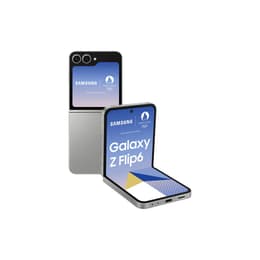
Galaxy Z Flip6
Galaxy Z Flip6
Starting at

Refurbished price:415.00

Versus €1,199.99 new

See options
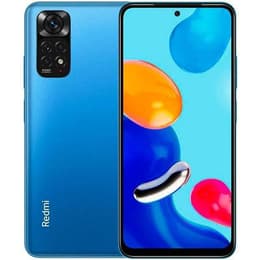
Xiaomi Redmi Note 11
Starting at

Refurbished price:108.00

Versus €249.99 new

See options

Ratings

The Samsung Galaxy Z Flip6 and the Xiaomi Redmi Note 11 are two distinct smartphones, released in different years and targeting different user experiences. The Galaxy Z Flip6, launched in July 2024, is a foldable device that emphasizes a compact form factor when closed, alongside advanced performance and camera capabilities. The Redmi Note 11, released in January 2022, is a more traditional slab-style smartphone focusing on a balanced feature set for everyday use.

Scores

Durability

The expected practical lifespan and software support differ significantly between these two devices, primarily due to their release timelines and manufacturer commitments.

  • Release Timeline: The Galaxy Z Flip6 was released in July 2024, making it a much newer device compared to the Redmi Note 11, which launched in January 2022. This age difference inherently impacts their remaining support windows.
  • Software Longevity: Samsung has committed to providing seven years of Android OS upgrades and seven years of security updates for the Galaxy Z Flip6, extending its software support until approximately 2031. The Redmi Note 11, running on Android 11 with MIUI 13 at launch, has received updates to Xiaomi HyperOS based on Android 13, but its update policy typically offers a shorter duration of major Android and security updates compared to the Flip6.
  • Physical Durability: The Galaxy Z Flip6 features an improved hinge design and an IP48 rating for water and dust resistance, along with more durable glass layers for its main display. The Redmi Note 11 has an IP53 rating for dust and splash protection and uses Gorilla Glass 3 for its display, with a plastic body and frame.

Year of Release

2024

2022

Compatible with latest Update

Yes

No

OS

Android

Android

Foldable

Yes

No

Performance

Performance capabilities vary considerably between the two devices, reflecting their different hardware generations and design philosophies.

  • Processing Power: The Galaxy Z Flip6 is equipped with a current-generation processor, designed to handle demanding applications, intensive multitasking, and advanced AI features smoothly. Users report that it breezes through tasks and offers smooth gameplay even at high settings. The Redmi Note 11 features a processor suitable for everyday tasks and moderate usage. It provides reliable performance for general browsing, social media, and light gaming.
  • Multitasking and Responsiveness: With 12GB of RAM as standard, the Galaxy Z Flip6 is well-suited for extensive multitasking and running numerous applications simultaneously without slowdowns. The Redmi Note 11 typically comes with 4GB or 6GB of RAM, which is sufficient for common daily activities but may show limitations with a high number of open applications or more resource-intensive tasks.
  • Storage Speed: The Galaxy Z Flip6 utilizes UFS 4.0 storage, contributing to faster app loading and data transfer speeds. The Redmi Note 11 uses UFS 2.2 storage, which offers good speeds for its category, and also supports expandable storage via a microSD card up to 1TB.

Memory (GB)

12 GB

4 GB

Screen quality

The display experience on these two smartphones presents notable differences in technology, size, and overall visual quality.

  • Display Technology and Clarity: The Galaxy Z Flip6 features a 6.7-inch Dynamic AMOLED 2X main display with a resolution of 2640 x 1080 pixels, offering vibrant colors and deep blacks. It also includes a 3.4-inch Super AMOLED cover screen for quick interactions when folded. The Redmi Note 11 has a 6.43-inch AMOLED DotDisplay with a 2400 x 1080 pixel resolution, providing clear visuals and good contrast.
  • Brightness and Refresh Rate: The Flip6's main display boasts a 120Hz refresh rate for smooth scrolling and animations, along with a peak brightness of 2,600 nits, ensuring excellent visibility even in bright outdoor conditions. The Redmi Note 11 offers a 90Hz refresh rate for a smoother visual experience than standard 60Hz panels, and a peak brightness of 1,000 nits, which is suitable for most outdoor scenarios.
  • Form Factor: The Galaxy Z Flip6's foldable design allows for a large screen experience that can be folded into a compact form, enhancing portability. The Redmi Note 11 provides a traditional, flat screen experience.

Resolution

1080 x 2640

1080 x 2400

Screen type

Foldable Dynamic LTPO AMOLED 2X

AMOLED

Audiovisual

Both devices offer capable camera systems, though they are designed for different levels of photographic versatility and performance.

  • Rear Camera System: The Galaxy Z Flip6 features a dual-camera setup on the rear, consisting of a 50MP wide-angle main sensor with optical image stabilization (OIS) and a 12MP ultra-wide-angle lens. This configuration is designed for capturing detailed images and offers improved low-light performance. The Redmi Note 11 comes with a quad-camera system, including a 50MP wide-angle main camera, an 8MP ultra-wide camera, a 2MP macro lens, and a 2MP depth sensor.
  • Photography Performance: The Flip6's camera system is noted for its ability to capture high-quality images with good detail and color reproduction, particularly benefiting from its larger main sensor and dedicated image processing. The Redmi Note 11's main sensor performs well in daylight conditions, and its ultra-wide lens is effective in good lighting. Low-light performance on the Redmi Note 11 is considered decent for its category, with a Night mode available.
  • Video Recording and Front Camera: The Galaxy Z Flip6 supports high-resolution video recording and features a 10MP front-facing camera for selfies and video calls. The Redmi Note 11 can record videos at 1080p at 30 frames per second and has a 13MP front camera, which provides clear selfies in good lighting.

Main camera

50 megapixels

50 megapixels

Front camera

10 megapixels

13 megapixels

Miscellaneous

Beyond core specifications, several practical elements contribute to the overall user experience of these devices.

  • Connectivity and Ports: The Galaxy Z Flip6 supports 5G connectivity, Wi-Fi 6E, and Bluetooth 5.3, offering fast wireless speeds and modern peripheral connections. It features a USB 3.2 Type-C port. The Redmi Note 11 supports 4G LTE, Wi-Fi 802.11 a/b/g/n/ac, and Bluetooth 5.0. It includes a USB Type-C port, a 3.5mm headphone jack, and an infrared (IR) blaster.
  • Biometric Security: Both devices incorporate reliable biometric authentication methods. The Galaxy Z Flip6 includes face recognition and a side-mounted fingerprint sensor. The Redmi Note 11 also features a side-mounted fingerprint sensor and AI Face Unlock.
  • Design and Handling: The Galaxy Z Flip6's foldable design allows it to be compact when closed (85.1 x 71.9 x 14.9 mm) and expands to a standard smartphone size when unfolded (165.1 x 71.9 x 6.9 mm), weighing 187g. The Redmi Note 11 is a traditional slab phone with dimensions of 159.87 x 73.87 x 8.09 mm and a weight of 179g, offering a comfortable grip with its matte plastic finish.

Weight

187 g

179 g

Screen size (in)

6.7

6.43

Network

5G

4G

SIM card

Physical SIM + eSIM

Dual Physical SIM

Carrier compatibility

Unlocked

Unlocked

User feedback for the Samsung Galaxy Z Flip6 often highlights its refined foldable design, robust performance, and the extended software support as key advantages. Users appreciate the compact form factor when folded and the improved camera capabilities. Some common observations include the cover screen's functionality being somewhat limited out of the box, and while battery life is improved over predecessors, it may still require careful management for very heavy users.

For the Xiaomi Redmi Note 11, users frequently praise its vibrant AMOLED display with a 90Hz refresh rate, its long-lasting battery, and its overall sturdy build quality for its category. The inclusion of a 3.5mm headphone jack and expandable storage are also often cited as positive aspects. Criticisms sometimes point to its performance being adequate for daily tasks but not suited for demanding applications, and its camera performance in low-light conditions being average.

Users prioritizing a cutting-edge, compact, and long-supported device with high performance and advanced camera features will find the Galaxy Z Flip6 well-suited to their needs. Its foldable form factor offers a unique blend of portability and screen real estate. Conversely, users seeking a reliable, traditional smartphone experience with a good display, excellent battery life, and essential features for everyday use may lean toward the Redmi Note 11. It provides a solid foundation for general smartphone usage. Both devices, whether new or as quality-assured refurbished options, offer distinct advantages for different user profiles.


See all articles

Our recent comparisons