

Galaxy S23 FE Vs Google Pixel 9

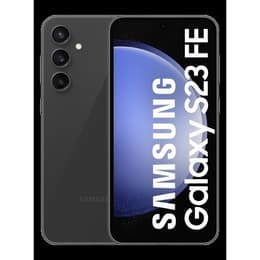
Galaxy S23 FE
Galaxy S23 FE
Starting at

Refurbished price:207.00

Versus €708.98 new

See options
Google Pixel 9
Google Pixel 9
Starting at

Refurbished price:386.00

Versus €1,066.71 new

See options

Ratings

The Samsung Galaxy S23 FE, released in October 2023, and the Google Pixel 9, launched in August 2024, are both Android smartphones offering distinct experiences within their respective ecosystems. While the Galaxy S23 FE emphasizes a balanced feature set with a versatile camera system, the Pixel 9 focuses on advanced computational photography and long-term software commitment. Both devices run on the Android operating system, but they offer different interpretations through Samsung's One UI and Google's more stock Android experience.

Scores

Durability

When considering the long-term usability of these devices, their release timelines and software support policies are key factors.

  • Software Longevity: The Google Pixel 9 offers a significant advantage with a commitment to seven years of OS and security updates, ensuring it remains current and secure for an extended period. In contrast, the Samsung Galaxy S23 FE is supported with four years of major OS updates and five years of security updates.
  • Physical Durability: Both phones feature robust builds with IP68 ratings for dust and water resistance. The Pixel 9 incorporates Gorilla Glass Victus 2 for display protection, while the Galaxy S23 FE uses Gorilla Glass 5 on both its front and back panels.
  • Repairability: The Galaxy S23 FE has demonstrated a relatively high repairability score, partly due to design choices like battery pull tabs, which simplify component replacement. Information regarding the Pixel 9's specific repairability score is less detailed, though Google's extended support commitment suggests a design that facilitates longevity.

Year of Release

2023

2024

Compatible with latest Update

Yes

Yes

OS

Android

Android

Foldable

No

No

Performance

The performance of these smartphones is driven by their respective internal components, impacting how smoothly they handle daily tasks and demanding applications.

  • Processing Power: The Google Pixel 9 is equipped with Google's Tensor G4 processor, designed to optimize AI-driven features and provide a responsive user experience. The Samsung Galaxy S23 FE utilizes either the Snapdragon 8 Gen 1 or Exynos 2200 processor, depending on the region, which delivers strong performance for general use and gaming.
  • Multitasking and Responsiveness: With 12GB of RAM, the Pixel 9 offers ample memory for seamless multitasking and keeping multiple applications open without slowdowns. The Galaxy S23 FE comes with 8GB of RAM, which is sufficient for most users' multitasking needs.
  • Battery Behavior: The Pixel 9 features a 4700 mAh battery, with Google claiming over 24 hours of typical use and up to 100 hours with extreme battery saver mode. The Galaxy S23 FE has a 4500 mAh battery, generally providing a full day of use, though some users have noted faster drainage with intensive tasks or specific regional processor variants.

Memory (GB)

8 GB

12 GB

Screen quality

Both devices offer vibrant displays, but they differ in their underlying technology and visual characteristics.

  • Display Technology and Clarity: The Google Pixel 9 features a 6.3-inch Actua OLED display, providing deep blacks and vibrant colors with a resolution of 2424x1080 pixels. The Samsung Galaxy S23 FE sports a 6.4-inch Dynamic AMOLED 2x display with a 2340x1080 pixel resolution, also known for its sharp visuals and rich color reproduction.
  • Brightness and Refresh Rate: The Pixel 9 boasts a higher peak brightness of up to 2700 nits, making it highly visible even in bright outdoor conditions, and supports a dynamic refresh rate from 60Hz to 120Hz for smooth scrolling. The Galaxy S23 FE offers a peak brightness of 1450 nits and a consistent 120Hz refresh rate, ensuring a fluid visual experience.
  • Viewing Experience: The slightly larger screen of the Galaxy S23 FE might offer a marginally more expansive viewing area, while the Pixel 9's higher peak brightness could be beneficial for users who frequently use their phone outdoors.

Resolution

1080 x 2340

1080 x 2424

Screen type

Dynamic AMOLED 2X

OLED

Audiovisual

The camera systems on both phones are designed to capture high-quality images and videos, each with its own strengths and approach to photography.

  • Rear Camera System: The Google Pixel 9 features a dual-camera setup with a 50MP main sensor and a 48MP ultrawide lens that includes macro focus capabilities. The Samsung Galaxy S23 FE offers a triple-camera system, comprising a 50MP main camera, a 12MP ultrawide, and an 8MP telephoto lens with 3x optical zoom.
  • Photography Performance: The Pixel 9 is renowned for its computational photography, excelling in features like Night Sight, Astrophotography, and AI-enhanced processing for natural-looking photos, even without a dedicated telephoto lens. The Galaxy S23 FE's 3x optical zoom provides clear zoomed-in shots, and its main camera performs well in good lighting, though some users note a tendency towards oversaturation and less consistent performance in low light or with fast-moving subjects.
  • Video and Audio: Both devices support 4K video recording, with the Galaxy S23 FE capable of up to 8K video at 24fps. The Pixel 9 includes features like Audio Magic Eraser and enhanced video stabilization.

Main camera

50 megapixels

50 megapixels

Front camera

10 megapixels

10.5 megapixels

Miscellaneous

Beyond core features, several practical elements contribute to the overall user experience of these smartphones.

  • Connectivity and Ports: The Google Pixel 9 supports Wi-Fi 7 and Bluetooth 5.3, offering advanced wireless connectivity. The Samsung Galaxy S23 FE features Wi-Fi 6E and Bluetooth, providing fast and reliable connections. Both devices utilize a USB-C port for charging and data transfer.
  • Biometrics and Sensors: Both phones include in-display fingerprint sensors for secure unlocking. The Pixel 9 integrates Google's Titan M2 security co-processor for enhanced security.
  • Design and Handling: The Pixel 9 features a frame made from 100% recycled aluminum, contributing to its sustainability profile. The Galaxy S23 FE has an aluminum frame and Gorilla Glass 5 back, offering a premium feel, though some users have found its sharp edges less comfortable to hold without a case.

Weight

209 g

198 g

Screen size (in)

6.4

6.3

Network

5G

5G

SIM card

Physical SIM

Physical SIM + eSIM

Carrier compatibility

Unlocked

Unlocked

The Samsung Galaxy S23 FE and Google Pixel 9 each present a compelling package, catering to different user priorities. The Galaxy S23 FE is often praised for its versatile camera system, particularly its dedicated optical telephoto lens, and its vibrant display. Users appreciate its solid build quality and the inclusion of features like reverse wireless charging. However, some criticisms include inconsistent battery performance, especially with certain processor variants, and a tendency for camera oversaturation.

The Google Pixel 9 receives acclaim for its exceptional computational photography capabilities, delivering consistent and natural-looking images, particularly in challenging conditions. Its long-term software support commitment is a significant advantage, ensuring extended usability and security. While it lacks a dedicated optical telephoto lens, its digital zoom and AI features compensate effectively for many users. Some users might find the design of the Pixel 9 to be more boxy than previous models, though it still feels premium.

Users prioritizing a dedicated optical zoom lens and a slightly larger display may find the Samsung Galaxy S23 FE well-suited to their needs. Conversely, those who value cutting-edge computational photography, extensive software support, and a focus on AI-driven features will likely lean towards the Google Pixel 9. Both devices offer a quality-assured refurbished option, providing an eco-friendly alternative for consumers seeking to make informed and sustainable choices.


See all articles

Our recent comparisons