
Compare models

Galaxy S25 Edge Vs Galaxy Z Fold6

  • 1-year minimum warranty
  • Free delivery on all orders
  • Free 30-day returns
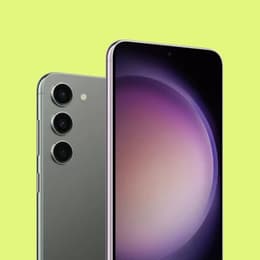
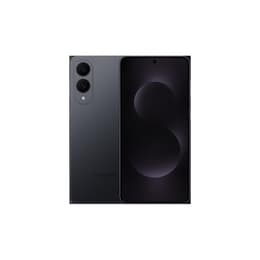
Galaxy S25 Edge
Starting at

Refurbished price:€475.00

Versus €1,275.21 new

See options
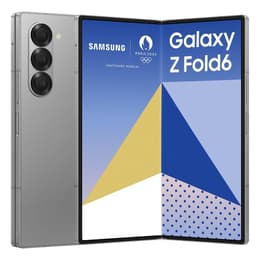
Galaxy Z Fold6
Starting at

Refurbished price:€608.00

Versus €1,999.99 new

See options

Differences at a glance

The Samsung Galaxy S25 Edge (2025) and the Samsung Galaxy Z Fold6 (2024) represent two distinct visions for mobile device engineering, contrasting an ultra-slim traditional smartphone design with an innovative folding dual-screen format. While both devices run on the Android operating system with custom user interfaces, they cater to entirely different structural preferences.

The primary differentiators between the two models lie in their physical form factors, screen configurations, and hardware focus, offering users a choice between maximum pocketability and expansive multitasking space.

Available Models

Colour

Storage

Scores

Durability

When evaluating the longevity and construction of these devices, both models offer robust build qualities paired with extended software support timelines, though their physical formats introduce different practical considerations.

  • Software support duration: Both smartphones receive multi-year operating system upgrades and security patches, with the Galaxy S25 Edge benefiting from a slightly later release window that extends its overall update lifecycle.
  • Repairability and physical resilience: The Galaxy S25 Edge relies on a rigid, exceptionally thin titanium frame and reinforced glass construction, whereas the Galaxy Z Fold6 incorporates a complex hinge mechanism and a flexible inner display requiring careful handling over years of daily use.
  • Expected practical lifespan: Both units maintain high processing longevity for daily routines, though traditional slab phones like the S25 Edge typically face fewer mechanical wear points over extended multi-year ownership.

Year of Release

2025

2024

Performance

Underneath their respective shells, both smartphones manage demanding multitasking, fluid app transitions, and intensive software tasks smoothly through high-capacity random access memory and efficient internal processors.

  • Storage and system responsiveness: Both devices are widely available in generous storage configurations starting at 256GB, pairing with ample RAM to ensure apps load instantly and background processes run without interruption.
  • Battery behavior in typical use: The ultra-slim profile of the Galaxy S25 Edge houses a smaller battery capacity that requires more frequent recharging during intensive use days, while the Galaxy Z Fold6 accommodates a larger dual-cell power reservoir to support its expansive screens.
  • Everyday execution: Navigating web pages, streaming media, and running multiple productivity applications simultaneously happens with equal fluidity on both models, handling heavy workloads without noticeable system stutter.

Screen quality

Display technology forms the core experience of both handsets, offering high-resolution viewing experiences tailored to vastly different physical dimensions and daily interaction styles.

  • Display format and versatility: The Galaxy S25 Edge features a single, expansive 6.7-inch AMOLED screen with crisp clarity and deep contrast, whereas the Galaxy Z Fold6 provides a smaller outer cover screen alongside a massive 7.6-inch foldable inner canvas that unfolds tablet-style.
  • Brightness and outdoor visibility: Both models deliver high peak brightness levels that maintain sharp text legibility and vibrant image reproduction under direct sunlight.
  • Refresh rate and smoothness: Both displays support high refresh rates up to 120Hz, ensuring buttery-smooth scrolling, responsive touch tracking, and fluid animation rendering across all applications.

Audiovisual

Optics and multimedia performance differ noticeably between the two choices, reflecting the physical design constraints and hardware priorities of each chassis style.

  • Camera system capabilities: The Galaxy S25 Edge emphasizes high-resolution main sensor photography capturing immense structural detail, while the Galaxy Z Fold6 employs a versatile triple-lens array incorporating dedicated telephoto zoom capabilities.
  • Low-light and video performance: Both units process nighttime photography and stable high-definition video recording effectively, utilizing advanced software image tuning to reduce noise and balance high-contrast lighting environments.
  • Media and audio output: Stereo speakers on both devices produce clear, balanced sound for casual video playback and calls, though the larger unfolded frame of the Z Fold6 creates a more immersive, wider soundstage for media consumption.

Miscellaneous

Practical daily utility is shaped by physical dimensions, connection standards, and sensor layouts that dictate how comfortably each device integrates into travel and work routines.

  • Connectivity and ports: Both smartphones support modern 5G cellular networks, high-speed Wi-Fi standards, and Bluetooth pairing, utilizing standard reversible USB-C ports for charging and data transfer.
  • Handling and ergonomics: The Galaxy S25 Edge prioritizes lightweight portability with a remarkably thin profile that slides easily into pockets, while the Galaxy Z Fold6 offers a heavier, thicker folded footprint that opens up into a larger workstation.
  • Security and sensors: Both incorporate responsive biometric authentication options, including facial recognition and side-mounted fingerprint scanners integrated into the power buttons for quick unlocking.

Screen size (in)

6.7

7.6

Network

5G

5G

SIM card

Physical SIM + eSIM

Dual Physical SIM + eSIM

Carrier compatibility

Unlocked

Unlocked

What the community thinks

User feedback from online communities highlights distinct experiences with both form factors. Owners of the Galaxy S25 Edge frequently praise its featherlight weight, comfortable daily handling, and sleek profile that avoids pocket bulk. At the same time, some users note that its slim battery size requires mindful power management during heavy travel days. Conversely, Galaxy Z Fold6 users heavily value the expansive workspace provided by the inner screen for multitasking and document editing, though common discussions point to its heavier weight and visible crease as notable trade-offs.

When deciding between these two options, user priorities dictate the ideal match. Users prioritizing a lightweight, ultra-thin traditional phone design with straightforward everyday portability will find the Galaxy S25 Edge well-suited to their needs. Meanwhile, users prioritizing a tablet-sized folding display for enhanced productivity and immersive media viewing may lean toward the Galaxy Z Fold6. For those considering an eco-friendly, quality-assured alternative, exploring a refurbished option through Back Market can provide a sustainable path toward acquiring either device.