

Galaxy S21 5G Vs Galaxy S23+

Galaxy S21 5G
Galaxy S21 5G
Starting at

Refurbished price:174.00

Versus €1,026.00 new

See options
Galaxy S23+
Galaxy S23+
Starting at

Refurbished price:295.00

Versus €1,019.00 new

See options

Ratings

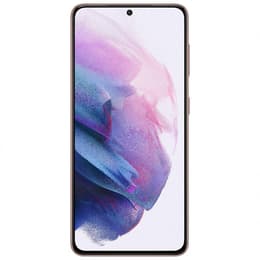
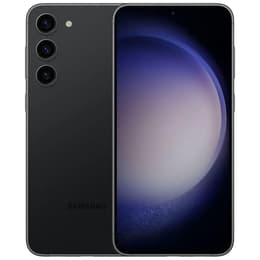
The Samsung Galaxy S21 5G, released in January 2021, and the Samsung Galaxy S23 Plus, launched in February 2023, are both premium Android smartphones from Samsung's flagship S series. While they share the core Android operating system and Samsung's One UI interface, the S23 Plus introduces advancements in processing power, camera capabilities, and overall device longevity due to its more recent release.

Scores

Durability

The expected practical lifespan of a smartphone is significantly influenced by its release date and the manufacturer's software support policy. These two models, separated by two years, offer different outlooks on long-term usability.

  • Software Updates: The Galaxy S21 5G, having launched with Android 11, has likely concluded its major operating system updates, typically receiving four generations of Android updates. The Galaxy S23 Plus, released with Android 13, is expected to receive major OS updates until Android 17 and security updates until February 2028, offering a longer period of current software support.
  • Build Materials: The Galaxy S21 5G features a polycarbonate back, which can be more resistant to shattering than glass, paired with Gorilla Glass Victus on the front. The Galaxy S23 Plus upgrades to Gorilla Glass Victus 2 on both the front and back, along with an Armor Aluminum frame, providing enhanced scratch and drop protection.
  • Repairability: The Galaxy S21 5G has been noted for being relatively straightforward to disassemble, with some modular components, contributing to a repairability score of around 7.5 out of 10 by some assessments. However, the battery often requires strong adhesive removal. Information on the S23 Plus's repairability suggests a similar approach with glued components, making battery replacement a common challenge for both.

Year of Release

2021

2023

Compatible with latest Update

Yes

Yes

OS

Android

Android

Foldable

No

No

Performance

Performance differences between the two devices are notable, primarily due to the generational leap in internal components, impacting everything from app responsiveness to battery efficiency.

  • Processing Power: The Galaxy S23 Plus features a more advanced processor, which translates to smoother operation, faster app loading times, and more efficient handling of demanding applications and multitasking. Users will experience a noticeable difference in responsiveness, especially with graphically intensive games or complex productivity tasks.
  • Battery Endurance: The Galaxy S23 Plus houses a larger 4700 mAh battery compared to the 4000 mAh battery in the Galaxy S21 5G. Combined with a more power-efficient processor, the S23 Plus generally offers significantly longer battery life, with many users reporting it can comfortably last through a full day, and sometimes even two, of moderate use. The S21 5G's battery life was considered adequate for a full day for many users, but heavy usage often required more frequent charging.
  • Storage and RAM: Both models typically come with 8GB of RAM, which is sufficient for smooth multitasking. Storage options for both devices generally start at 128GB, with 256GB and 512GB variants also available for the S23 Plus, offering ample space for apps, photos, and videos.

Memory (GB)

8 GB

8 GB

Screen quality

Both smartphones offer high-quality display experiences, but the newer model brings enhancements in brightness and overall viewing comfort.

  • Display Technology and Size: Both devices feature Dynamic AMOLED 2X displays with a 120Hz refresh rate, providing fluid scrolling and vibrant colors. The Galaxy S21 5G has a 6.2-inch display, offering a more compact form factor. The Galaxy S23 Plus features a larger 6.6-inch display, providing more screen real estate for media consumption and productivity.
  • Brightness and Clarity: While both screens offer excellent clarity with a Full HD+ resolution (1080 x 2400 pixels for S21 5G, 1080 x 2340 pixels for S23 Plus), the Galaxy S23 Plus boasts a higher peak brightness of 1750 nits, compared to the S21 5G's 1300 nits. This makes the S23 Plus's display more visible in bright outdoor conditions.
  • Viewing Experience: The adaptive 120Hz refresh rate on both phones ensures smooth visuals. The larger screen of the S23 Plus enhances the immersive experience for videos and games, while the S21 5G's smaller size makes it easier for one-handed use.

Resolution

1080 x 2400

1080 x 2340

Screen type

Dynamic AMOLED 2X

Dynamic AMOLED 2X

Audiovisual

The camera systems on both devices are capable, but the Galaxy S23 Plus benefits from newer sensor technology and improved image processing.

  • Rear Camera System: The Galaxy S21 5G features a triple camera setup with a 12MP main sensor, a 12MP ultrawide sensor, and a 64MP telephoto lens offering 3x hybrid optical zoom. The Galaxy S23 Plus also has a triple camera system, but with a 50MP main sensor, a 12MP ultrawide, and a 10MP telephoto lens with 3x optical zoom. The S23 Plus's larger main sensor and improved processing contribute to better detail and color accuracy.
  • Low-Light and Video Performance: The Galaxy S23 Plus shows improvements in low-light photography, often producing brighter and more detailed images. Video recording on the S23 Plus also sees enhancements, including better stabilization and more natural color rendition, with the ability to record 8K video at 30fps, an improvement over the S21 5G's 8K at 24fps.
  • Front Camera: The S21 5G includes a 10MP front camera, while the S23 Plus upgrades to a 12MP front camera. The S23 Plus's front camera also benefits from improved processing, leading to crisp and well-lit selfies.

Main camera

12 megapixels

50 megapixels

Front camera

10 megapixels

12 megapixels

Miscellaneous

Beyond the core features, several practical elements differentiate these two Samsung Galaxy smartphones.

  • Connectivity and Ports: Both devices support 5G connectivity and feature a USB-C port for charging and data transfer. The Galaxy S23 Plus includes Bluetooth 5.3, a slight upgrade from the Galaxy S21 5G's Bluetooth 5.1, offering potentially more stable and efficient wireless connections. Neither phone includes a traditional 3.5mm headphone jack.
  • Biometric Security: Both models incorporate an in-display fingerprint sensor for secure unlocking. The S21 5G's sensor was noted for being larger and responsive. Both also offer facial recognition for convenient access.
  • Design and Handling: The Galaxy S21 5G is more compact and lighter, weighing around 169-171 grams, making it easier to handle with one hand. The Galaxy S23 Plus is larger and heavier at 196 grams, offering a more expansive viewing experience but requiring a two-handed grip for many tasks. Both devices carry an IP68 rating for dust and water resistance.

Weight

171 g

168 g

Screen size (in)

6.2

6.6

Network

5G

5G

SIM card

Physical SIM + eSIM

Dual Physical SIM + eSIM

Carrier compatibility

Unlocked

Unlocked

Connector

USB-C

USB-C

Choosing between the Galaxy S21 5G and the Galaxy S23 Plus involves weighing the benefits of a newer generation device against the continued capabilities of an earlier model. The Galaxy S23 Plus generally receives praise for its significantly improved battery life, enhanced performance, and refined camera system, particularly in challenging lighting conditions and video recording. Users frequently highlight its smooth operation and the extended software support as key advantages. Some criticisms for the S23 Plus are less common, but some users might find its larger size less convenient for one-handed use compared to the S21 5G.

The Galaxy S21 5G, while an older model, is still a capable smartphone. Its more compact size is often a point of appreciation for users who prefer a smaller device. While its camera system was well-regarded at launch, some users coming from other brands occasionally found its image processing to be less consistent. Its battery life, while generally sufficient, does not match the endurance of the S23 Plus. The primary concern for the S21 5G at this point is its nearing end-of-life for major software updates, which impacts its long-term usability and security.

Users prioritizing extended software support, superior battery life, and the latest advancements in camera technology and processing power will find the Galaxy S23 Plus well-suited to their needs. Its larger display also caters to those who consume a lot of media or require more screen real estate for productivity. Conversely, users who prefer a more compact and lighter device, and for whom the latest software updates are not the absolute top priority, may still find the Galaxy S21 5G to be a practical choice. Both devices are available as quality-assured refurbished options, providing an eco-friendly alternative for consumers seeking reliable technology.


See all articles

Our recent comparisons