


Compare models

iPhone 15 Plus Vs OnePlus 10 Pro

  • 1-year minimum warranty
  • Free delivery on all orders
  • Free 30-day returns
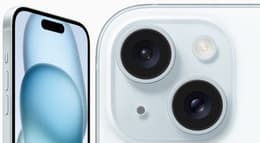
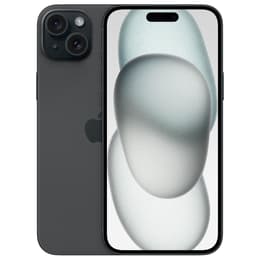
iPhone 15 Plus
Starting at

Refurbished price:454.00

Versus €979.00 new

See options
OnePlus 10 Pro
Starting at

Refurbished price:242.81

Versus €899.00 new

See options

Differences at a glance

The iPhone 15 Plus, released in September 2023, and the OnePlus 10 Pro, launched globally in April 2022, are distinct smartphones offering different user experiences. While the iPhone 15 Plus operates on Apple's iOS ecosystem, the OnePlus 10 Pro runs on Android, specifically OxygenOS. Key differentiators include their display technology, camera philosophies, and overall software approach.

Available Models

Colour

Storage (GB)

Scores

Durability

The longevity of a smartphone is influenced by its release timeline, software support, and physical resilience.

  • Release Timeline: The iPhone 15 Plus, being released in September 2023, is a newer device compared to the OnePlus 10 Pro, which saw its global launch in April 2022. This difference in release date inherently provides the iPhone 15 Plus with a longer potential lifespan in terms of software updates and hardware relevance.
  • Software Support: Apple typically provides iOS updates for 5-6 years from a device's release, meaning the iPhone 15 Plus is expected to receive software support well into the future, potentially until iOS 26. The OnePlus 10 Pro launched with Android 12 and is generally expected to receive around four years of software updates.
  • Durability and Repairability: The iPhone 15 Plus features a Ceramic Shield front and an IP68 rating for water and dust resistance, indicating robust build quality. The OnePlus 10 Pro features Gorilla Glass Victus for screen protection. However, the OnePlus 10 Pro has been noted in some durability tests for structural integrity concerns, particularly a tendency to snap in half under significant bending force. Its repairability score is around 6 out of 10.

Year of Release

2023

2022

Compatible with latest Update

Yes

Yes

OS

iOS

Android

Foldable

No

No

Performance

Performance in smartphones is about how smoothly they handle daily tasks, demanding applications, and multitasking.

  • Processing Power: The iPhone 15 Plus is equipped with a powerful current-generation chip, which ensures brisk performance and smooth handling of demanding apps and multitasking. The OnePlus 10 Pro features a processor that delivers slick performance, making it capable of handling intensive workloads and gaming smoothly.
  • Storage and Responsiveness: Both devices offer various storage configurations, with the iPhone 15 Plus available in 128GB, 256GB, and 512GB options. The OnePlus 10 Pro comes with 128GB or 256GB storage options, alongside 8GB or 12GB of RAM. The iPhone's operating system is known for its optimized performance with its hardware, providing a consistently responsive user experience. The OnePlus 10 Pro's OxygenOS is also praised for its smoothness and stability.
  • Battery Behavior: The iPhone 15 Plus is recognized for its exceptional battery life, often lasting more than a day with heavy use and up to three days with casual use, offering up to 26 hours of video playback. The OnePlus 10 Pro, with its larger battery capacity, also provides very good battery life, often lasting a full day and potentially extending into a second day with lighter usage. It also supports rapid wired and wireless charging.

Screen quality

The display is a primary interface, and its quality significantly impacts the user experience.

  • Display Technology and Resolution: The iPhone 15 Plus features a 6.7-inch Super Retina XDR OLED display with a resolution of 2796x1290 pixels, resulting in sharp visuals. The OnePlus 10 Pro boasts a 6.7-inch Fluid AMOLED display with a higher resolution of 1440x3216 pixels (QHD+), offering a very clear viewing experience.
  • Brightness and Refresh Rate: The iPhone 15 Plus offers a typical brightness of 1000 nits and a peak outdoor brightness of up to 2000 nits, ensuring good visibility in various lighting conditions, but it has a standard 60Hz refresh rate. The OnePlus 10 Pro features an adaptive 120Hz refresh rate (LTPO2.0) that can dynamically adjust from 1Hz to 120Hz, providing smoother scrolling and animations while optimizing battery use. Its peak brightness reaches 1300 nits.
  • Special Features: The iPhone 15 Plus incorporates the Dynamic Island, an interactive area around the front camera cutout that displays alerts and live activities. The OnePlus 10 Pro's curved display design offers an immersive viewing experience.

Resolution

1290 x 2796

1440 x 3216

Screen type

Super Retina XDR OLED

LTPO2 Fluid AMOLED

Audiovisual

Camera capabilities are a significant factor for many users, influencing how they capture and share moments.

  • Rear Camera Systems: The iPhone 15 Plus features a dual-camera system with a 48MP main sensor and a 12MP ultra-wide lens, along with a 2x telephoto option enabled by the main sensor. The OnePlus 10 Pro offers a versatile triple-camera setup, including a 48MP main sensor, a 50MP ultra-wide lens with a wide 150° field of view, and an 8MP telephoto lens capable of 3.3x optical zoom. The OnePlus camera system benefits from a partnership with Hasselblad, focusing on natural color calibration.
  • Photography Features: Both devices offer advanced computational photography features. The iPhone 15 Plus includes Photonic Engine, Deep Fusion, Smart HDR 5, Night mode, and next-generation portrait capabilities with focus and depth control. The OnePlus 10 Pro provides features like Nightscape, Portrait Mode, Pro Mode with manual controls, and AI scene recognition.
  • Video Recording: The iPhone 15 Plus supports 4K video recording up to 60 frames per second, with Cinematic mode and Action mode for stabilized footage. The OnePlus 10 Pro can record 8K video at 24 frames per second and 4K video at up to 120 frames per second, offering more options for high-resolution and slow-motion video capture.

Main camera

48 megapixels

48 megapixels

Front camera

12 megapixels

32 megapixels

Miscellaneous

Beyond core features, several practical elements contribute to the overall user experience and device utility.

  • Connectivity and Ports: Both smartphones support 5G connectivity and Wi-Fi 6 (802.11ax) for fast wireless internet. The iPhone 15 Plus uses a USB-C port, which is a significant change from previous models, though it operates at USB 2.0 speeds. The OnePlus 10 Pro also features a USB-C port, supporting USB 3.1 speeds. Both include Bluetooth 5.3 (iPhone 15 Plus) and Bluetooth 5.2 (OnePlus 10 Pro) for accessory connections.
  • Biometrics and Sensors: The iPhone 15 Plus relies on Face ID for secure authentication. The OnePlus 10 Pro utilizes an in-display optical fingerprint scanner. Both devices include a range of sensors such as accelerometers, gyroscopes, and ambient light sensors.
  • Design and Handling: The iPhone 15 Plus features an aluminum design with a color-infused glass back and Ceramic Shield front. It weighs 201 grams and measures 160.9 x 77.8 x 7.8 mm. The OnePlus 10 Pro has a glass back and weighs 200 grams, with dimensions of 163 x 73.9 x 8.55 mm. The OnePlus 10 Pro also includes a physical alert slider, a feature appreciated by many users for quickly changing notification modes.

Weight

201 g

201 g

Screen size (in)

6.7

6.7

Network

5G

5G

SIM card

Physical SIM + eSIM

Dual Physical SIM

Carrier compatibility

Unlocked

Unlocked

What the community thinks

The iPhone 15 Plus and OnePlus 10 Pro cater to different preferences within the smartphone market. Users frequently praise the iPhone 15 Plus for its exceptional battery life, large and bright OLED display, and the intuitive integration of the Dynamic Island. Its camera system is also well-regarded for producing high-quality photos and videos, particularly with its computational photography enhancements. Common criticisms often point to its standard 60Hz refresh rate display and the USB 2.0 data transfer speeds of its USB-C port.

The OnePlus 10 Pro is often lauded for its fluid 120Hz AMOLED display, rapid charging capabilities, and generally smooth performance. Its camera system, developed in partnership with Hasselblad, receives appreciation for its color science and versatility, including a wide-angle lens with an expansive field of view. However, some users have noted that its camera performance, while good, may not always match the absolute best in class, and there have been concerns regarding its structural durability in extreme bend tests.

Users prioritizing extended battery life, a large display within the iOS ecosystem, and long-term software support may find the iPhone 15 Plus well-suited to their needs. Conversely, individuals who value a high refresh rate display, faster charging, and the customization options of Android, along with a versatile camera system, might lean towards the OnePlus 10 Pro. Both devices offer compelling features, and choosing between them often comes down to personal preference for operating system and specific feature priorities. For those considering a more sustainable choice, both models are available as quality-assured refurbished options.