

Dell Latitude 5320 13" Vs Microsoft Surface Go 2 10"

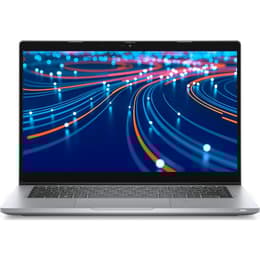
Dell Latitude 5320 13"
Starting at

Refurbished price:307.00

Versus €1,051.43 new

See options
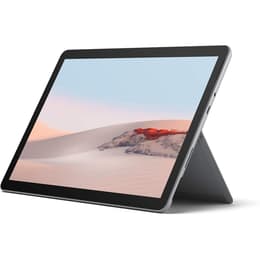
Microsoft Surface Go 2 10"
Starting at

Refurbished price:249.00

Versus €590.00 new

See options

Ratings

The Dell Latitude 5320 13, released in March 2021, is a business-oriented laptop designed for productivity, while the Microsoft Surface Go 2 10, launched in May 2020, is a compact 2-in-1 detachable tablet built for portability and versatility. Both devices operate on the Windows ecosystem, offering a familiar software experience, but they cater to different user needs through their form factors and core capabilities. The Latitude 5320 emphasizes robust performance and extensive connectivity in a traditional laptop design, whereas the Surface Go 2 prioritizes lightweight mobility and touch-first interaction.

Scores

Durability

When considering the long-term usability of these devices, their release timelines and design philosophies play a significant role. The Dell Latitude 5320, being a business-grade laptop, is generally built with durability in mind, while the Surface Go 2 offers a more consumer-focused, portable design.

  • Release Timeline: The Dell Latitude 5320 was released in March 2021, making it a slightly newer device compared to the Microsoft Surface Go 2, which launched in May 2020. This difference in release date can influence the duration of software support and the perceived modernity of internal components.
  • Software Longevity: Both devices run on the Windows operating system and are eligible for updates to the latest versions, such as Windows 11. The Latitude 5320, with its slightly newer release, may receive official feature and security updates for a marginally longer period.
  • Repairability and Build: The Dell Latitude 5320 features a chassis that, while generally robust, may exhibit some flex, and its RAM is integrated, limiting future upgradeability. In contrast, the Microsoft Surface Go 2 is designed with components that are glued in place, making user repairs or upgrades challenging. The Latitude 5320's outer shell incorporates bioplastic materials, contributing to its construction. The Surface Go 2 utilizes a magnesium alloy construction, offering a premium feel.

Year of Release

2021

2019

Last Os Compatibility

Yes

Yes

OS

Windows 11

Windows 11

Performance

The performance capabilities of the Dell Latitude 5320 and the Microsoft Surface Go 2 are tailored to their respective design intentions, with the Latitude generally offering more processing power for demanding tasks.

  • Processing Power: The Dell Latitude 5320 is equipped with 11th Generation Intel Core processors, which provide a strong foundation for handling business applications, multitasking, and more intensive workloads efficiently. The Microsoft Surface Go 2, on the other hand, uses 8th Generation Intel Pentium Gold or Core m3 processors, which are suitable for everyday tasks like web browsing, email, and light productivity, but may show limitations with more demanding software or extensive multitasking.
  • Memory and Storage: The Latitude 5320 offers a wider range of RAM configurations, from 4GB up to 32GB, with 8GB and higher configurations benefiting from dual-channel performance, which aids in smoother multitasking and application responsiveness. Its storage options include fast M.2 PCIe NVMe SSDs, providing quick boot times and rapid data access. The Surface Go 2 comes with 4GB or 8GB of LPDDR3 RAM and offers storage options ranging from 64GB eMMC to 128GB or 256GB SSDs, which are adequate for its intended use but less expansive than the Latitude.
  • Battery Endurance: The Dell Latitude 5320, particularly with its larger 63Wh battery option, can deliver substantial battery life, with some configurations lasting up to 13-14 hours during web browsing, supporting a full workday for many users. The Microsoft Surface Go 2 has significantly improved its battery life over its predecessor, offering up to 10 hours of typical usage and around 11.5 hours in web-browsing tests, making it suitable for on-the-go use throughout a day.

Memory (GB)

8 GB

8 GB

Processor

Core i5-1135G7

Pentium Gold 4425Y

Graphic card

Integrated Graphics

Integrated Graphics

Screen quality

The visual experience on both devices is distinct, primarily due to their differing display sizes, aspect ratios, and target use cases.

  • Display Technology and Size: The Dell Latitude 5320 features a 13.3-inch Full HD (1920 x 1080) IPS display, offering comfortable viewing angles and good clarity for productivity tasks. The Microsoft Surface Go 2 has a smaller 10.5-inch PixelSense display with a resolution of 1920 x 1280 pixels and a 3:2 aspect ratio, which provides more vertical screen real estate, beneficial for document viewing and web browsing.
  • Brightness and Clarity: The Latitude 5320's display typically offers brightness levels between 250 and 400 nits, with some configurations including Gorilla Glass and ComfortView Plus technology to reduce blue light emissions. The Surface Go 2's PixelSense display reaches up to 390 nits of brightness and is noted for its vibrant colors and good contrast, with its backlight not using PWM for brightness adjustment above 76 nits, which can be more comfortable for extended viewing.
  • Touch and Refresh Rate: Both devices offer touch-enabled displays, enhancing interactive capabilities. The Latitude 5320 generally features a standard 60Hz refresh rate. The Surface Go 2 also operates at a standard refresh rate, providing a smooth experience for general use and touch interactions.

Resolution

1920 x 1080

1920 x 1280

Screen type

LCD

IPS

Camera

Audiovisual

Both the Dell Latitude 5320 and the Microsoft Surface Go 2 incorporate camera systems and audio features designed to support modern communication and media consumption, though with different emphasis.

  • Camera Capabilities: The Dell Latitude 5320 typically includes an HD (720p) or optional Full HD (1080p) front-facing camera, often with a privacy shutter and optional IR sensors for Windows Hello facial recognition, making it suitable for video conferencing. The Microsoft Surface Go 2 features a 5MP front-facing camera capable of 1080p video, also with IR sensors for Windows Hello, and an 8MP rear-facing camera with autofocus that can record 1080p video, offering more versatility for capturing images and scanning documents.
  • Audio Experience: For audio output, the Latitude 5320 is equipped with stereo speakers, providing a total of 4W output, suitable for general media consumption and conference calls. The Surface Go 2 also features 2W stereo speakers with Dolby Audio, aiming for a clear and immersive sound experience for its size.
  • Microphone Quality: Both devices include dual-array microphones. The Latitude 5320's digital-array microphones are designed for clear voice pickup in professional settings. The Surface Go 2 enhances its audio input with dual Studio Mics, which are optimized to improve voice clarity and reduce background noise during calls and recordings.

Miscellaneous

Beyond their core functionalities, several practical elements differentiate the Dell Latitude 5320 and the Microsoft Surface Go 2, impacting their usability in various scenarios.

  • Connectivity and Ports: The Dell Latitude 5320 offers a comprehensive selection of ports, including two Thunderbolt 4 ports that support DisplayPort Alt Mode, USB4, and Power Delivery, alongside two USB 3.2 Gen 1 ports, an HDMI 2.0 port, a microSD card reader, and a 3.5mm audio jack. This extensive port selection caters to a wide range of peripherals and external displays. The Microsoft Surface Go 2 provides a more streamlined set of ports, including a USB-C port (3.1 Gen 1 with charging and video out capabilities), a Surface Connect port for charging and docking, a microSDXC card slot, and a 3.5mm headphone jack. Both devices support modern wireless standards like Wi-Fi 6 and Bluetooth 5.0/5.1/5.2, with optional LTE connectivity for on-the-go internet access.
  • Dimensions and Portability: The Latitude 5320, starting at approximately 1.18 kg (2.61 lb) and with a thickness of about 16.96 mm, is a compact and relatively lightweight laptop. The Surface Go 2, as a tablet, is significantly lighter at around 544 grams (1.199 lb) for the Wi-Fi model and thinner at 8.3 mm, making it exceptionally portable, though its weight increases with the optional Type Cover.
  • Security Features: Both devices integrate security features. The Latitude 5320 offers optional fingerprint readers and IR cameras for facial recognition via Windows Hello. The Surface Go 2 also includes an IR camera for Windows Hello facial recognition, providing secure and convenient login.

Weight

1200 g

800 g

Screen size

13

10

The Dell Latitude 5320 13 and the Microsoft Surface Go 2 10 serve different segments of users, each excelling in its designed role. Users often praise the Latitude 5320 for its robust performance, comprehensive port selection, and strong battery life, making it a reliable workhorse for professionals and students who require a traditional laptop experience for demanding tasks. Its business-grade features and security options are frequently highlighted as key advantages. However, some users note its integrated RAM as a limitation for future upgrades.

The Surface Go 2 receives commendation for its exceptional portability, vibrant display, and improved battery life compared to its predecessor, making it an appealing choice for those seeking a lightweight 2-in-1 device for content consumption, light productivity, and on-the-go use. Its tablet form factor and touch capabilities are often cited as strengths. Criticisms sometimes point to its less powerful processors in base configurations and the additional cost of essential accessories like the Type Cover.

Users prioritizing a powerful, full-fledged laptop experience with extensive connectivity for productivity and multitasking will find the Dell Latitude 5320 well-suited to their needs. Conversely, individuals who value extreme portability, a versatile tablet-laptop hybrid, and a touch-first interface for everyday tasks and media consumption may lean toward the Microsoft Surface Go 2. Both devices offer quality-assured refurbished options, providing an eco-friendly alternative for consumers looking to make a sustainable choice while still acquiring a capable device.


See all articles

Our recent comparisons