

Galaxy S20 Vs iPhone 11 Pro Max

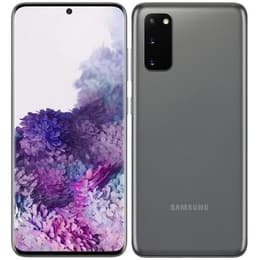
Galaxy S20
Galaxy S20
Starting at

Refurbished price:193.00

Versus €909.00 new

See options
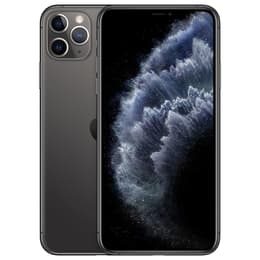
iPhone 11 Pro Max
iPhone 11 Pro Max
Starting at

Refurbished price:219.00

Versus €939.00 new

See options

Ratings

The Samsung Galaxy S20, released in March 2020, and the Apple iPhone 11 Pro Max, launched in September 2019, represent flagship smartphones from their respective manufacturers. While both devices offer premium experiences, they cater to different preferences through their distinct operating systems and hardware philosophies. Key differentiators include the Galaxy S20's higher refresh rate display and 5G connectivity, contrasting with the iPhone 11 Pro Max's integrated iOS ecosystem and robust performance.

Scores

Durability

Evaluating the long-term usability of these devices involves considering their release timelines, software support, and physical resilience.

  • Release Timeline: The iPhone 11 Pro Max was introduced in September 2019, preceding the Galaxy S20's launch in March 2020. This six-month difference can influence the duration of future software support.
  • Software Longevity: The Galaxy S20, running Android, typically receives major OS updates for a period of three to four years, followed by security updates. The iPhone 11 Pro Max, operating on iOS, generally benefits from a longer support window, often receiving major iOS updates for five to six years from its release.
  • Physical Durability: Both devices feature an IP68 rating for water and dust resistance, indicating a similar level of protection against environmental elements. The iPhone 11 Pro Max is rated to withstand submersion up to 4 meters for 30 minutes, while the Galaxy S20 has a similar rating.

Year of Release

2020

2019

Compatible with latest Update

No

Yes

OS

Android

iOS

Foldable

No

No

Performance

Performance in smartphones is determined by a combination of processing power, memory, and battery optimization, impacting daily usage and demanding applications.

  • Processing Capabilities: The Galaxy S20 handles demanding applications and multitasking smoothly, thanks to its advanced processor and generous RAM configurations, which can be 8GB or 12GB. The iPhone 11 Pro Max, powered by its A13 Bionic chip, delivers fluid performance across its operating system and applications, even with 4GB of RAM, due to efficient hardware-software integration.
  • Storage Options: Both devices offer various internal storage capacities to suit different user needs. The Galaxy S20 is available with 128GB, 256GB, or 512GB of internal storage, with the added flexibility of expandable storage via a microSD card. The iPhone 11 Pro Max comes with 64GB, 256GB, or 512GB storage options, without expandable storage.
  • Battery Behavior: The Galaxy S20 is equipped with a 4000 mAh battery, designed to provide a full day of use for many users, supported by intelligent power management features. The iPhone 11 Pro Max features a 3969 mAh battery, which, combined with iOS optimization, is noted by users for its extended endurance, often lasting through heavy use.

Memory (GB)

8 GB

4 GB

Screen quality

The visual experience on a smartphone is largely defined by its display technology, resolution, and responsiveness.

  • Display Technology and Resolution: The Galaxy S20 features a 6.2-inch Dynamic AMOLED 2X display with a resolution of 1440 x 3200 pixels, offering sharp and detailed visuals. The iPhone 11 Pro Max sports a 6.5-inch Super Retina XDR OLED display with a resolution of 2688 x 1242 pixels, known for its deep blacks and vibrant color reproduction.
  • Refresh Rate and Smoothness: A notable difference lies in the refresh rates; the Galaxy S20 offers a 120Hz refresh rate at FHD+ resolution, providing a smoother scrolling and gaming experience. The iPhone 11 Pro Max maintains a standard 60Hz refresh rate.
  • Brightness and Clarity: Both displays achieve high peak brightness levels, with the Galaxy S20 reaching up to 1200 nits and the iPhone 11 Pro Max also capable of 1200 nits for HDR content, ensuring good visibility in various lighting conditions.

Resolution

1440 x 3200

1242 x 2688

Screen type

Dynamic AMOLED 2X

Super Retina XDR OLED

Audiovisual

Camera systems on both devices offer advanced photography and videography capabilities, though with different approaches to hardware and software processing.

  • Rear Camera System: The Galaxy S20 features a triple-lens setup including a 12MP wide-angle, a 64MP telephoto with 3x hybrid optical zoom, and a 12MP ultra-wide camera. The iPhone 11 Pro Max also has a triple 12MP camera system, comprising wide, ultra-wide, and telephoto lenses with 2x optical zoom.
  • Photography Features: The Galaxy S20's 64MP telephoto lens allows for greater detail in zoomed-in shots and supports 8K video recording. The iPhone 11 Pro Max excels in image processing with features like Night Mode and Deep Fusion, enhancing low-light performance and detail.
  • Video Recording and Front Camera: The Galaxy S20 can record video at up to 8K resolution at 24fps, while the iPhone 11 Pro Max supports 4K video recording at up to 60fps. For selfies, the Galaxy S20 has a 10MP front camera, and the iPhone 11 Pro Max features a 12MP TrueDepth front camera that also enables Face ID.

Main camera

12 megapixels

12 megapixels

Front camera

10 megapixels

12 megapixels

Miscellaneous

Beyond core features, several practical elements contribute to the overall user experience and device utility.

  • Connectivity: The Galaxy S20 offers 5G connectivity, providing access to faster mobile network speeds where available. The iPhone 11 Pro Max supports 4G LTE networks. Both devices include Wi-Fi 6 and Bluetooth 5.0 for wireless connections.
  • Ports and Biometrics: The Galaxy S20 uses a USB-C port for charging and data transfer and features an in-display fingerprint sensor for biometric security. The iPhone 11 Pro Max utilizes Apple's proprietary Lightning port and relies on Face ID for secure authentication.
  • Dimensions and Build: The Galaxy S20 weighs approximately 163 grams and has dimensions of 151.7 x 69.1 x 7.9 mm. The iPhone 11 Pro Max is a larger and heavier device, weighing 226 grams with dimensions of 158 x 77.8 x 8.1 mm.

Weight

163 g

226 g

Screen size (in)

6.2

6.5

Network

4G

4G

SIM card

Dual Physical SIM

Physical SIM + eSIM

Carrier compatibility

Unlocked

Unlocked

Connector

USB-C

Lightning

Users often praise the iPhone 11 Pro Max for its consistent performance, excellent battery life, and reliable camera system, particularly its low-light capabilities and video quality. Some common criticisms from users include the absence of a high refresh rate display and the proprietary Lightning port. Conversely, the Galaxy S20 is frequently lauded for its vibrant 120Hz display, versatile camera setup with 8K video recording, and 5G connectivity. User concerns sometimes point to battery life when the 120Hz refresh rate is continuously enabled and the regional variations in processor performance.

Users prioritizing a smooth, high-refresh-rate display and the latest cellular connectivity (5G) may find the Galaxy S20 well-suited to their needs. Those who value a highly optimized ecosystem, strong long-term software support, and a consistently performing camera with excellent video capabilities, coupled with robust battery endurance, might lean towards the iPhone 11 Pro Max. Both devices offer compelling features for different user profiles, and considering a quality-assured refurbished option for either model can be a sustainable choice for consumers.


See all articles

Our recent comparisons