

Galaxy S20 Vs Galaxy S21+ 5G

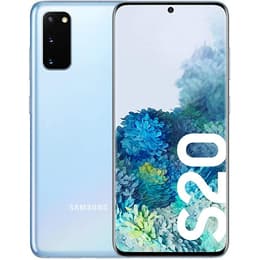
Galaxy S20
Galaxy S20
Starting at

Refurbished price:193.00

Versus €909.00 new

See options
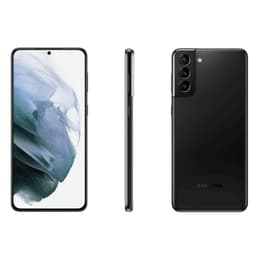
Galaxy S21+ 5G
Galaxy S21+ 5G
Starting at

Refurbished price:185.00

Versus €1,059.00 new

See options

Ratings

The Samsung Galaxy S20, released in February 2020, and the Samsung Galaxy S21 Plus 5G, launched in January 2021, represent successive generations within Samsung's flagship smartphone lineup. While both devices offer a premium Android experience, the S21 Plus 5G introduces updated internal components and a refined design, building upon the foundation laid by its predecessor. Both smartphones operate on the Android platform, providing access to a wide ecosystem of applications and services.

Scores

Durability

When considering the long-term usability of these devices, their release timelines and software support cycles are key factors. The practical lifespan of a smartphone is often tied to its software update availability and physical durability.

  • Software Support: The Galaxy S20, originally launched with Android 10, received major OS upgrades up to Android 13 and security updates until approximately April 2025, marking the end of its official software lifecycle. The Galaxy S21 Plus 5G, released with Android 11, would have received a similar duration of major OS and security updates, typically extending its support slightly longer due to its later release.
  • Repairability: The Galaxy S20 series, including the S20 Plus, generally received low repairability scores from iFixit, often around 3 out of 10. This was primarily due to the extensive use of strong adhesive for the back cover and battery, making disassembly challenging. The standard Galaxy S20, however, had a slightly better repairability score of 7 out of 10, with more accessible battery and screen cables, though adhesive was still used for the back cover and battery. The S21 Plus 5G, being from a similar design philosophy, likely presents comparable challenges for repair.
  • Physical Durability: Both devices feature an IP68 rating for dust and water resistance, providing protection against everyday elements. The Galaxy S20 utilized Corning Gorilla Glass 6 for display protection, while the S21 Plus 5G upgraded to Gorilla Glass Victus, offering enhanced drop and scratch resistance.

Year of Release

2020

2021

Compatible with latest Update

No

Yes

OS

Android

Android

Foldable

No

No

Performance

The performance of a smartphone is crucial for daily tasks, from navigating apps to demanding multimedia use. Both the Galaxy S20 and S21 Plus 5G offer capable performance, but there are distinctions in their underlying hardware and real-world implications.

  • Processing Power: The Galaxy S20 was equipped with either an Exynos 990 processor (global markets) or a Snapdragon 865 processor (US markets). The Galaxy S21 Plus 5G features a newer generation processor, either the Exynos 2100 (international) or the Snapdragon 888 (US), which generally translates to improved speed and efficiency for demanding applications and multitasking.
  • Memory and Storage: The Galaxy S20 typically came with 8GB or 12GB of RAM and 128GB of internal storage, with the added benefit of expandable storage via a microSD card slot. The S21 Plus 5G offers 8GB of RAM and storage options of 128GB or 256GB, but it notably removed the microSD card slot, meaning storage is not expandable.
  • Battery Behavior: The Galaxy S20 houses a 4000mAh battery, while the S21 Plus 5G features a larger 4800mAh battery. User reports for the S20 often indicated average battery life, particularly when using the higher 120Hz refresh rate. The S21 Plus 5G generally provides better battery endurance, with many users reporting it can last a full day of typical use.

Memory (GB)

8 GB

8 GB

Screen quality

The display is a primary interface for smartphone interaction, and both devices offer vibrant viewing experiences with some key differences in specifications and practical use.

  • Display Technology and Size: Both models feature a Dynamic AMOLED 2X display with HDR10+ support, known for deep blacks and vibrant colors. The Galaxy S20 has a 6.2-inch display, offering a more compact form factor. The S21 Plus 5G comes with a larger 6.7-inch display, providing more screen real estate for media consumption and productivity.
  • Resolution and Refresh Rate: The Galaxy S20 boasts a higher resolution of 1440x3200 pixels, resulting in a sharper pixel density of approximately 563 ppi. It supports a 120Hz refresh rate, but this is only available when the display resolution is set to 1080p. The S21 Plus 5G has a resolution of 1080x2400 pixels, with a pixel density of around 394 ppi. It features an adaptive 120Hz refresh rate, which can dynamically adjust based on content to optimize battery life.
  • Brightness and Clarity: Both displays offer high brightness levels, ensuring good visibility even in bright outdoor conditions. The Dynamic AMOLED 2X technology on both devices contributes to excellent contrast and color accuracy, making content appear clear and engaging.

Resolution

1440 x 3200

1080 x 2400

Screen type

Dynamic AMOLED 2X

Dynamic AMOLED 2X

Audiovisual

Both the Galaxy S20 and S21 Plus 5G are equipped with versatile camera systems designed to capture high-quality photos and videos in various scenarios.

  • Rear Camera System: The Galaxy S20 features a triple-camera setup on the rear, consisting of a 12MP wide-angle lens, a 64MP telephoto lens with 3x hybrid optical zoom, and a 12MP ultrawide lens. The S21 Plus 5G utilizes a very similar triple-camera configuration: a 12MP wide-angle, a 64MP telephoto with 3x hybrid optical zoom, and a 12MP ultrawide. This indicates that the core camera hardware is largely consistent between the two models.
  • Photography Features: Both devices offer features like 30x Space Zoom (digital zoom) and a dedicated Night Mode for improved low-light photography. The S20 introduced Single Take mode, which captures multiple photos and videos simultaneously, and this feature is also present on the S21 Plus 5G. The S21 Plus 5G also includes Director's View, allowing users to record with multiple cameras simultaneously and switch angles.
  • Video Recording: Both smartphones are capable of recording 8K video at 24 frames per second, offering high-resolution footage. They also support features like Super Steady for stabilized video capture. The front-facing camera on both is a 10MP sensor, capable of capturing detailed selfies and video calls.

Main camera

12 megapixels

12 megapixels

Front camera

10 megapixels

10 megapixels

Miscellaneous

Beyond core performance and display, several practical elements contribute to the overall user experience, including connectivity, physical design, and additional features.

  • Connectivity: Both the Galaxy S20 and S21 Plus 5G support 5G networks, enabling faster mobile data speeds where available. However, some variants of the S20 initially lacked support for high-band 5G (mmWave). Both also support modern Wi-Fi standards and Bluetooth for wireless connections.
  • Physical Design and Handling: The Galaxy S20 is the more compact and lighter device, measuring 151.7 x 69.1 x 7.9mm and weighing 163 grams. The S21 Plus 5G is larger and heavier, with dimensions of 161.5 x 75.6 x 7.8mm and a weight of around 200-202 grams. The S20 features slightly curved display edges, while the S21 Plus 5G has a flatter display, which some users prefer for handling and screen protection.
  • Ports and Sensors: Both devices utilize a USB-C port for charging and data transfer. A notable difference is the S20's inclusion of a microSD card slot for expandable storage, which is absent in the S21 Plus 5G. Both phones feature an in-display fingerprint sensor for secure unlocking and authentication.

Weight

163 g

200 g

Screen size (in)

6.2

6.7

Network

4G

5G

SIM card

Dual Physical SIM

Physical SIM + eSIM

Carrier compatibility

Unlocked

Unlocked

Connector

USB-C

USB-C

The Samsung Galaxy S20 and S21 Plus 5G, while from consecutive generations, offer distinct advantages depending on user priorities. The Galaxy S20 is often praised for its relatively compact size and the flexibility of expandable storage via a microSD card. Users appreciated its high-resolution display, especially when opting for the 1080p 120Hz mode for smoother visuals. However, common criticisms often centered on its battery life, which some users found to be average, particularly with the 120Hz refresh rate enabled.

The Galaxy S21 Plus 5G, on the other hand, frequently receives positive remarks for its improved battery endurance and the enhanced durability offered by its Gorilla Glass Victus display. Many users also favored its flatter display design and the overall performance boost from its newer processor. Criticisms for the S21 Plus 5G often point to the removal of the microSD card slot and the camera system, while capable, not representing a significant generational leap from its predecessor. Some users also reported occasional heating during intensive tasks.

Users prioritizing a more compact device and the ability to expand storage will find the Galaxy S20 well-suited to their needs. Conversely, those who value longer battery life, a larger display, and slightly newer processing power may lean towards the Galaxy S21 Plus 5G. Both devices remain viable options, and considering a quality-assured refurbished option for either model can be a sustainable choice for consumers.


See all articles

Our recent comparisons






