

Galaxy S20 Vs Huawei P30 Pro

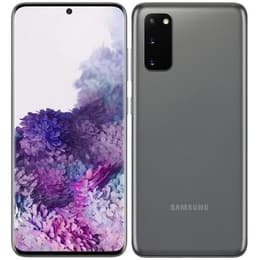
Galaxy S20
Galaxy S20
Starting at

Refurbished price:193.00

Versus €909.00 new

See options
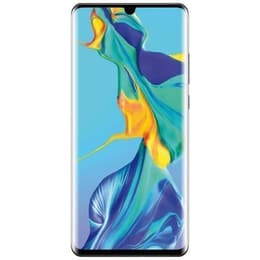
Huawei P30 Pro
Huawei P30 Pro
Starting at

Refurbished price:186.00

Versus €849.00 new

See options

Ratings

The Samsung Galaxy S20, released in March 2020, and the Huawei P30 Pro, launched in March 2019, are both flagship smartphones from their respective eras. While the Galaxy S20 arrived a year later with updated hardware and 5G capabilities, the P30 Pro distinguished itself with its advanced camera system and robust battery. Both devices run on the Android operating system, though with different custom user interfaces and update trajectories.

Scores

Durability

When considering the practical lifespan of these devices, several factors come into play, including their release timelines, software support, and physical resilience.

  • Release Timeline and Software Support: The Galaxy S20, being released in March 2020, benefits from a later launch, which generally translates to a longer period of official software updates. It launched with Android 10 and received updates up to Android 13. The Huawei P30 Pro, released in March 2019, started with Android 9 (EMUI 9.1) and was updated to EMUI 12, which is based on Android 10 or 11 depending on the region. This means the Galaxy S20 typically offers a more extended software support window.
  • Durability Features: Both devices offer a high level of protection against environmental elements. The Galaxy S20 features Corning Gorilla Glass 6 on both its front and back, coupled with an IP68 rating for water and dust resistance. The Huawei P30 Pro also includes Gorilla Glass 6 on its front and carries an IP68 rating, indicating similar resistance to dust and water immersion.
  • Expected Practical Lifespan: Users can expect both phones to remain functional for several years, especially when considering quality-assured refurbished options. The Galaxy S20's newer processor and longer software update path may offer a slightly more future-proof experience for those prioritizing the latest Android features and security patches.

Year of Release

2020

2019

Compatible with latest Update

No

No

OS

Android

Android

Foldable

No

No

Performance

The performance of a smartphone is crucial for daily tasks, from navigating applications to managing multiple processes simultaneously. These two devices offer distinct experiences based on their internal components.

  • Processor Capabilities: The Galaxy S20 is equipped with a more recent generation processor (either the Exynos 990 or Snapdragon 865, depending on the market), which provides a noticeable boost in processing power compared to the Huawei P30 Pro's Kirin 980 chipset. This translates to faster app loading times and smoother operation for demanding applications on the Galaxy S20.
  • Multitasking and Responsiveness: The Galaxy S20 generally offers a more fluid multitasking experience, handling several open applications and quick switches between them with greater ease. This is partly due to its newer processor and often higher RAM configurations available. The P30 Pro, while still capable, may show slight delays when pushing its limits with numerous background tasks.
  • Battery Behavior: The Huawei P30 Pro features a 4200 mAh battery, which, combined with its lower refresh rate screen, often results in excellent battery endurance for a full day of typical use. The Galaxy S20 has a 4000 mAh battery (rated minimum 3880mAh), and while capable, its higher resolution and 120Hz refresh rate display can consume more power, potentially requiring more frequent charging for heavy users.

Memory (GB)

8 GB

8 GB

Screen quality

The display is a primary interface for smartphone interaction, and both devices offer vibrant viewing experiences with some key differences in technology and specifications.

  • Display Technology and Resolution: The Samsung Galaxy S20 features a 6.2-inch Dynamic AMOLED 2X display with a resolution of 3200x1440 pixels, resulting in a very sharp image with 563 pixels per inch. This display technology is known for deep blacks and vibrant colors. The Huawei P30 Pro comes with a slightly larger 6.47-inch OLED display, offering a resolution of 2340x1080 pixels, which translates to 398 pixels per inch. While still providing excellent contrast and color, its resolution is lower than the S20.
  • Refresh Rate and Smoothness: A significant differentiator is the refresh rate. The Galaxy S20 boasts a 120Hz refresh rate, which makes scrolling, animations, and gaming appear noticeably smoother and more fluid. The Huawei P30 Pro operates at a standard 60Hz refresh rate, which is perfectly adequate for most tasks but lacks the enhanced fluidity of the S20.
  • Brightness and Viewing Experience: Both phones offer good brightness levels suitable for outdoor visibility. The Galaxy S20's Dynamic AMOLED 2X panel can achieve high peak brightness, contributing to better HDR content viewing. The P30 Pro's OLED screen also provides strong contrast and good visibility in various lighting conditions.

Resolution

1440 x 3200

1080 x 2340

Screen type

Dynamic AMOLED 2X

OLED

Audiovisual

Both the Galaxy S20 and the P30 Pro were celebrated for their camera capabilities at their respective launches, each bringing unique strengths to mobile photography.

  • Rear Camera Systems: The Huawei P30 Pro features a versatile quad-camera setup, highlighted by a 40MP wide lens, a 20MP ultrawide lens, and an 8MP periscope telephoto lens that delivers an impressive 5x optical zoom and up to 50x digital zoom. This periscope lens was a significant innovation, allowing for exceptional reach. The Galaxy S20 offers a triple-camera system with a 12MP wide lens, a 64MP telephoto lens with 3x hybrid optical zoom and up to 30x digital zoom, and a 12MP ultrawide lens.
  • Low-Light and Zoom Performance: The P30 Pro was particularly renowned for its low-light performance, capturing bright and detailed images even in very dim conditions. Its 5x optical zoom remains a strong point for capturing distant subjects with clarity. The Galaxy S20 also performs well in low light and offers good zoom capabilities, including 8K video recording, a feature not present on the P30 Pro.
  • Front Camera and Video: For selfies, the Huawei P30 Pro has a high-resolution 32MP front camera. The Galaxy S20 features a 10MP front camera. Both are capable of capturing quality video, with the S20 having the edge in maximum resolution for video recording.

Main camera

12 megapixels

40 megapixels

Front camera

10 megapixels

32 megapixels

Miscellaneous

Beyond core performance and display, several practical features and design elements differentiate these two smartphones, impacting daily usability.

  • Connectivity Options: The Samsung Galaxy S20 supports 5G connectivity in many regions, offering faster mobile data speeds where available, along with Wi-Fi 6 for improved wireless network performance. The Huawei P30 Pro is limited to 4G LTE and supports Wi-Fi 5 (802.11 a/b/g/n/ac).
  • Ports and Sensors: Both devices utilize a USB-C port for charging and data transfer. Neither phone includes a traditional 3.5mm headphone jack. For biometric security, the Galaxy S20 uses an ultrasonic in-display fingerprint sensor, while the P30 Pro employs an optical in-display fingerprint sensor.
  • Design and Handling: The Galaxy S20 is slightly more compact and lighter, measuring 151.7 x 69.1 x 7.9 mm and weighing 163g. The Huawei P30 Pro is a bit larger and heavier at 158 x 73.4 x 8.4 mm and 192g. Both feature glass backs and aluminum frames, contributing to a premium feel.

Weight

163 g

192 g

Screen size (in)

6.2

6.47

Network

4G

4G

SIM card

Dual Physical SIM

Dual Physical SIM

Carrier compatibility

Unlocked

Unlocked

User sentiment for both the Samsung Galaxy S20 and the Huawei P30 Pro generally highlights their strengths in different areas. The P30 Pro is frequently praised for its exceptional camera zoom capabilities and impressive battery life, with many users appreciating its ability to capture distant subjects and last through a full day of heavy use. Some common criticisms for the P30 Pro, particularly in later years, revolve around its older software update cycle compared to newer devices and the lack of 5G connectivity.

The Galaxy S20, on the other hand, receives acclaim for its vibrant 120Hz display, offering a very smooth visual experience, and its overall strong performance for everyday tasks and gaming. Its 5G capability was also a significant draw at its release. Some users noted that while its battery life is good, it might not match the P30 Pro's longevity, especially when the 120Hz refresh rate is consistently enabled.

Users prioritizing an extended software update lifespan, a smoother display experience, and access to 5G connectivity may find the Samsung Galaxy S20 better suited to their needs. Conversely, users who value superior optical zoom capabilities in a camera, robust low-light photography, and potentially longer battery life from a single charge might lean towards the Huawei P30 Pro. Both devices offer a premium smartphone experience, and choosing a quality-assured refurbished option for either model presents an eco-friendly alternative for consumers.


See all articles

Our recent comparisons