
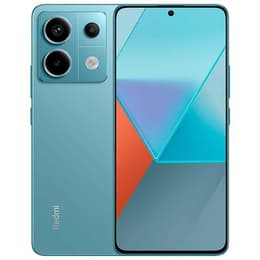


Xiaomi Redmi Note 12 Pro Vs Xiaomi Redmi Note 13 Pro

Xiaomi Redmi Note 12 Pro
Starting at

Refurbished price:112.00

Versus €399.00 new

See options
Xiaomi Redmi Note 13 Pro
Starting at

Refurbished price:179.00

Versus €349.00 new

See options

Ratings

The Xiaomi Redmi Note 12 Pro 5G, released in November 2022, and the Xiaomi Redmi Note 13 Pro 5G, launched in January 2024, represent consecutive generations within Xiaomi's popular mid-range smartphone series. While both devices offer a balanced user experience, the newer Redmi Note 13 Pro 5G introduces advancements in display technology, camera capabilities, and processing power. Both operate on the Android platform, providing access to a wide ecosystem of applications and services.

Scores

Durability

When considering the long-term usability of these devices, several factors come into play, including their initial release and expected software support.

  • Release Timeline: The Redmi Note 12 Pro 5G was released in November 2022, while the Redmi Note 13 Pro 5G followed in January 2024. This two-year difference means the Redmi Note 13 Pro 5G benefits from a longer period of anticipated software updates and security patches. [6, 9, 30]
  • Software Longevity: The Redmi Note 12 Pro 5G launched with Android 12 and MIUI 13, whereas the Redmi Note 13 Pro 5G typically ships with Android 13 and MIUI 14. [1, 3, 13, 25, 30] This newer starting point for the Redmi Note 13 Pro 5G suggests it will receive operating system updates for a longer duration, extending its functional lifespan.
  • Physical Durability: The Redmi Note 12 Pro 5G features Corning Gorilla Glass 5 for screen protection and an IP53 rating for dust and splash resistance. [25, 26, 30] The Redmi Note 13 Pro 5G upgrades to Corning Gorilla Glass Victus and an IP54 rating, offering enhanced resistance against drops and splashes. [11, 25, 29, 34]

Year of Release

2022

2023

Compatible with latest Update

No

Yes

OS

Android

Android

Foldable

No

No

Performance

The performance of a smartphone is largely dictated by its internal components, influencing how smoothly applications run and how efficiently it handles demanding tasks.

  • Processing Power: The Redmi Note 12 Pro 5G is equipped with a processor designed for efficient daily use and moderate multitasking. [5, 26, 30] The Redmi Note 13 Pro 5G features a newer generation processor, which provides a noticeable improvement in overall responsiveness and handling of more intensive applications and gaming. [3, 5, 9, 12, 21, 25]
  • Storage and Multitasking: Both devices offer various storage configurations, typically starting from 128GB and extending to 256GB, with RAM options up to 12GB. [1, 3, 5, 8, 10, 30] The Redmi Note 13 Pro 5G's updated architecture, combined with ample RAM, contributes to smoother transitions between apps and more efficient background process management.
  • Battery Behavior: The Redmi Note 12 Pro 5G houses a 5000mAh battery, providing reliable power for a full day of moderate to heavy use, with users often reporting around 6-7 hours of screen-on time. [18, 19, 27, 30] The Redmi Note 13 Pro 5G comes with a slightly larger 5100mAh battery, which, coupled with its more efficient processor, can extend usage to about 1.5 days for some users, or around 8 hours of screen-on time under heavy usage. [1, 3, 14, 21, 23, 25] Both support 67W fast charging, allowing for quick recharges. [1, 3, 18, 23, 25, 30]

Memory (GB)

8 GB

8 GB

Screen quality

The display is a primary interface for user interaction, and both models offer vibrant viewing experiences with some key distinctions.

  • Display Technology and Size: Both the Redmi Note 12 Pro 5G and Redmi Note 13 Pro 5G feature a 6.67-inch AMOLED display with a 120Hz refresh rate, ensuring smooth visuals and responsive touch interactions. [6, 10, 25, 30] This technology delivers deep blacks and vibrant colors, enhancing the viewing experience for various content.
  • Resolution and Clarity: The Redmi Note 12 Pro 5G offers a Full HD+ resolution of 1080x2400 pixels. [6, 30] The Redmi Note 13 Pro 5G steps up to a 1.5K resolution of 1220x2712 pixels, providing a sharper and more detailed image, particularly noticeable with fine text and high-resolution media. [3, 25]
  • Brightness Levels: While the Redmi Note 12 Pro 5G reaches a typical brightness of 500 nits and a peak of 900 nits for high-brightness mode, the Redmi Note 13 Pro 5G significantly boosts this to 500 nits typical, 1200 nits HBM, and an impressive 1800 nits peak brightness. [10, 25, 30] This higher brightness on the Redmi Note 13 Pro 5G improves outdoor visibility and HDR content consumption.

Resolution

1080 x 2400

1220 x 2712

Screen type

AMOLED

AMOLED

Audiovisual

The camera systems on both devices are designed to capture everyday moments, with the newer model featuring a significant upgrade in its primary sensor.

  • Main Camera Sensor: The Redmi Note 12 Pro 5G features a 50-megapixel main camera with Optical Image Stabilization (OIS), capable of producing detailed and well-exposed photos in good lighting conditions. [8, 18, 26, 28, 30] The Redmi Note 13 Pro 5G boasts a 200-megapixel main camera, also with OIS, which captures a higher level of detail and offers more flexibility for cropping. [1, 3, 9, 14, 21, 23]
  • Auxiliary Lenses and Performance: Both phones include an 8-megapixel ultrawide camera and a 2-megapixel macro camera. User feedback indicates that while the main sensors on both perform well, the ultrawide and macro lenses offer more modest performance, particularly in challenging lighting. [14, 15, 18, 26, 27, 28]
  • Video Recording and Selfies: Both devices support 4K video recording at 30 frames per second with their main rear cameras. [3, 30] For selfies, both are equipped with a 16-megapixel front-facing camera, suitable for video calls and social media content. [1, 3, 8, 11, 18, 30]

Main camera

50 megapixels

200 megapixels

Front camera

16 megapixels

16 megapixels

Miscellaneous

Beyond core specifications, several practical features contribute to the overall user experience and daily convenience.

  • Connectivity Standards: Both the Redmi Note 12 Pro 5G and Redmi Note 13 Pro 5G support 5G connectivity for faster mobile data speeds. They also include Wi-Fi (though typically Wi-Fi 5/ac, not Wi-Fi 6) and Bluetooth for wireless connections. [1, 14, 25, 30]
  • Physical Ports and Sensors: Both models retain a 3.5mm headphone jack, a feature appreciated by users with wired audio accessories. [14, 30] They also feature USB-C ports for charging and data transfer. For security, both include a fingerprint sensor, often integrated into the power button for convenient access. [1, 11, 13, 30]
  • Design and Handling: The Redmi Note 12 Pro 5G weighs 187 grams and has dimensions of 163.0 x 76.0 x 8.0mm. [25, 30] The Redmi Note 13 Pro 5G maintains a similar weight at 187 grams but is slightly more compact at 161.15 x 74.24 x 7.98mm. [1, 25] Both feature a glass back and a plastic frame, offering a comfortable in-hand feel. [27, 30]

Weight

187 g

187 g

Width

76 cm

7,42 cm

Height

162,9 cm

16,11 cm

Depth

7,9 cm

0,8 cm

Screen size (in)

6.67

6.67

Network

5G

5G

SIM card

Dual Physical SIM

Dual Physical SIM

Carrier compatibility

Unlocked

Unlocked

The Xiaomi Redmi Note 12 Pro 5G and Redmi Note 13 Pro 5G cater to users seeking capable smartphones within the mid-range segment, each with distinct advantages. The Redmi Note 12 Pro 5G is often praised for its solid AMOLED display, reliable battery life, and a main camera that performs well in various conditions. Users appreciate its consistent performance for everyday tasks and the inclusion of a 3.5mm headphone jack. Some criticisms have pointed to its secondary cameras being less impressive and the software experience, while functional, sometimes lacking the polish of competitors. [18, 26, 27, 28]

The Redmi Note 13 Pro 5G builds upon its predecessor with a significantly upgraded 200-megapixel main camera, a sharper 1.5K display with higher peak brightness, and a more powerful processor for enhanced overall performance. Its improved durability features, including Gorilla Glass Victus and an IP54 rating, also stand out. However, similar to its predecessor, the auxiliary cameras (ultrawide and macro) may not meet the same high standards as the main sensor. [3, 14, 15, 21, 23]

Users prioritizing a more advanced camera system, a sharper and brighter display, and slightly better future-proofing through a newer processor and extended software support may find the Redmi Note 13 Pro 5G better suited to their needs. Conversely, those who find the Redmi Note 12 Pro 5G's specifications sufficient for their daily usage and appreciate its established reliability might consider it a practical choice. Both devices offer a compelling option for those looking for a quality-assured refurbished option, providing an eco-friendly alternative to purchasing new.


See all articles

Our recent comparisons