

Galaxy A50 Vs iPhone 13

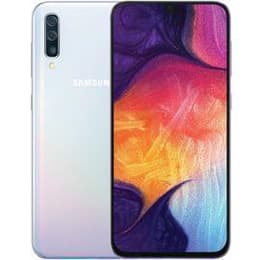
Galaxy A50
Galaxy A50
Starting at

Refurbished price:107.00

Versus €349.00 new

See options
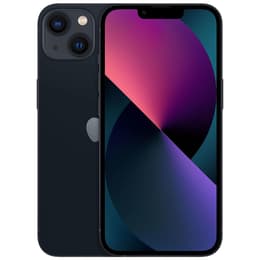
iPhone 13
iPhone 13
Starting at

Refurbished price:232.00

Versus €769.00 new

See options

Ratings

The Samsung Galaxy A50, an Android smartphone first released in March 2019, and the iPhone 13, an iOS device launched in September 2021, represent distinct generations and ecosystems within the smartphone market. While both offer a comprehensive mobile experience, they primarily differ in their core performance capabilities, camera systems, and the duration of their software support, catering to varying user preferences and needs.

Scores

Durability

The practical lifespan of a smartphone is significantly influenced by its release date and the manufacturer's commitment to software updates. The Samsung Galaxy A50, having been released in March 2019, likely concluded its official operating system and security update cycle by 2026. This means it may no longer receive the latest Android features or critical security patches, potentially affecting its long-term usability and security.

In contrast, the iPhone 13, launched in September 2021, benefits from Apple's extended software support, typically receiving major iOS updates for five to six years from its release. This provides a longer period of access to new features, performance enhancements, and ongoing security updates, extending its functional life well into the future. While both devices offer moderate repairability, the iPhone 13's newer components and longer software runway generally translate to a longer expected practical lifespan for users prioritizing up-to-date software and security.

Year of Release

2019

2021

Compatible with latest Update

No

Yes

OS

Android

iOS

Foldable

No

No

Performance

Evaluating smartphone performance involves considering how smoothly devices handle everyday tasks, demanding applications, and multitasking.

  • Everyday Responsiveness: The iPhone 13 provides a consistently fluid and responsive user experience across all applications, from web browsing to graphically intensive games. This is due to its more advanced internal architecture, which ensures quicker app loading times and seamless transitions.
  • Multitasking Capabilities: The iPhone 13 manages multiple applications running simultaneously with greater efficiency, maintaining a smooth user experience even under heavy loads. The Galaxy A50, while capable of basic multitasking, may exhibit slowdowns when numerous apps are open or when switching between more demanding applications, especially in 2026.
  • Future Readiness: The iPhone 13's processing power offers substantial headroom for future software updates and increasingly demanding applications, ensuring it remains capable for a longer period. The Galaxy A50, with its older internal components, may struggle to keep pace with newer software and apps over time.

Memory (GB)

4 GB

4 GB

Screen quality

The display is a primary interface for smartphone interaction, and both devices offer distinct visual experiences.

  • Display Technology and Clarity: Both the iPhone 13 and the Galaxy A50 feature OLED display technology, which delivers deep blacks and vibrant colors. The iPhone 13's Super Retina XDR display offers a higher pixel density and resolution (2532x1170 pixels at 460 ppi) compared to the Galaxy A50's Super AMOLED panel (2340x1080 pixels at 403 ppi), resulting in sharper text and more detailed images.
  • Brightness for Outdoor Use: The iPhone 13 generally achieves higher peak brightness levels, making its screen more easily viewable and legible in bright outdoor conditions. The Galaxy A50's display is suitable for most indoor and moderate outdoor lighting.
  • Viewing Experience: The iPhone 13 features a 6.1-inch display, while the Galaxy A50 has a slightly larger 6.4-inch screen. Despite the size difference, the iPhone 13 offers a more refined visual experience with superior color accuracy and contrast, enhancing media consumption and general interaction. Both devices utilize a standard 60Hz refresh rate.

Resolution

1080 x 2340

1170 x 2532

Screen type

Super AMOLED

Super Retina XDR OLED

Audiovisual

Camera and audio capabilities are crucial for capturing moments and enjoying multimedia content.

  • Photography Performance: The iPhone 13's dual 12MP camera system (wide and ultrawide) delivers consistently high-quality photos with excellent detail, dynamic range, and color accuracy, particularly excelling in challenging low-light conditions due to larger sensors and sensor-shift optical image stabilization on the main camera. The Galaxy A50 features a triple-camera setup with a 25MP main sensor, an 8MP ultrawide, and a 5MP depth sensor. It performs well in good lighting but shows limitations in low-light scenarios compared to the iPhone 13.
  • Video Recording: The iPhone 13 offers advanced video recording capabilities, including 4K resolution at up to 60 frames per second and features like Cinematic mode, providing more creative control and professional-looking results. The Galaxy A50 records video at 1080p at 30 frames per second, suitable for casual use.
  • Audio Experience: The iPhone 13 features stereo speakers, providing a more immersive audio experience for media playback. Its microphone quality is generally superior for calls and voice recordings. The Galaxy A50 has a single bottom-firing speaker but includes a 3.5mm headphone jack, a feature absent on the iPhone 13.

Main camera

25 megapixels

12 megapixels

Front camera

25 megapixels

12 megapixels

Miscellaneous

Beyond the core features, several practical elements contribute to the overall user experience and device utility.

  • Connectivity Options: The iPhone 13 supports 5G connectivity and Wi-Fi 6, offering faster wireless speeds and enhanced network performance. The Galaxy A50 supports 4G LTE and Wi-Fi 5.
  • Ports and Biometrics: The iPhone 13 utilizes a Lightning port for charging and data transfer, and relies on Face ID for secure facial recognition. The Galaxy A50 features a more universal USB-C port and retains a 3.5mm headphone jack. It uses an optical under-display fingerprint sensor for biometric authentication.
  • Build Materials and Handling: The iPhone 13 features a more robust construction with a Ceramic Shield front cover and an aluminum frame, contributing to its durability. The Galaxy A50 uses a plastic back and frame, which makes it lighter but potentially less resistant to impacts.

Weight

166 g

173 g

Screen size (in)

6.4

6.1

Network

4G

5G

SIM card

Dual Physical SIM

Physical SIM + eSIM

Carrier compatibility

Unlocked

Unlocked

Connector

USB-C + Jack 3.5mm

Lightning

User feedback for the iPhone 13 consistently highlights its strong performance, excellent camera capabilities, and long-term software support. Users often praise its smooth operation and the reliability of the iOS ecosystem. Common points of discussion include the continued use of the Lightning port and the standard 60Hz display refresh rate, which some users note as areas where other devices offer different specifications.

For the Samsung Galaxy A50, at its release, users generally appreciated its vibrant AMOLED display, the inclusion of a headphone jack, and expandable storage. However, in 2026, common concerns would likely center on its aging performance, the cessation of software updates, and camera capabilities that have been surpassed by newer devices.

Users prioritizing extended software longevity, robust performance for demanding applications, and a high-quality camera system, particularly for video, will find the iPhone 13 well-suited to their needs. Its integrated ecosystem and strong security features also appeal to those seeking a streamlined experience. Conversely, users who prefer the Android operating system, require a 3.5mm headphone jack, or value a larger screen size might consider the Galaxy A50, understanding its limitations in terms of current performance and future software support. Both devices are available as quality-assured refurbished options, providing a sustainable choice for consumers. The ultimate decision depends on individual priorities regarding operating system preference, performance demands, and desired device lifespan.


See all articles

Our recent comparisons