

Galaxy S10e Vs Galaxy S20

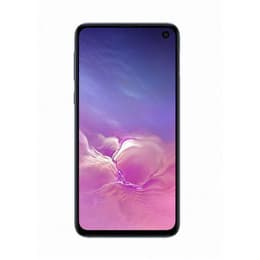
Galaxy S10e
Galaxy S10e
Starting at

Refurbished price:118.00

Versus €759.00 new

See options
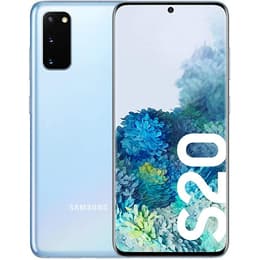
Galaxy S20
Galaxy S20
Starting at

Refurbished price:181.04

Versus €909.00 new

See options

Ratings

The Samsung Galaxy S10e, released in March 2019, and the Samsung Galaxy S20, launched in March 2020, represent two consecutive generations of Samsung's flagship smartphone line. While both devices offer a premium Android experience, the Galaxy S20 introduces several advancements in display technology, camera capabilities, and overall performance. The S10e is known for its compact form factor, while the S20 offers a larger, more immersive screen and enhanced features.

Scores

Durability

When considering the longevity of these devices, several factors come into play, including their release timelines, software support, and physical durability.

  • Release and Software Support: The Galaxy S10e, released in March 2019, received major Android operating system updates up to Android 12. Its official security update support concluded around April 2023. The Galaxy S20, launched a year later in March 2020, received major Android updates up to Android 13 and its security update support officially ended around April 2025. This means the S20 offers a slightly longer period of official software and security updates. [1, 3, 5, 8, 9, 12, 15, 20, 21, 22, 26, 34]
  • Physical Durability: Both smartphones feature an IP68 rating for dust and water resistance, indicating protection against immersion in water up to 1.5 meters for 30 minutes. Both also utilize Gorilla Glass for screen protection. However, user reports suggest the S20's larger, curved display might be more susceptible to damage from drops compared to the S10e's smaller, flat screen. [17, 33, 34, 35, 44]
  • Expected Practical Lifespan: While official software support has concluded for both models, they remain functional for everyday tasks. Users prioritizing the latest software features and security patches will find the S20 had a slightly extended lifespan in this regard. For general use, the practical lifespan will depend on individual usage patterns and care.

Year of Release

2019

2020

Compatible with latest Update

No

No

OS

Android

Android

Foldable

No

No

Performance

The performance of a smartphone is crucial for handling daily tasks, from browsing and social media to demanding applications and gaming.

  • Processing Power and Responsiveness: The Galaxy S20 features a newer generation processor compared to the S10e. This translates to a noticeable improvement in overall speed and responsiveness, particularly when launching applications, multitasking, and engaging in graphically intensive games. Users report the S20 feels snappier under real-life strain and manages thermal performance more effectively during prolonged use. [6, 7, 17, 18, 23, 30, 32, 33]
  • Multitasking and Storage: The Galaxy S20 typically comes with 8GB or 12GB of RAM, while the S10e offers 6GB or 8GB. The increased RAM in the S20 allows for smoother multitasking, enabling users to switch between multiple open applications without significant slowdowns. Both devices generally offer 128GB of internal storage and support expandable storage via a microSD card. [2, 3, 4, 5, 6, 8, 10, 17, 18, 23, 27, 30, 34, 40]
  • Battery Behavior: The Galaxy S20 is equipped with a larger 4000mAh battery, compared to the S10e's 3100mAh battery. While the S20's larger battery capacity generally provides longer usage, its higher-resolution display and faster refresh rate can consume more power. For moderate users, the S20 often provides a clear battery life advantage, especially if the higher refresh rate is not constantly active. Both support wireless charging and reverse wireless charging. [1, 2, 3, 4, 17, 18, 23, 30, 33, 37, 41, 43]

Memory (GB)

6 GB

8 GB

Screen quality

The display is a primary interface for smartphone interaction, and both devices offer high-quality viewing experiences with distinct characteristics.

  • Display Technology and Clarity: Both phones feature Dynamic AMOLED displays, known for vibrant colors and deep blacks. The Galaxy S20 boasts a 6.2-inch display with a higher resolution of 1440x3200 pixels, resulting in a sharper image compared to the S10e's 5.8-inch 1080x2280 pixel display. The S20's display also features a Dynamic AMOLED 2X panel, offering enhanced visual quality. [1, 2, 3, 7, 13, 17, 18, 28, 33, 34, 35]
  • Refresh Rate and Smoothness: A significant difference lies in the refresh rate. The Galaxy S20 offers a 120Hz refresh rate, which provides a noticeably smoother scrolling experience and more fluid animations, though this is typically available at a lower resolution (1080p). The S10e has a standard 60Hz refresh rate. [13, 17, 18, 28, 30, 33, 42]
  • Screen Size and Design: The S10e features a flat 5.8-inch display, which some users prefer for its ease of one-handed use and reduced accidental touches. The S20 has a larger 6.2-inch display with subtly curved edges and minimal bezels, offering a more immersive viewing experience. [2, 13, 17, 18, 30, 35, 38, 39, 40]

Resolution

1080 x 2280

1440 x 3200

Screen type

Dynamic AMOLED

Dynamic AMOLED 2X

Audiovisual

Camera capabilities are a key differentiator for many users, and both the Galaxy S10e and S20 offer versatile photographic tools.

  • Rear Camera System: The Galaxy S10e features a dual-camera setup with a 12MP wide-angle lens and a 16MP ultrawide lens. The Galaxy S20 elevates this with a triple-camera system, including a 12MP wide-angle, a 64MP telephoto, and a 12MP ultrawide lens. The S20's telephoto lens provides enhanced zoom capabilities, a notable upgrade for capturing distant subjects. [1, 2, 3, 7, 13, 17, 18, 19, 27, 28, 40]
  • Photography and Video Features: Both phones deliver capable photography in good lighting conditions. The S20 generally offers improved low-light performance and better detail retention compared to the S10e, which can produce grainier images in challenging light. For video, the S20 supports 8K video recording, a feature not available on the S10e, which maxes out at 4K 60fps. Both have 10MP front-facing cameras. [1, 3, 19, 25, 27, 28, 33, 35, 40]
  • Audio Experience: Both devices are equipped with stereo speakers tuned by AKG, providing a rich audio experience for media consumption. The S10e retains a 3.5mm headphone jack, a feature absent on the S20, which relies on USB-C or wireless audio solutions. [1, 28, 35, 42]

Main camera

12 megapixels

12 megapixels

Front camera

10 megapixels

10 megapixels

Miscellaneous

Beyond core features, several practical elements contribute to the overall user experience and daily usability of these smartphones.

  • Connectivity and Ports: The Galaxy S20 supports 5G connectivity in certain models, offering faster mobile data speeds where available, a feature not present in the S10e. Both devices support modern Wi-Fi standards (Wi-Fi 6 for S20, Wi-Fi 6/802.11ax for S10e) and Bluetooth 5.0. Both utilize a USB-C port for charging and data transfer. [1, 3, 7, 10, 17, 18, 30, 34]
  • Biometrics and Sensors: The S10e features a side-mounted capacitive fingerprint sensor, which many users find fast and reliable. The S20 incorporates an ultrasonic in-display fingerprint sensor. Both also offer 2D face unlock. [3, 34, 35, 32]
  • Design and Handling: The Galaxy S10e is notably more compact and lighter, weighing 150g with dimensions of 142.2 x 69.9 x 7.9 mm. This makes it more comfortable for one-handed use and pocketability. The Galaxy S20 is larger and slightly heavier at 163g, with dimensions of 151.7 x 69.1 x 7.9 mm, offering more screen real estate but potentially being less comfortable for smaller hands. [1, 3, 17, 18, 30, 34, 35, 40]

Weight

150 g

163 g

Screen size (in)

5.8

6.2

Network

4G

4G

SIM card

Physical SIM

Dual Physical SIM

Carrier compatibility

Unlocked

Unlocked

Connector

USB-C + Jack 3.5mm

USB-C

User sentiment for the Galaxy S10e often highlights its compact size, comfortable handling, and the presence of a 3.5mm headphone jack as significant advantages. Many appreciate its solid performance for everyday tasks and its capable camera system, especially for those who prefer a smaller device. Criticisms sometimes point to its battery life, which can be mediocre for heavy users, and its low-light camera performance. [35, 37, 38, 39, 40, 41]

The Galaxy S20 is frequently praised for its advanced display with a high refresh rate, its more powerful camera system with improved zoom and 8K video capabilities, and its overall faster performance. Users often note the smoother visual experience and the benefits of a larger screen. Common concerns include its battery drain when the 120Hz refresh rate is continuously active and the absence of a headphone jack. Some users also find its larger size less convenient for one-handed use. [17, 18, 19, 25, 28, 30, 32, 33, 41, 43]

Users prioritizing a compact form factor, a flat display, and the convenience of a headphone jack may find the Galaxy S10e well-suited to their needs. Its performance remains adequate for general use, and its smaller size makes it highly portable. Conversely, users who value a larger, more fluid display, enhanced camera versatility with better zoom and video recording, and a boost in processing power will likely lean towards the Galaxy S20. The S20 offers a more modern flagship experience, particularly for media consumption and photography enthusiasts.

For those considering either device, exploring quality-assured refurbished options can provide a sustainable choice, extending the life of these capable smartphones.