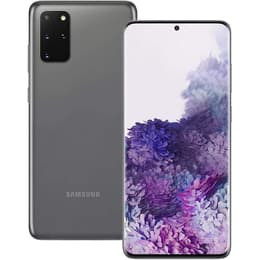
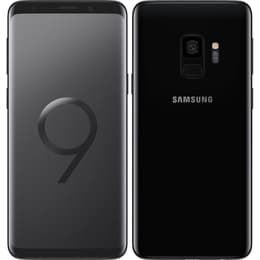


Galaxy S20+ 5G Vs Galaxy S9

Galaxy S20+ 5G
Galaxy S20+ 5G
Starting at

Refurbished price:191.00

Versus €590.00 new

See options
Galaxy S9
Galaxy S9
Starting at

Refurbished price:131.41

Versus €499.00 new

See options

Ratings

The Samsung Galaxy S20 Plus 5G, released in early 2020, and the Samsung Galaxy S9, launched in early 2018, represent different generations of Samsung's flagship smartphone line. While both devices offer a premium Android experience, the S20 Plus 5G introduces advancements in connectivity, camera technology, and display features, reflecting the rapid evolution of mobile technology over a two-year period. Both operate on the Android platform, though with varying levels of software support due to their respective release timelines.

Scores

Durability

The practical lifespan of a smartphone is heavily influenced by its release timeline and the duration of software support it receives.

  • Release Timeline: The Galaxy S9, released in March 2018, is an older device compared to the Galaxy S20 Plus 5G, which launched in February 2020. This two-year difference significantly impacts their remaining software support.
  • OS Support: The Galaxy S9 concluded its major Android operating system updates with Android 10 and its security patches ended in April 2022. In contrast, the Galaxy S20 Plus 5G launched with Android 10 and received major OS updates up to Android 13, with security patches extending further, offering a longer period of official software longevity.
  • Repairability: Both devices feature glass construction on the front and back, held together with strong adhesive, contributing to similar repairability challenges. The Galaxy S9 received a repairability score of 4 out of 10 from iFixit, indicating that repairs, especially for components like the battery and display, can be difficult and are best handled by professionals. While a specific score for the S20 Plus 5G isn't as widely cited, its similar build suggests comparable repair complexities.

Year of Release

2020

2018

Compatible with latest Update

No

No

OS

Android

Android

Foldable

No

No

Performance

Performance is a key differentiator, with the newer device offering a more responsive and capable user experience.

  • Processing Power: The Galaxy S20 Plus 5G features a more advanced processor, providing a noticeable boost in speed and efficiency for demanding applications, complex multitasking, and graphics-intensive gaming. The Galaxy S9, while capable for everyday tasks, utilizes an older generation processor that may show limitations with newer, more resource-intensive apps.
  • Multitasking Capability: The S20 Plus 5G typically comes with 12GB of RAM, allowing for smoother transitions between numerous open applications and more efficient background processes. The Galaxy S9, with 4GB of RAM, handles everyday multitasking adequately but may experience more frequent app reloads when many applications are active simultaneously.
  • Storage Options: The S20 Plus 5G offers internal storage options starting from 128GB, with variants up to 512GB, and supports microSD card expansion up to 1TB. The Galaxy S9 typically came with 64GB or 128GB of internal storage, expandable via microSD card up to 400GB.

Memory (GB)

8 GB

4 GB

Screen quality

The visual experience on both devices is vibrant, though the S20 Plus 5G introduces notable enhancements.

  • Display Technology and Size: The Galaxy S20 Plus 5G features a larger 6.7-inch Dynamic AMOLED 2X display, offering a more expansive viewing area compared to the Galaxy S9's 5.8-inch Super AMOLED screen. Both technologies deliver deep blacks and rich colors, characteristic of AMOLED panels.
  • Resolution and Clarity: Both phones offer a high resolution (1440x3200 pixels for S20 Plus 5G, 2960x1440 pixels for S9), ensuring sharp text and detailed images. The S20 Plus 5G has a slightly higher pixel density due to its resolution on a larger screen.
  • Refresh Rate: A significant difference is the S20 Plus 5G's ability to offer a 120Hz refresh rate at Full HD+ resolution, providing noticeably smoother scrolling and more fluid animations. The Galaxy S9 operates at a standard 60Hz refresh rate.

Resolution

1440 x 3200

1440 x 2960

Screen type

Dynamic AMOLED 2X

Super AMOLED

Audiovisual

Both smartphones offer capable camera systems, but the S20 Plus 5G brings a more versatile setup.

  • Rear Camera System: The Galaxy S20 Plus 5G features a quad-camera array, including a 12MP wide-angle lens, a 64MP telephoto lens with 3x hybrid optical zoom, a 12MP ultrawide lens, and a depth sensor. This provides greater flexibility for various shooting scenarios. The Galaxy S9 has a single 12MP main camera with a unique variable aperture (f/1.5 and f/2.4) that adjusts to lighting conditions, alongside optical image stabilization.
  • Photography Performance: The S20 Plus 5G generally offers improved low-light performance and greater detail capture, especially with its higher-resolution telephoto sensor. The S9's variable aperture was innovative for its time, allowing it to adapt well to different lighting, but the S20 Plus 5G benefits from newer sensor technology and computational photography.
  • Video Capabilities: The S20 Plus 5G can record video at up to 8K resolution at 24 frames per second, and 4K at 60 frames per second. The Galaxy S9 supports 4K video recording at 60 frames per second and features a Super Slow-motion mode at 720p resolution.

Main camera

12 megapixels

12 megapixels

Front camera

10 megapixels

8 megapixels

Miscellaneous

Beyond core features, several practical elements distinguish these two devices.

  • Connectivity: A major difference is the S20 Plus 5G's support for 5G networks, including both sub-6GHz and mmWave bands, enabling faster download and upload speeds in compatible areas. The Galaxy S9 is limited to 4G LTE connectivity. Both support modern Wi-Fi standards and Bluetooth 5.0.
  • Ports and Biometrics: The Galaxy S9 includes a 3.5mm headphone jack, a feature absent on the S20 Plus 5G. Both devices utilize a USB-C port for charging and data transfer. For security, the S20 Plus 5G features an in-display fingerprint sensor and face unlock. The Galaxy S9 has a rear-mounted fingerprint sensor and an iris scanner, alongside face recognition.
  • Build and Handling: Both phones feature a glass front and back with an aluminum frame and are IP68 rated for dust and water resistance. The S20 Plus 5G uses Gorilla Glass 6 for enhanced durability, while the S9 uses Gorilla Glass 5. The S20 Plus 5G is larger and slightly heavier (161.9 x 73.7 x 7.8 mm, 188g) compared to the S9 (147.7 x 68.7 x 8.5 mm, 163g).

Weight

188 g

163 g

Screen size (in)

6.7

5.8

Network

5G

4G

SIM card

Physical SIM + eSIM

Physical SIM

Carrier compatibility

Unlocked

Unlocked

Connector

USB-C

USB-C + Jack 3.5mm

User feedback often highlights the Galaxy S9's compact size and the convenience of its headphone jack as praise points. Some users, however, noted that its battery life could be inconsistent for heavy usage, and its software support has now ended.

The Galaxy S20 Plus 5G is frequently lauded for its expansive and fluid display, its versatile camera system, and the inclusion of 5G connectivity, which offers a more future-proof experience. Common observations include its strong overall performance for demanding tasks and its longer software update cycle.

Users prioritizing a more modern feature set, including 5G connectivity, a high refresh rate display, and a more advanced camera system with longer software support, will find the Galaxy S20 Plus 5G well-suited to their needs. Its larger screen and enhanced processing power make it a strong contender for media consumption and productivity. Conversely, individuals who prefer a more compact device, value the traditional headphone jack, and primarily use their phone for everyday tasks without requiring the latest performance benchmarks might lean towards the Galaxy S9. Its established design and still-capable core functions can be appealing for those seeking a straightforward smartphone experience.

For those considering either device, exploring quality-assured refurbished options can provide an eco-friendly alternative, extending the life of these products and offering a sustainable choice.


See all articles

Our recent comparisons