

Galaxy S10 Vs iPhone 12 mini

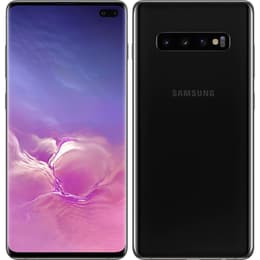
Galaxy S10
Galaxy S10
Starting at

Refurbished price:114.00

Versus €549.00 new

See options
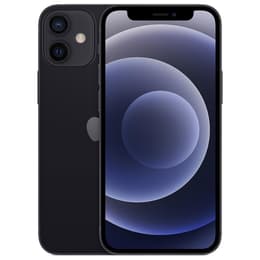
iPhone 12 mini
iPhone 12 mini
Starting at

Refurbished price:146.50

Versus €689.00 new

See options

Ratings

The Samsung Galaxy S10, released in March 2019, and the iPhone 12 Mini, launched in October 2020, represent distinct approaches to smartphone design and user experience. While the Galaxy S10 offers a larger display and a versatile camera system running on Android, the iPhone 12 Mini provides a compact form factor with Apple's iOS ecosystem and a focus on performance and a streamlined camera experience. These differences cater to varying user preferences in terms of size, operating system, and feature priorities.

Scores

Durability

The expected practical lifespan of a smartphone is influenced by its release date, software support, and physical durability. Both devices offer robust build quality, but their differing release timelines impact their long-term software viability.

  • Release Timeline: The Galaxy S10 was released in March 2019, while the iPhone 12 Mini followed in October 2020. This difference means the iPhone 12 Mini benefits from a later starting point for software updates.
  • OS Support: The Galaxy S10 received its last major Android operating system update with Android 12, which was rolled out in early 2022. The iPhone 12 Mini, launched with iOS 14, is expected to receive iOS updates for a longer duration, potentially until 2027.
  • Durability Features: The Galaxy S10 features Gorilla Glass 6 on the front and Gorilla Glass 5 on the back, with an aluminum frame. The iPhone 12 Mini introduced a Ceramic Shield front cover, designed to offer enhanced drop performance, alongside a glass back and an aluminum frame.

Year of Release

2019

2020

Compatible with latest Update

No

Yes

OS

Android

iOS

Foldable

No

No

Performance

Performance in daily use is a key differentiator, with both devices offering capable hardware for their respective ecosystems. The underlying architecture and software optimization contribute to their responsiveness and handling of various tasks.

  • Processor Capabilities: The iPhone 12 Mini features a more recent generation processor, which translates to efficient handling of demanding applications and smooth multitasking. The Galaxy S10, while still capable, relies on an older generation processor that may show its age with the most intensive tasks or future software updates.
  • Multitasking and Responsiveness: The iPhone 12 Mini generally offers fluid navigation and app switching, benefiting from its optimized software and hardware integration. The Galaxy S10 provides a responsive experience for everyday use, though some users have noted occasional slowdowns with heavy usage over time.
  • Storage Options: The Galaxy S10 was available with 128GB or 512GB of internal storage and offered expandable storage via a microSD card. The iPhone 12 Mini comes in 64GB, 128GB, and 256GB configurations, without expandable storage.

Memory (GB)

8 GB

4 GB

Screen quality

The visual experience on both devices is shaped by their display technology, size, and resolution, catering to different preferences for media consumption and daily interaction.

  • Display Technology and Size: The Galaxy S10 features a 6.1-inch Dynamic AMOLED display, known for its vibrant colors and deep blacks. The iPhone 12 Mini has a smaller 5.4-inch Super Retina XDR OLED display, also offering rich colors and contrast, but in a more compact form factor.
  • Resolution and Clarity: The Galaxy S10 offers a higher resolution of 1440 x 3040 pixels, providing a very sharp image. The iPhone 12 Mini has a resolution of 1080 x 2340 pixels, which still delivers clear visuals on its smaller screen.
  • Brightness and Viewing Experience: Both displays offer good brightness levels, with the Galaxy S10 capable of reaching up to 1200 nits peak brightness, and the iPhone 12 Mini also reaching 1200 nits peak brightness for HDR content. The larger screen of the S10 provides a more expansive viewing area, while the 12 Mini's display is designed for comfortable one-handed use.

Resolution

1440 x 3040

1080 x 2340

Screen type

Dynamic AMOLED

Super Retina XDR OLED

Audiovisual

Both smartphones offer capable camera systems, designed to capture a variety of moments with different strengths in their approach to photography and video recording.

  • Rear Camera Systems: The Galaxy S10 features a triple-camera setup with a 12 MP wide, 12 MP telephoto (2x optical zoom), and a 16 MP ultrawide lens, offering versatility for different shooting scenarios. The iPhone 12 Mini has a dual-camera system, comprising a 12 MP wide and a 12 MP ultrawide lens.
  • Low-Light and Everyday Photography: The iPhone 12 Mini benefits from improved low-light performance across its lenses due to its wider aperture on the main camera and computational photography enhancements. The Galaxy S10 also performs well in various lighting conditions, with its multiple lenses providing flexibility.
  • Video Recording and Features: Both devices are capable of recording high-quality video. The iPhone 12 Mini supports Dolby Vision HDR video recording, offering enhanced dynamic range. The Galaxy S10 provides stable video capture and a range of shooting modes.

Main camera

12 megapixels

12 megapixels

Front camera

10 megapixels

12 megapixels

Miscellaneous

Beyond core features, several practical elements contribute to the overall user experience, from connectivity to physical design and interaction methods.

  • Connectivity and Ports: The iPhone 12 Mini supports 5G connectivity, offering faster cellular data speeds where available, and uses a Lightning port for charging and data transfer. The Galaxy S10 supports 4G LTE and features a USB-C port, along with a 3.5mm headphone jack, which is absent on the iPhone 12 Mini.
  • Biometric Authentication: The Galaxy S10 incorporates an ultrasonic in-display fingerprint sensor for secure unlocking. The iPhone 12 Mini relies on Face ID, Apple's facial recognition system.
  • Dimensions and Handling: The iPhone 12 Mini is significantly smaller and lighter, measuring 131.5 x 64.2 x 7.4 mm and weighing 135g, making it ideal for one-handed use and pocketability. The Galaxy S10 is larger at 149.9 x 70.4 x 7.8 mm and weighs 157g, offering a more substantial feel.

Weight

158 g

135 g

Screen size (in)

6.1

5.4

Network

4G

5G

SIM card

Physical SIM

Physical SIM + eSIM

Carrier compatibility

Unlocked

Unlocked

The Samsung Galaxy S10 and iPhone 12 Mini cater to different user priorities, reflecting their distinct design philosophies and operating systems. Users often praise the Galaxy S10 for its expansive and vibrant display, versatile camera system with a telephoto lens, and the inclusion of a headphone jack and expandable storage. Some common criticisms have included its software update longevity compared to newer devices and, for some, the performance of its in-display fingerprint sensor.

The iPhone 12 Mini is frequently lauded for its exceptionally compact size, powerful performance for its form factor, and its capable camera system, particularly its low-light capabilities. However, its smaller battery capacity is a frequent point of concern for heavy users, often requiring more frequent charging. The smaller screen size, while a benefit for portability, can also be a drawback for extensive media consumption or detailed work.

Users prioritizing a larger, high-resolution display, camera versatility with a dedicated telephoto lens, and the flexibility of Android with expandable storage may find the Galaxy S10 well-suited to their needs. Conversely, those who value a highly compact device, a streamlined iOS experience, strong performance in a small package, and longer software support will likely lean towards the iPhone 12 Mini. Both devices remain viable options, especially when considering quality-assured refurbished alternatives, offering a sustainable choice for consumers.

See all articles

Our recent comparisons







