
Galaxy S23 Ultra Vs Xiaomi Redmi Note 14 Pro

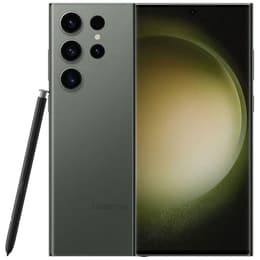
Galaxy S23 Ultra
Galaxy S23 Ultra
Starting at

Refurbished price:430.00

Versus €1,409.00 new

See options
Xiaomi Redmi Note 14 Pro
Starting at

Refurbished price:260.77

Versus €349.99 new

See options

Ratings

The Samsung Galaxy S23 Ultra, released in February 2023, and the Xiaomi Redmi Note 14 Pro, launched in January 2025, represent distinct segments within the smartphone market. While the Galaxy S23 Ultra is positioned as a premium flagship device, the Redmi Note 14 Pro aims to deliver advanced features within a more accessible package. Key differentiators include their processing power, camera versatility, and long-term software support. Both devices operate on the Android platform, offering a wide ecosystem of applications and customization.

Scores

Durability

When considering the practical lifespan of these devices, several factors come into play, including their release timelines, software support, and physical durability.

  • Release Timeline: The Galaxy S23 Ultra, released in early 2023, has been on the market longer than the Redmi Note 14 Pro, which debuted in early 2025. This difference in launch dates impacts their remaining software support cycles.
  • Software Longevity: The Galaxy S23 Ultra is committed to receiving four major Android OS upgrades and five years of security updates, extending its official support until approximately 2028. The Redmi Note 14 Pro is expected to receive three major Android OS upgrades and four years of security updates. This means the Galaxy S23 Ultra offers a longer period of guaranteed software updates.
  • Repairability and Durability: The Galaxy S23 Ultra features Gorilla Glass Victus 2 on both its front and back, along with an aluminum frame and an IP68 rating for dust and water resistance. Its repairability has been noted as improved, with features like battery pull tabs simplifying some repairs. The Redmi Note 14 Pro also incorporates Gorilla Glass Victus 2 for screen protection and carries an IP64 rating for dust and splash resistance. Its repairability is considered average, with some adhesive use, but also includes battery pull tabs.

Year of Release

2023

2025

OS

Android

Android

Foldable

No

No

Performance

The performance capabilities of these two smartphones are influenced by their internal components, affecting everything from app loading to demanding tasks.

  • Processing Power: The Galaxy S23 Ultra is equipped with a high-performance processor designed for flagship-level operations, enabling smooth handling of intensive applications, advanced gaming, and seamless multitasking. The Redmi Note 14 Pro utilizes a mid-range processor, which provides capable performance for everyday use and many popular games, though it may exhibit limitations with the most graphically demanding applications or prolonged heavy usage.
  • Multitasking and Responsiveness: Users of the Galaxy S23 Ultra generally report a highly responsive experience, with quick app launches and fluid transitions, even with multiple applications running simultaneously. The Redmi Note 14 Pro offers a generally smooth experience for typical tasks, but some users have noted occasional stutters or slower responses during more intensive activities.
  • Battery Behavior: The Galaxy S23 Ultra, with its 5000 mAh battery, is widely praised for its extended battery life, often lasting a full day even for heavy users. The Redmi Note 14 Pro features a 5500 mAh battery, and while it offers good endurance for many users, some reports suggest that software optimization can impact its overall longevity.

Memory (GB)

8 GB

8 GB

Screen quality

The visual experience on a smartphone is largely defined by its display, with differences in technology, resolution, and brightness impacting clarity and usability.

  • Display Technology and Clarity: The Galaxy S23 Ultra features a 6.8-inch Dynamic AMOLED 2X display with a high resolution of 3088 x 1440 pixels, providing exceptional sharpness and vibrant colors. The Redmi Note 14 Pro comes with a 6.67-inch AMOLED display, offering a resolution of 1220 x 2712 pixels, which delivers clear visuals suitable for most content consumption.
  • Brightness and Outdoor Visibility: The Redmi Note 14 Pro boasts a high peak brightness of up to 3000 nits, which can significantly enhance visibility in bright outdoor conditions. The Galaxy S23 Ultra offers a peak brightness of 1750 nits, providing strong visibility in various lighting environments.
  • Refresh Rate and Smoothness: Both devices feature a 120Hz refresh rate, contributing to smoother scrolling and more fluid animations. The Galaxy S23 Ultra's display is adaptive, scaling its refresh rate from 1Hz to 120Hz to optimize power efficiency. The Redmi Note 14 Pro's 120Hz refresh rate provides a responsive touch experience, with a high touch sampling rate for quick input registration.

Resolution

1440 x 3088

1080x2400

Audiovisual

Camera systems are a primary consideration for many users, and both devices offer distinct photographic and videographic capabilities.

  • Rear Camera System: The Galaxy S23 Ultra features a versatile quad-camera setup, including a 200 MP main sensor, a 12 MP ultrawide lens, and two 10 MP telephoto lenses offering 3x and 10x optical zoom. This configuration provides extensive flexibility for various photographic scenarios, including distant subjects. The Redmi Note 14 Pro is equipped with a 200 MP main camera, an 8 MP ultrawide, and a 2 MP macro lens, offering a strong main sensor for detailed stills.
  • Photography Performance: The Galaxy S23 Ultra is recognized for its comprehensive camera system, delivering high-quality images with strong detail and color reproduction, particularly benefiting from its advanced zoom capabilities. While the Redmi Note 14 Pro's 200 MP main camera can capture impressive daylight photos, some users have reported inconsistent quality in low-light conditions and during video recording.
  • Video Recording and Audio: The Galaxy S23 Ultra supports video recording up to 8K resolution, offering advanced features for videographers. The Redmi Note 14 Pro's video capabilities are generally limited to 1080p at 60fps, with some users expressing concerns about video quality and stability. Both devices offer stereo speakers for media consumption, with the Galaxy S23 Ultra's audio tuned by AKG.

Front camera

12 megapixels

32 MP

Miscellaneous

Beyond core performance and display, several practical features and design elements contribute to the overall user experience.

  • Connectivity and Ports: Both smartphones support 5G connectivity, Wi-Fi 6, and Bluetooth for modern wireless communication. The Galaxy S23 Ultra uses a USB-C 3.2 port, while the Redmi Note 14 Pro also features a USB-C port. Neither device includes a traditional 3.5mm headphone jack.
  • Biometric Security and Sensors: The Galaxy S23 Ultra incorporates an under-display ultrasonic fingerprint sensor and supports face recognition for secure unlocking. The Redmi Note 14 Pro also features an in-screen fingerprint sensor. Both devices include a standard array of sensors such as accelerometers, gyroscopes, and compasses.
  • Design and Handling: The Galaxy S23 Ultra has a substantial build, weighing around 233 grams, and features a distinct, somewhat boxy design with an integrated S Pen stylus. The Redmi Note 14 Pro is lighter at 190 grams and has a more conventional smartphone form factor, with dimensions that contribute to comfortable handling.

Weight

233 g

180 g

Screen size (in)

6.8

6.67

Network

5G

4G

SIM card

Dual Physical SIM + eSIM

Dual Physical SIM

Carrier compatibility

Unlocked

Unlocked

The Samsung Galaxy S23 Ultra and the Xiaomi Redmi Note 14 Pro cater to different user priorities, each excelling in specific areas. User feedback for the Galaxy S23 Ultra frequently praises its exceptional battery life, powerful performance for demanding tasks, and the versatility of its camera system, particularly the advanced zoom capabilities. Some criticisms include its large size and occasional overprocessing of photos.

For the Redmi Note 14 Pro, common praise points include its bright AMOLED display and the high-resolution main camera for daylight stills. However, some users have expressed concerns regarding its video recording quality, low-light camera performance, and occasional software stutters or overheating during intensive use.

Users prioritizing a top-tier, comprehensive smartphone experience with extended software support, advanced camera features, and integrated stylus functionality will find the Galaxy S23 Ultra well-suited to their needs. Conversely, users who value a bright display, a high-megapixel main camera, and a more recent release date in a device that handles everyday tasks efficiently may lean toward the Redmi Note 14 Pro. Both models are available as quality-assured refurbished options, providing an eco-friendly alternative for consumers seeking to make a sustainable choice.


See all articles

Our recent comparisons







