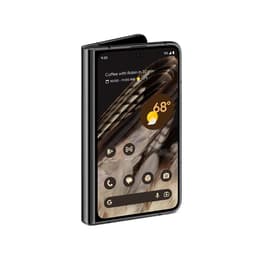
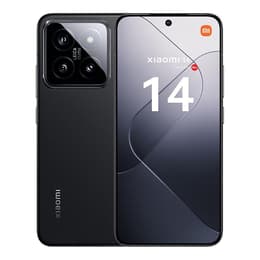


Google Pixel Fold Vs Xiaomi 14

Google Pixel Fold
Google Pixel Fold
Starting at

Refurbished price:454.00

Versus €1,750.29 new

See options
Xiaomi 14
Xiaomi 14
Starting at

Refurbished price:385.00

Versus €1,099.00 new

See options

Ratings

The Google Pixel Fold, released in June 2023, marks Google's entry into the foldable smartphone market, offering a unique form factor that transforms from a traditional smartphone into a larger tablet-like display. In contrast, the Xiaomi 14, launched globally in February 2024, is a conventional flagship smartphone known for its compact design and high-end specifications. While both devices run on the Android operating system, their fundamental designs cater to different user experiences, with the Pixel Fold emphasizing screen versatility and the Xiaomi 14 focusing on a premium, traditional smartphone experience.

Scores

Durability

When considering the long-term usability of these devices, their release timelines and software support play a significant role.

  • Release Timeline: The Google Pixel Fold was released in June 2023, making it an earlier model compared to the Xiaomi 14, which saw its global launch in February 2024. This difference in release dates means the Xiaomi 14 benefits from more recent hardware and a slightly longer period before its technology is considered older.
  • Software Longevity: Google has committed to providing five years of OS and security updates for the Pixel Fold, extending its support until Android 18. The Xiaomi 14, running on Xiaomi HyperOS based on Android 14 at launch, is expected to receive four major Android OS upgrades and five years of security updates for its global version. This indicates a similar expected software lifespan for both devices, ensuring access to new features and security patches for several years.
  • Repairability: The Pixel Fold received a repairability score of 6.5 out of 10 from PBK Reviews, noting that while self-repairs can be difficult, they are manageable. The Xiaomi 14 has a moderate repairability score of 8.0 out of 10, with positive aspects like accessible battery cables and pull tabs for battery removal, though adhesive is used for the back cover and battery.

Year of Release

2023

2023

Compatible with latest Update

Yes

Yes

OS

Android

Android

Foldable

Yes

No

Performance

The performance of a smartphone is crucial for daily tasks, from app usage to demanding games and multitasking. Both devices offer robust capabilities, but their underlying architectures differ.

  • Processing Power: The Google Pixel Fold is equipped with an octa-core processor designed by Google, which handles demanding applications and multitasking smoothly. The Xiaomi 14 features a current-generation octa-core processor, providing strong performance for intensive tasks, gaming, and AI-powered applications.
  • System Responsiveness: Users of the Xiaomi 14 report smooth performance for everyday tasks and intensive use, though some performance throttling may occur under sustained heavy workloads. The Pixel Fold's performance is generally smooth, but some users noted the device could run warm during demanding tasks like hotspotting or video capture, though this did not significantly impact performance.
  • Memory and Storage: The Pixel Fold comes with 12GB of RAM and storage options of 256GB or 512GB. The Xiaomi 14 offers more flexibility with 8GB, 12GB, or 16GB of RAM and storage capacities ranging from 256GB to 1TB.

Memory (GB)

12 GB

16 GB

Screen quality

The display is a primary interaction point, and both devices offer high-quality viewing experiences, albeit in different formats.

  • Display Technology and Clarity: The Google Pixel Fold features a 7.6-inch foldable OLED main display with a resolution of 2208x1840 pixels, offering deep blacks and vibrant colors. Its 5.8-inch OLED cover display has a resolution of 2092x1080 pixels. The Xiaomi 14 boasts a 6.36-inch LTPO OLED display with a resolution of 1200x2670 pixels, also providing sharp visuals and rich colors.
  • Brightness and Refresh Rate: Both devices feature 120Hz refresh rates for smooth scrolling and responsiveness. The Pixel Fold's main display reaches a peak brightness of 1450 nits, while its cover display can go up to 1550 nits. The Xiaomi 14's display offers a higher peak brightness of 3000 nits, enhancing visibility in bright outdoor conditions.
  • Form Factor and Viewing Experience: The Pixel Fold's unique design allows for a large, immersive tablet-like experience when unfolded, with a wider aspect ratio on its cover screen that makes it comfortable for typical smartphone use. The Xiaomi 14 provides a traditional, compact smartphone display with thin, uniform bezels, offering a vivid and sharp viewing experience in a more conventional form.

Resolution

1840 x 2208

1200 x 2670

Screen type

Foldable OLED

LTPO OLED

Audiovisual

Both smartphones offer advanced camera systems, but with different approaches to imaging and user experience.

  • Rear Camera System: The Google Pixel Fold features a triple rear camera setup, including a 48-megapixel main lens, a 10.8-megapixel ultrawide lens, and a 10.8-megapixel telephoto lens with 5x optical zoom. The Xiaomi 14 also comes with a triple rear camera system, co-engineered with Leica, featuring three 50-megapixel lenses: a main lens with optical image stabilization, an ultrawide lens, and a telephoto lens with 3.2x optical zoom.
  • Photography Performance: The Pixel Fold is praised for its camera quality, leveraging Google's computational photography for accurate skin tones and strong low-light performance. The Xiaomi 14's Leica-engineered camera system is noted for its impressive performance across various lighting conditions, delivering exceptional images.
  • Video Recording and Selfies: The Pixel Fold includes a 9.5-megapixel front camera on the cover display and an 8-megapixel inner camera. Its foldable design allows for using the higher-quality rear cameras for selfies. The Xiaomi 14 has a 32-megapixel front camera and supports video recording up to 8K resolution at 24 frames per second.

Main camera

48 megapixels

50 megapixels

Front camera

8 megapixels

32 megapixels

Miscellaneous

Beyond the core components, several practical features contribute to the overall user experience and device utility.

  • Connectivity and Ports: Both devices support 5G connectivity and modern Wi-Fi standards. The Pixel Fold includes Wi-Fi 802.11 ax and Bluetooth v5.2, while the Xiaomi 14 supports Wi-Fi 6 (802.11ax) and Bluetooth 5.4. Both utilize a USB Type-C port for charging and data transfer. The Xiaomi 14 also includes an infrared blaster.
  • Biometric Security: The Pixel Fold features a side-mounted fingerprint sensor and face recognition. The Xiaomi 14 incorporates an under-display optical fingerprint sensor for secure authentication.
  • Design and Durability Features: The Pixel Fold weighs 283 grams and has a folded thickness of 12.1 mm, unfolding to 5.8 mm. It features Gorilla Glass Victus on the cover and back, with an Ultra Thin Glass inner display, and boasts IPX8 water resistance. The Xiaomi 14 is lighter at 193 grams (glass back) and thinner at 8.2 mm, constructed with an aluminum alloy body and a glass back protected by Gorilla Glass Victus, offering IP68 dust and water resistance.

Weight

283 g

188 g

Screen size (in)

7.6

6.36

Network

5G

5G

SIM card

Physical SIM + eSIM

Dual Physical SIM

Carrier compatibility

Unlocked

Unlocked

The Google Pixel Fold and Xiaomi 14 cater to distinct user preferences within the smartphone market. The Pixel Fold is often praised for its innovative foldable design, offering the versatility of a large screen in a compact form factor, and its robust camera system, which benefits from Google's computational photography. Users appreciate its wider cover display, making it more usable as a traditional smartphone when folded. However, some common criticisms include its weight and initial concerns about battery life, though software updates have improved this aspect.

The Xiaomi 14, on the other hand, receives frequent praise for its premium build quality, compact size, and vibrant display. Its camera system, co-engineered with Leica, is highly regarded for delivering excellent photographic results. Users also highlight its strong performance and fast charging capabilities as significant advantages. Some minor criticisms from users include potential performance throttling during extended heavy use and initial software quirks, which are often addressed through updates.

Users prioritizing a versatile device that can switch between a smartphone and a small tablet, especially for productivity and media consumption, may find the Google Pixel Fold well-suited to their needs. Its unique form factor and strong camera performance make it an appealing choice for those who value innovation and a larger screen experience. Conversely, users who prefer a traditional, compact, high-performance smartphone with a top-tier camera and rapid charging will likely lean towards the Xiaomi 14. It offers a refined flagship experience in a more conventional design.

For those considering either of these devices, exploring quality-assured refurbished options can provide an eco-friendly alternative, allowing access to advanced technology while making a sustainable choice.

See all articles

Our recent comparisons