

Compare models
Galaxy A56 Vs iPhone 17e
- 1-year minimum warranty
- Free delivery on all orders
- Free 30-day returns
Differences at a glance
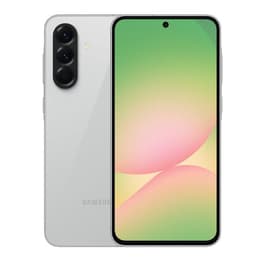
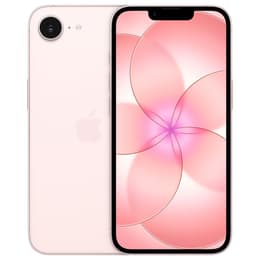
The Samsung Galaxy A56 (2025) and the iPhone 17e (2026) are modern smartphones designed to provide balanced, everyday functionality within their respective software ecosystems. While both devices cater to users seeking reliable daily performance, they operate on different platforms—Android and iOS—and offer distinct hardware approaches regarding screen size, camera configuration, and build proportions.
Available Models
Colour
Storage (GB)
Scores
Durability
Both smartphones are built to handle multi-year usage cycles, though their software update timelines and physical durability parameters differ.
- Software Support and Longevity: The iPhone 17e benefits from Apple's extended iOS update window, ensuring long-term feature support, while the Galaxy A56 provides multi-year Android OS upgrades under Samsung's structured support policy.
- Build and Repairability: The Galaxy A56 incorporates sturdy glass protection on the front and back, whereas the iPhone 17e features Apple's reinforced glass and robust water resistance ratings for everyday peace of mind.
Year of Release
2025
2026
OS
Android
iOS
Foldable
No
No
Performance
System responsiveness and power management vary across these models based on their hardware architecture and software optimization.
- Multitasking and App Handling: Both devices manage daily applications, web browsing, and demanding tasks smoothly, maintaining fluid transitions and stable background app execution.
- Battery Behavior: The Galaxy A56 includes a large 5000 mAh cell designed to easily clear a full day of mixed use, while the iPhone 17e relies on power-efficient processing to maximize battery longevity from its physical capacity.
Screen quality
Display configurations cater to different viewing preferences, featuring distinct panel sizes and visual traits.
- Display Technology: The Galaxy A56 offers a spacious 6.7-inch panel, whereas the iPhone 17e utilizes a compact 6.1-inch Super Retina XDR OLED screen known for high pixel density and deep contrast.
- Outdoor Usability: Both screens reach high peak brightness levels, ensuring clear legibility and vibrant color reproduction under direct sunlight.
Resolution
1080x2340
2532 x 1170
Audiovisual
Optics and media playback systems are tailored to capture everyday moments and deliver reliable audio experiences.
- Camera Configurations: The Galaxy A56 features a versatile multi-lens rear setup for varied framing options, while the iPhone 17e employs a high-resolution primary sensor that utilizes sensor-cropping for clear optical-quality zoom.
- Video and Audio: Both models support stable high-definition video recording alongside stereo speaker output suitable for casual media consumption.
Miscellaneous
Physical dimensions and connectivity standards define the ergonomic and networking profiles of each device.
- Handling and Portability: The Galaxy A56 offers a wider profile accommodating its larger screen, while the iPhone 17e provides a slimmer, lighter form factor that sits comfortably in smaller hands.
- Connectivity and Ecosystems: Both units support fast 5G data speeds, modern Wi-Fi protocols, and secure biometric authentication methods tailored to their respective platforms.
Weight
198 g
169 g
Screen size (in)
6.7
6.1
Network
5G
5G
SIM card
Dual Physical SIM + eSIM
eSIM
Carrier compatibility
Unlocked
Unlocked
Connector
USB-C
USB-C (USB 2)
What the community thinks
When choosing between these two devices, user preferences generally center on operating system familiarity, screen dimensions, and hardware ecosystem integration. Users prioritizing a larger display area and the customisation flexibility of Android may find the Galaxy A56 well-suited to their daily routines. Conversely, users seeking a compact form factor, long-term iOS feature support, and tight integration with Apple accessories will likely lean toward the iPhone 17e. For those exploring sustainable purchasing habits, choosing a quality-assured refurbished option through Back Market provides an eco-friendly alternative that extends device lifecycles without compromising on performance standards.