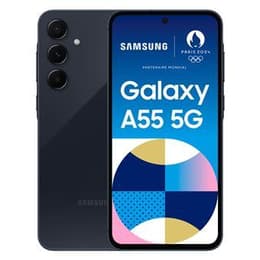
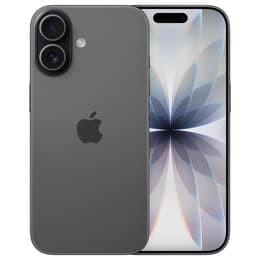


Galaxy A55 Vs iPhone 17

Galaxy A55
Galaxy A55
Starting at

Refurbished price:230.00

Versus €513.35 new

See options
iPhone 17
iPhone 17
Starting at

Refurbished price:704.00

Versus €979.00 new

See options

Ratings

The Samsung Galaxy A55, released in March 2024, and the Apple iPhone 17, launched in September 2025, represent distinct approaches to the smartphone market. The Galaxy A55 operates on the Android platform, offering a customizable experience, while the iPhone 17 runs on Apple's iOS, known for its integrated ecosystem. Key differentiators between these two devices include their operating systems, processor architectures, and camera philosophies, catering to different user preferences.

Scores

Durability

When considering the long-term usability of a smartphone, software support and physical durability are important factors.

  • Release Timeline: The Samsung Galaxy A55 was released in March 2024, making it an established device in the Android mid-range segment. The iPhone 17, released in September 2025, benefits from a more recent launch, typically implying a longer period of future software support.
  • Software Longevity: Samsung has committed to providing the Galaxy A55 with four major OS upgrades and five years of security updates. Apple is known for its extended software support, with the iPhone 17 expected to receive major iOS updates for approximately five to seven years, and security updates potentially extending even longer. This suggests the iPhone 17 will likely receive new features and security patches for a longer duration.
  • Physical Durability: The Galaxy A55 features a glass front protected by Corning Gorilla Glass Victus+ and an aluminum frame, contributing to its robust build and IP67 water and dust resistance rating. The iPhone 17 incorporates Ceramic Shield 2 for enhanced display strength and an aluminum frame, along with an IP68 rating for water and dust resistance. Both devices offer good protection against everyday elements, with the iPhone 17's IP68 rating indicating slightly better water resistance.

Year of Release

2024

2025

Compatible with latest Update

Yes

Yes

OS

Android

iOS

Foldable

No

No

Performance

Performance is a core aspect of any smartphone, influencing how smoothly applications run and how efficiently tasks are handled.

  • Processor Capabilities: The Samsung Galaxy A55 is powered by the Exynos 1480 SoC, which provides smooth performance for everyday tasks and moderate gaming. The iPhone 17 features Apple's A19 chip, which is designed to handle demanding applications and multitasking with high responsiveness, often leading the industry in raw processing power. Users engaging in intensive gaming or video editing on their device may notice a difference in processing speed and graphical rendering.
  • Multitasking and Responsiveness: The Galaxy A55 is available with 8GB or 12GB of RAM, supporting efficient multitasking. The iPhone 17 comes with 8GB of RAM, and its optimized iOS ecosystem ensures smooth transitions between apps and responsive user interactions. Both devices are capable of handling multiple applications simultaneously without significant slowdowns.
  • Storage Options: The Galaxy A55 offers storage options of 128GB or 256GB, with expandable storage via a microSD card slot. The iPhone 17 starts with 256GB of internal storage and is also available in a 512GB configuration, but does not offer expandable storage. Users who require extensive storage for media and applications, or prefer the flexibility of expandable storage, will find a difference in these offerings.

Memory (GB)

8 GB

8 GB

Screen quality

The display is a primary interface for smartphone interaction, and its quality significantly impacts the user experience.

  • Display Technology and Resolution: The Samsung Galaxy A55 features a 6.6-inch Super AMOLED display with a 1080 x 2340 pixel resolution, providing vibrant colors and deep blacks. The iPhone 17 comes with a 6.3-inch Super Retina XDR OLED display, offering a 2622 x 1206 pixel resolution and similar benefits of OLED technology. Both displays deliver clear and detailed visuals.
  • Refresh Rate and Smoothness: Both the Galaxy A55 and the iPhone 17 feature a 120Hz refresh rate, which contributes to smoother scrolling and more fluid animations. The iPhone 17's display also includes ProMotion technology, allowing for adaptive refresh rates that can optimize battery consumption.
  • Brightness Levels: The Galaxy A55 offers a peak brightness of 1000 nits, ensuring good visibility in various lighting conditions. The iPhone 17 boasts a higher peak brightness of 3000 nits for outdoor use and 1600 nits for HDR content, providing enhanced visibility in bright environments and a more impactful HDR experience.

Resolution

1080 x 2340

2622x1206

Screen type

Super AMOLED

Super Retina XDR

Audiovisual

Camera capabilities are a significant consideration for many users, influencing the quality of photos and videos captured.

  • Rear Camera Systems: The Samsung Galaxy A55 features a triple rear camera setup, including a 50MP main sensor with optical image stabilization (OIS), a 12MP ultrawide lens, and a 5MP macro lens. The iPhone 17 is equipped with a dual 48MP Fusion camera system, comprising a 48MP main lens with OIS and a 48MP ultrawide lens. The iPhone 17's main camera also enables 12MP optical-quality 2x telephoto shots through cropping.
  • Photography Performance: The Galaxy A55's main camera captures detailed and vibrant photos in good lighting, with decent low-light performance and effective night mode processing. Its ultrawide camera also performs well in good light. The iPhone 17's camera system is noted for its consistent and reliable image quality across various lighting conditions, with improvements in ultrawide detail and range compared to its predecessors. Users have reported improved low-light performance with the iPhone 17.
  • Video Recording: Both devices support 4K video recording at 30 frames per second. The iPhone 17 offers additional video features such as Cinematic mode up to 4K and Action mode, along with improved stabilization.
  • Front Camera: The Galaxy A55 has a 32MP front-facing camera. The iPhone 17 features an 18MP Center Stage camera, which includes features like Dual Capture and enhanced computational photography for selfies.

Main camera

50 megapixels

48 megapixels

Front camera

32 megapixels

18 megapixels

Miscellaneous

Beyond core specifications, several practical elements contribute to the overall user experience and device utility.

  • Connectivity: Both the Galaxy A55 and iPhone 17 support 5G connectivity for fast mobile data. The Galaxy A55 includes Wi-Fi 6 and Bluetooth 5.3. The iPhone 17 features Wi-Fi 7 and Bluetooth 6, offering newer wireless standards for potentially faster and more stable connections.
  • Ports and Biometrics: The Galaxy A55 uses a USB-C 2.0 port and includes an in-display fingerprint scanner for security. The iPhone 17 utilizes a USB-C port and relies on Face ID for biometric authentication.
  • Design and Handling: The Galaxy A55 has dimensions of 161.1 x 77.4 x 8.2 mm and weighs 213g, featuring an aluminum frame and glass back. The iPhone 17 measures 149.6 x 71.5 x 7.95 mm and weighs 177g, also with an aluminum frame and glass construction. The iPhone 17 is notably lighter and more compact, which may appeal to users preferring a smaller device for one-handed use.
  • Audio: The Galaxy A55 features dual speakers for audio output. The iPhone 17 also includes stereo speakers with spatial audio support. User reviews for the iPhone 17 have highlighted improved sound quality, including a noticeable base-like quality.

Weight

213 g

177 g

Screen size (in)

6.6

6.3

Network

5G

5G

SIM card

Physical SIM

eSIM

Carrier compatibility

Unlocked

Unlocked

Connector

USB-C

USB-C

The Samsung Galaxy A55 and the iPhone 17 cater to different segments of the smartphone market, each with distinct strengths. Users frequently praise the Galaxy A55 for its robust battery life, often lasting two days on a single charge, and its vibrant Super AMOLED display. Its camera system is generally well-regarded for producing detailed photos, especially in good lighting. Some users, however, note that while its performance is solid for its class, it may not match the raw power of flagship devices.

The iPhone 17, on the other hand, receives commendation for its powerful processor, which ensures smooth performance across all tasks. Its display, with ProMotion technology and high peak brightness, is a significant highlight, offering a premium visual experience. The camera system is consistently praised for its reliable image quality and advanced video features. Criticisms sometimes point to the base model's battery life not always matching the dramatic improvements seen in its Pro counterparts, though it still offers a full day of use for many.

Users prioritizing extended software support, a highly integrated ecosystem, and top-tier processing power may find the iPhone 17 well-suited to their needs. Conversely, those who value expandable storage, a slightly larger display, and a strong battery life in a device running Android may lean towards the Galaxy A55. Both devices offer compelling features, and considering a quality-assured refurbished option for either model can provide an eco-friendly alternative for making an informed choice.


See all articles

Our recent comparisons







