

Galaxy A53 5G Vs iPhone 15

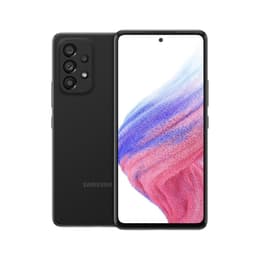
Galaxy A53 5G
Galaxy A53 5G
Starting at

Refurbished price:119.00

Versus €459.00 new

See options
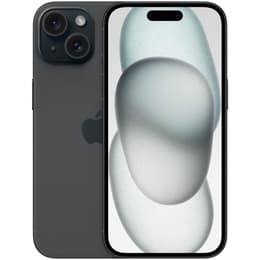
iPhone 15
iPhone 15
Starting at

Refurbished price:394.00

Versus €879.00 new

See options

Ratings

The Samsung Galaxy A53 5G, released in March 2022, and the iPhone 15, launched in September 2023, represent distinct approaches to smartphone design and functionality. While the Galaxy A53 5G operates on the Android platform, offering a customizable experience, the iPhone 15 runs on Apple's iOS, known for its integrated ecosystem. These devices differ significantly in their core processing power and camera capabilities, catering to varying user preferences.

Scores

Durability

The longevity of a smartphone is influenced by its release timeline, software support, and physical durability features. The Galaxy A53 5G and iPhone 15 offer different expectations in these areas.

  • Software Support: The Samsung Galaxy A53 5G, released in March 2022, was promised four years of Android OS upgrades, extending its support up to Android 16, and five years of security updates, which are expected to continue until 2027. In contrast, the iPhone 15, launched in September 2023, has a publicly committed minimum of five years of software support, with updates expected until at least September 2028, and typically receives OS updates for 5-7 years.
  • Physical Durability: The Galaxy A53 5G features a plastic back and Corning Gorilla Glass 5 on the front, along with an IP67 rating for dust and water resistance, meaning it can withstand immersion in up to 1 meter of water for 30 minutes. The iPhone 15 incorporates a Ceramic Shield front cover, a color-infused glass back, and an aluminum frame, coupled with an IP68 rating, allowing for submersion in up to 6 meters of water for 30 minutes.
  • Repairability: While specific repairability scores can vary, both devices are designed with components that may require professional servicing for significant repairs. The newer release of the iPhone 15 generally implies a longer period of readily available parts and service support from the manufacturer.

Year of Release

2022

2023

Compatible with latest Update

Yes

Yes

OS

Android

iOS

Foldable

No

No

Performance

Performance in daily use, from app handling to multitasking, is a key differentiator between these two smartphones, largely influenced by their internal components and software optimization.

  • Processing Power: The Galaxy A53 5G is equipped with a processor designed for efficient mid-range performance, handling everyday applications and moderate multitasking smoothly. Some users have noted that its performance can sometimes feel less responsive compared to higher-end devices, particularly with demanding games or heavy usage. The iPhone 15 features a more advanced processor, which was previously used in Apple's Pro models, providing a significant boost in speed and efficiency. This allows for very smooth operation, quick app loading, and seamless multitasking, even with graphically intensive applications and games.
  • Battery Behavior: The Galaxy A53 5G houses a 5000 mAh battery, which often translates to extended usage times, with many users reporting that it can comfortably last more than a full day on a single charge, even with active use. The iPhone 15, despite having a smaller battery capacity, is highly optimized through its operating system and processor, enabling it to consistently deliver a full day of power for most users.
  • Storage and Responsiveness: Both devices offer various storage configurations. The iPhone 15's more powerful internal components contribute to its overall system responsiveness, making interactions feel immediate and fluid. The Galaxy A53 5G provides a solid user experience, though occasional minor delays might be observed during intensive tasks.

Memory (GB)

4 GB

6 GB

Screen quality

The visual experience on a smartphone is heavily dependent on its display technology, resolution, and brightness, areas where the Galaxy A53 5G and iPhone 15 present different characteristics.

  • Display Technology and Clarity: The Samsung Galaxy A53 5G features a 6.5-inch Super AMOLED display, known for its vibrant colors, deep blacks, and excellent contrast. It offers a resolution of 1080 x 2400 pixels, resulting in clear and sharp visuals for everyday content consumption. The iPhone 15 comes with a 6.1-inch Super Retina XDR OLED display, which also delivers rich colors and deep blacks, alongside a higher resolution of 1179 x 2556 pixels, providing a slightly sharper image with a higher pixel density.
  • Refresh Rate and Brightness: The Galaxy A53 5G boasts a 120Hz refresh rate, contributing to smoother scrolling and a more fluid visual experience, particularly noticeable in fast-paced content and navigation. Its display offers good brightness for indoor and outdoor viewing. The iPhone 15 has a standard 60Hz refresh rate, which provides a consistent and smooth experience for most tasks. However, it excels in brightness, with a peak outdoor brightness of up to 2,000 nits, making it exceptionally legible even in direct sunlight.
  • Screen Size and Features: The larger screen of the Galaxy A53 5G offers more expansive viewing for media and productivity. The iPhone 15 introduces the Dynamic Island, an interactive area around the front camera and sensors that displays alerts and live activities, enhancing user interaction.

Resolution

1080 x 2400

1179 x 2556

Screen type

Super AMOLED

Super Retina XDR OLED

Audiovisual

The camera systems on both devices are designed to capture moments, but they offer different strengths in terms of hardware, features, and overall image quality.

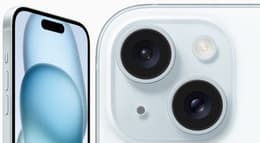
  • Rear Camera System: The Samsung Galaxy A53 5G features a versatile quad-camera setup, including a 64MP main sensor with optical image stabilization (OIS), a 12MP ultrawide lens, and dedicated 5MP macro and depth sensors. It performs well in bright conditions, capturing detailed and colorful photos, though its low-light performance is generally considered average. The iPhone 15 is equipped with a dual-camera system, highlighted by a 48MP main sensor with OIS that can also produce 2x telephoto-like shots through an intelligent crop, and a 12MP ultrawide lens. This system delivers impressive detail, improved low-light capabilities, and consistent image quality across various scenarios.
  • Video Recording Capabilities: Both phones are capable of recording 4K video at 30 frames per second (fps). The iPhone 15 extends its video capabilities with 4K recording at up to 60fps, offering smoother motion capture, and includes advanced features like Cinematic Mode for depth-of-field effects. The Galaxy A53 5G provides good video quality for its segment, with stabilization primarily effective at 30fps.
  • Front Camera and Audio: The Galaxy A53 5G has a 32MP front camera, suitable for detailed selfies and video calls. The iPhone 15 features a 12MP front camera that excels in clarity and dynamic range. Both devices offer stereo speakers, providing a more immersive audio experience for media consumption. The iPhone 15's microphone quality is noted for clear call and recording performance.

Main camera

64 megapixels

48 megapixels

Front camera

32 megapixels

12 megapixels

Miscellaneous

Beyond core performance and display, practical elements like connectivity, physical design, and security features contribute to the overall user experience of these smartphones.

  • Connectivity and Ports: Both the Galaxy A53 5G and iPhone 15 support 5G connectivity for fast mobile data. The iPhone 15 features Wi-Fi 6 and Bluetooth 5.3, offering faster and more stable wireless connections. The Galaxy A53 5G supports Wi-Fi and Bluetooth 5.1. A notable difference is the port type: the iPhone 15 has transitioned to a USB-C port, aligning with a more universal standard, while the Galaxy A53 5G also uses USB-C.
  • Biometric Security and Design: The Galaxy A53 5G incorporates an in-display optical fingerprint sensor for secure unlocking. The iPhone 15 relies on Face ID, Apple's facial recognition system. In terms of physical design, the Galaxy A53 5G has a slightly larger footprint and weight (159.6 x 74.8 x 8.1 mm, 189g) compared to the iPhone 15 (147.6 x 71.6 x 7.8 mm, 171g), making the iPhone 15 a more compact and lighter device.
  • Build Materials and Features: The Galaxy A53 5G uses a plastic back, which can be more resistant to shattering, while the iPhone 15 features a color-infused glass back, offering a different tactile feel. The iPhone 15 also includes the Dynamic Island, an interactive notification and activity hub.

Weight

189 g

171 g

Screen size (in)

6.5

6.1

Network

5G

5G

SIM card

Physical SIM

eSIM

Carrier compatibility

Unlocked

Unlocked

Connector

USB-C

USB-C (USB 2)

User sentiment for the Samsung Galaxy A53 5G often highlights its strong battery life and vibrant AMOLED display as significant advantages. Many appreciate its versatile camera system for everyday photography, especially in good lighting conditions. Criticisms sometimes point to its processor performance, which some users find less powerful for demanding tasks compared to alternatives, and occasional reports of slower charging speeds.

For the iPhone 15, common praise centers on its powerful and efficient processor, leading to a very fluid user experience across applications and games. Users frequently commend its improved camera system, particularly for its detail, low-light performance, and video capabilities. The introduction of the Dynamic Island and the switch to USB-C are also often cited as positive enhancements. Some users, however, note the 60Hz refresh rate as a point of comparison with other devices that offer higher rates.

Users prioritizing an extended battery life, a larger display for media consumption, and a highly customizable Android experience may find the Samsung Galaxy A53 5G well-suited to their needs. Its robust software support policy also ensures a good lifespan. Conversely, users who value top-tier processing power, a highly refined camera system with advanced video features, and a compact design within the iOS ecosystem will likely lean towards the iPhone 15. Its superior screen brightness and longer expected software update period also contribute to its appeal for those seeking a premium and long-lasting device. Both models are available as quality-assured refurbished options, providing an eco-friendly alternative for consumers.

See all articles

Our recent comparisons