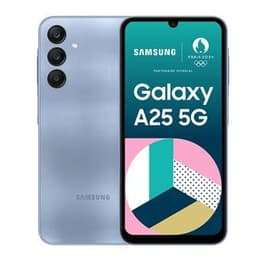
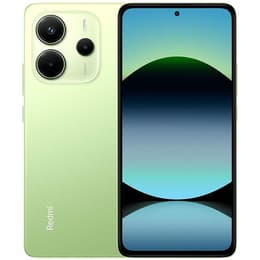


Galaxy A25 Vs Xiaomi Redmi Note 14 4G

Galaxy A25
Galaxy A25
Starting at

Refurbished price:134.00

Versus €319.11 new

See options
Xiaomi Redmi Note 14 4G
Starting at

Refurbished price:162.00

Versus €229.99 new

See options

Ratings

The Samsung Galaxy A25, released in late 2023, and the Xiaomi Redmi Note 14 4G, launched in early 2025, are both Android smartphones designed for everyday use. While both devices offer a similar user experience through the Android operating system, they differentiate themselves in areas such as display technology, camera capabilities, and long-term software support. The Galaxy A25 operates on Android 14 with Samsung's One UI, while the Redmi Note 14 4G also runs Android 14, but with Xiaomi's HyperOS interface.

Scores

Durability

When considering the longevity of these devices, their release timelines and software support policies are key factors.

  • Release Timeline: The Samsung Galaxy A25 was released in December 2023, making it a slightly older model compared to the Xiaomi Redmi Note 14 4G, which launched in January 2025. This difference in release year impacts the duration of future software updates.
  • OS Support Duration: The Galaxy A25 is expected to receive four major Android operating system updates and five years of security updates from its release. In contrast, the Redmi Note 14 4G offers a more extended commitment with four major Android updates and six years of security updates. This means the Redmi Note 14 4G is projected to receive security patches for an additional year compared to the Galaxy A25.
  • Durability Features: Both devices feature Corning Gorilla Glass 5 for display protection. The Redmi Note 14 4G also includes an IP54 rating for dust and splash resistance, offering a degree of protection against everyday elements.

Year of Release

2023

2025

OS

Android

Android

Foldable

No

No

Performance

Both smartphones are equipped to handle daily tasks and multitasking, though with some distinctions in their underlying hardware and user experience.

  • Processor Capabilities: The Samsung Galaxy A25 is powered by an Exynos 1280 processor, which provides smooth performance for general applications and moderate gaming. The Xiaomi Redmi Note 14 4G features a MediaTek Helio G99-Ultra processor, designed to offer responsive performance for multitasking and casual gaming.
  • Multitasking and Storage: Both devices typically come with 6GB or 8GB of RAM, allowing for efficient app switching and multitasking. They also offer 128GB or 256GB of internal storage, with the option to expand storage via a microSD card, which is beneficial for users who store many photos, videos, or applications.
  • Battery Performance: The Galaxy A25 is equipped with a 5000mAh battery, supporting 25W fast charging. Users generally report that its battery can last through a full day of typical use. The Redmi Note 14 4G has a larger 5500mAh battery and supports faster 33W charging, which can provide extended usage times and quicker recharges.

Memory (GB)

6 GB

6 GB

Screen quality

The visual experience on both phones is delivered through vibrant displays, each with specific characteristics that cater to different viewing preferences.

  • Display Technology and Size: Both the Galaxy A25 and the Redmi Note 14 4G feature AMOLED displays, known for their deep blacks and vibrant colors. The Galaxy A25 has a 6.5-inch Super AMOLED screen, while the Redmi Note 14 4G offers a slightly larger 6.67-inch AMOLED panel.
  • Resolution and Refresh Rate: Both displays offer a Full HD+ resolution (1080x2340 pixels for A25, 1080x2400 pixels for Note 14 4G), ensuring clear and detailed visuals. They also both support a 120Hz refresh rate, contributing to smoother scrolling and a more fluid visual experience.
  • Brightness and Clarity: The Redmi Note 14 4G boasts a higher peak brightness of 1800 nits, with a typical high brightness mode (HBM) of 1200 nits, which can be beneficial for outdoor visibility. The Galaxy A25 claims a peak brightness of 1000 nits. Both displays are protected by Corning Gorilla Glass 5.

Resolution

1080x2340

1080x2400

Audiovisual

The camera systems on these devices offer different strengths for capturing photos and videos in various scenarios.

  • Main Camera Capabilities: The Samsung Galaxy A25 features a 50MP main camera with Optical Image Stabilization (OIS), which helps in reducing blur from handshakes, especially in lower light conditions. It is complemented by an 8MP ultrawide lens and a 2MP macro sensor. The Xiaomi Redmi Note 14 4G sports a higher resolution 108MP main camera, but it lacks OIS. It also includes 2MP macro and 2MP depth sensors, but does not have an ultrawide camera.
  • Photography Performance: User reviews suggest the Galaxy A25's main camera performs well in good lighting, capturing vibrant images, though some users note a lack of detail in certain situations and struggles in indoor lighting. The Redmi Note 14 4G's 108MP main sensor is reported to deliver solid results in both daylight and night photography, but some users find the secondary sensors less practical.
  • Video Recording and Front Camera: The Galaxy A25 is capable of recording video at 4K resolution at 30 frames per second, and 1080p at 30/60fps. Its front camera is 13MP. The Redmi Note 14 4G records video at 1080p and features a 20MP front camera, which can automatically switch to wide-angle for group shots.

Miscellaneous

Beyond core specifications, several practical elements contribute to the overall user experience of these smartphones.

  • Connectivity and Ports: The Samsung Galaxy A25 supports 5G connectivity, offering faster mobile data speeds where available. The Xiaomi Redmi Note 14 4G is a 4G-only device. Both phones include Wi-Fi (A25 with Wi-Fi 5, Note 14 4G with Wi-Fi 5 dual-band), Bluetooth (A25 with 5.1, Note 14 4G with 5.3), NFC, and a USB-C port. Both also retain a 3.5mm headphone jack.
  • Biometric Security and Audio: The Galaxy A25 features a side-mounted fingerprint sensor, while the Redmi Note 14 4G incorporates an in-display fingerprint sensor. Both devices offer stereo speakers, with the Redmi Note 14 4G specifically mentioning Dolby Atmos support for an enhanced audio experience.
  • Additional Features: The Redmi Note 14 4G includes an IR Blaster, allowing it to function as a universal remote control. It also has an IP54 rating for dust and splash resistance. The Galaxy A25 does not specify an IP rating but is built with a plastic back and frame, and a glass front.

Weight

197 g

196 g

Screen size (in)

6.5

6.67

Network

5G

4G

SIM card

Physical SIM

Physical SIM + eSIM

Carrier compatibility

Unlocked

Unlocked

The Samsung Galaxy A25 and Xiaomi Redmi Note 14 4G each present a compelling package for users seeking a capable smartphone, with distinct advantages that cater to different priorities. User feedback for the Galaxy A25 often praises its vibrant AMOLED display, reliable battery life, and Samsung's commitment to software updates. Some criticisms include its camera performance in low light and occasional reports of sluggishness in the user interface for power users.

For the Redmi Note 14 4G, common praise points highlight its impressive 108MP main camera, larger battery with faster charging, and the extended software support policy. However, some users note the absence of an ultrawide camera, the limited utility of the secondary sensors, and occasional software bugs or delayed updates.

Users prioritizing 5G connectivity, a camera with Optical Image Stabilization, and a slightly more compact design may prefer the Samsung Galaxy A25. Conversely, those who value a larger battery, faster charging, a higher resolution main camera, and a longer software update commitment might lean toward the Xiaomi Redmi Note 14 4G. Both devices offer a quality-assured refurbished option, providing an eco-friendly alternative for consumers looking to make an informed and sustainable choice.

See all articles

Our recent comparisons






