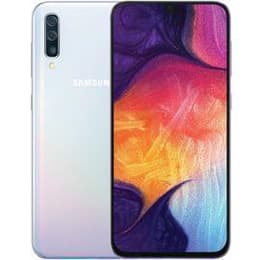
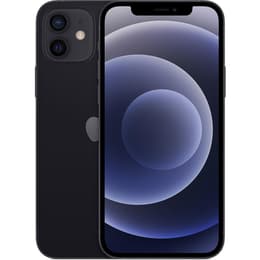


Galaxy A50 Vs iPhone 12

Galaxy A50
Galaxy A50
Starting at

Refurbished price:107.00

Versus €349.00 new

See options
iPhone 12
iPhone 12
Starting at

Refurbished price:174.00

Versus €829.00 new

See options

Ratings

The Samsung Galaxy A50, released in early 2019, and the Apple iPhone 12, launched in late 2020, represent distinct approaches to smartphone design and functionality. While the Galaxy A50 operates on the Android platform, offering a customizable experience, the iPhone 12 runs on Apple's iOS, known for its integrated ecosystem. Key differentiators include their respective operating systems, display technologies, and overall performance capabilities, reflecting their different release timelines and target user experiences.

Scores

Durability

The practical lifespan of a smartphone is influenced by its release timeline, software support, and physical durability.

  • Release Timeline: The Samsung Galaxy A50 was introduced in early 2019, while the iPhone 12 followed in late 2020. This difference in release dates means the iPhone 12 benefits from a longer period of anticipated software updates and security patches from its manufacturer.
  • Software Longevity: The Galaxy A50 launched with Android 9.0 Pie and received updates up to Android 11 with One UI 3.1, indicating a typical support cycle for Android devices of its era. The iPhone 12, starting with iOS 14, is compatible with more recent iOS versions, extending its software relevance further into the future.
  • Physical Durability: The Galaxy A50 features a plastic back and frame with Corning Gorilla Glass 3 on the front display for scratch resistance. The iPhone 12 incorporates a Ceramic Shield front cover, designed for enhanced drop performance, and an aluminum frame, contributing to its robust build. Both devices carry an IP rating for water and dust resistance, with the iPhone 12 rated for greater depth and duration.

Year of Release

2019

2020

Compatible with latest Update

No

Yes

OS

Android

iOS

Foldable

No

No

Performance

Performance in daily use is a critical aspect, impacting how smoothly applications run and how efficiently tasks are handled.

  • System Responsiveness: The iPhone 12 offers a highly responsive user experience, handling demanding applications and multitasking with fluidity. This is largely due to its advanced internal components, which provide significant processing power.
  • Multitasking and App Handling: The Galaxy A50, equipped with its internal processor and available with 4GB or 6GB of RAM, manages everyday tasks and moderate multitasking effectively. However, some users have noted occasional lags when the device is heavily loaded with applications or during intensive use.
  • Battery Behavior: The Galaxy A50 includes a 4000 mAh battery, which generally provides a full day of use for many users, with some reporting impressive longevity even with heavy usage. The iPhone 12 has a 2815 mAh battery, and while it can last a full day, its battery performance can be more significantly impacted by the use of 5G connectivity.

Memory (GB)

4 GB

4 GB

Screen quality

The visual experience is largely defined by the display technology, resolution, and overall clarity.

  • Display Technology: Both devices feature OLED-based displays, offering deep blacks and vibrant colors. The Galaxy A50 uses a 6.4-inch Super AMOLED panel, while the iPhone 12 features a 6.1-inch Super Retina XDR OLED display.
  • Resolution and Clarity: The Galaxy A50 provides a Full HD+ resolution of 2340 x 1080 pixels, resulting in clear visuals. The iPhone 12 has a resolution of 2532 x 1170 pixels, offering a slightly higher pixel density for sharper text and images.
  • Brightness and Viewing Experience: The iPhone 12's display can achieve higher peak brightness levels, especially when viewing HDR content, which enhances visibility in bright outdoor conditions and improves the dynamic range of media. The Galaxy A50's Super AMOLED display also offers good brightness and wide viewing angles, contributing to an enjoyable viewing experience.

Resolution

1080 x 2340

1170 x 2532

Screen type

Super AMOLED

Super Retina XDR OLED

Audiovisual

Camera capabilities are a significant factor for many users, influencing the quality of photos and videos captured.

  • Rear Camera Systems: The Galaxy A50 features a triple rear camera setup, including a 25-megapixel main sensor, an 8-megapixel ultra-wide lens, and a 5-megapixel depth sensor. The iPhone 12 has a dual 12-megapixel camera system, comprising a wide and an ultra-wide lens.
  • Photography Performance: The iPhone 12 excels in various lighting conditions, offering features like Night mode across all cameras, Deep Fusion for enhanced detail, and Smart HDR 3 for improved dynamic range. The Galaxy A50 performs well in well-lit environments, capturing detailed photos, though its low-light performance and depth sensing for portrait shots have received mixed user feedback.
  • Video Recording: The iPhone 12 supports 4K video recording with Dolby Vision HDR, providing high-quality video capture. The Galaxy A50's default camera app limits video recording to 1080p, despite its chipset supporting 4K.

Main camera

25 megapixels

12 megapixels

Front camera

25 megapixels

12 megapixels

Miscellaneous

Beyond core features, several practical elements contribute to the overall user experience and device utility.

  • Connectivity: The iPhone 12 supports 5G cellular networks, offering faster data speeds where available, along with Wi-Fi 6. The Galaxy A50 supports 4G LTE and Wi-Fi 5 (802.11 a/b/g/n/ac). Both devices include Bluetooth 5.0 for wireless accessories.
  • Ports and Biometrics: The iPhone 12 uses a Lightning port for charging and data transfer and relies on Face ID for secure authentication. The Galaxy A50 features a USB-C port and an in-display optical fingerprint sensor for unlocking and security.
  • Design and Handling: The Galaxy A50 has a slim profile and a lightweight build, with a plastic back that often features a gradient finish. The iPhone 12 has a flat-edged design with an aluminum frame and a glass back, contributing to a distinct tactile feel.

Weight

166 g

164 g

Width

7,47 cm

7.15 cm

Height

15,85 cm

14.67 cm

Depth

0,77 cm

0.74 cm

Screen size (in)

6.4

6.1

Network

4G

5G

SIM card

Dual Physical SIM

Physical SIM + eSIM

Carrier compatibility

Unlocked

Unlocked

Connector

USB-C + Jack 3.5mm

Lightning

Users frequently praise the Samsung Galaxy A50 for its vibrant Super AMOLED display and generally reliable battery life, making it a suitable option for everyday media consumption and moderate use. Some common criticisms have pointed to its performance occasionally lagging under heavy loads and the inconsistency of its in-display fingerprint sensor.

The iPhone 12 is often lauded for its powerful performance, excellent camera capabilities, particularly in low light, and its bright, high-resolution OLED display. However, user discussions sometimes highlight concerns regarding its battery life, especially when consistently using 5G connectivity.

For individuals prioritizing an expansive and colorful display for media, long battery life for general use, and expandable storage, the Galaxy A50 may align well with their needs. Conversely, users who value top-tier processing power for demanding applications, advanced camera features, and a longer software support window might find the iPhone 12 to be a more fitting choice. Both devices offer distinct advantages, catering to different user preferences. Exploring quality-assured refurbished options for either model can provide an eco-friendly alternative for consumers.


See all articles

Our recent comparisons