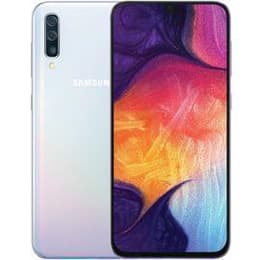



Galaxy A50 Vs Huawei P30 Pro

Galaxy A50
Galaxy A50
Starting at

Refurbished price:107.00

Versus €349.00 new

See options
Huawei P30 Pro
Huawei P30 Pro
Starting at

Refurbished price:188.00

Versus €849.00 new

See options

Ratings

The Samsung Galaxy A50 and the Huawei P30 Pro are Android smartphones that were both released in early 2019. While the Galaxy A50 positioned itself as a strong contender in the mid-range segment, the P30 Pro was a flagship device known for its advanced camera system. Both devices run on the Android operating system, though with different custom user interfaces: Samsung's One UI and Huawei's EMUI.

Scores

Durability

When considering the long-term usability of these devices, their release timelines and subsequent software support are key factors. Both phones launched in 2019, meaning they have already received a significant portion of their expected software updates.

  • Software Longevity: The Samsung Galaxy A50 launched with Android 9 Pie and received updates up to Android 11. Samsung officially ended software support for the Galaxy A50 around April 2023, meaning it no longer receives feature or security updates. The Huawei P30 Pro also launched with Android 9 Pie (EMUI 9.1) and was updated to EMUI 12 globally. Huawei's update policy is less consistent, but some P30 Pro models in China received HarmonyOS 4 in late 2025, though global models typically stopped at EMUI 12.
  • Physical Durability: The Huawei P30 Pro features an IP68 rating for dust and water resistance, offering protection against immersion in water. The Samsung Galaxy A50 does not carry an official IP rating, indicating less resistance to dust and water exposure. The P30 Pro uses an aluminum alloy frame and glass construction, while the A50 has a plastic back and frame with a glass front protected by Corning Gorilla Glass 3.
  • Practical Lifespan: Given that both devices are several years old, their practical lifespan for receiving official software support has largely concluded. Users of either device should consider that they will not receive the latest Android versions or regular security patches, which can impact long-term security and compatibility with newer applications.

Year of Release

2019

2019

Compatible with latest Update

No

No

OS

Android

Android

Foldable

No

No

Performance

The performance of a smartphone is influenced by its internal components, affecting how smoothly applications run and how efficiently it handles demanding tasks.

  • Processing Power: The Huawei P30 Pro is equipped with a more powerful processor, which allows it to handle graphically intensive games and complex applications with greater ease and responsiveness. The Samsung Galaxy A50's processor is suitable for everyday tasks, social media, and lighter gaming, but some users reported heating and lag when running multiple demanding apps.
  • Multitasking and Storage: The P30 Pro typically comes with 8GB of RAM, providing ample capacity for smooth multitasking and keeping many applications open simultaneously without significant slowdowns. The Galaxy A50 offers 4GB or 6GB of RAM, which is sufficient for general use but may show limitations with heavy multitasking. Both devices offer various internal storage options, with the P30 Pro supporting Nano Memory (NM) cards for expansion, while the A50 uses more common microSD cards.
  • Battery Behavior: The Huawei P30 Pro features a 4200 mAh battery, which generally provides extended usage times, with users often praising its longevity. The Samsung Galaxy A50 has a 4000 mAh battery, also noted by users for its good battery life under typical conditions. Both support fast charging, with the P30 Pro offering faster charging speeds.

Memory (GB)

4 GB

8 GB

Screen quality

The display is a primary interface for smartphone interaction, and both devices offer distinct viewing experiences.

  • Display Technology and Clarity: Both the Samsung Galaxy A50 and the Huawei P30 Pro feature Full HD+ resolution displays (1080x2340 pixels), providing clear and detailed visuals for general content consumption. The Galaxy A50 uses a Super AMOLED panel, known for its vibrant colors and deep blacks. The P30 Pro utilizes an OLED display, which also delivers rich colors and strong contrast.
  • Size and Viewing Experience: The Huawei P30 Pro has a slightly larger 6.47-inch display compared to the Galaxy A50's 6.4-inch screen. Both offer an immersive viewing experience with minimal bezels. The P30 Pro's display is curved at the edges, contributing to a more expansive feel.
  • Brightness and Refresh Rate: Both displays offer adequate brightness for indoor use, and the OLED/Super AMOLED technology ensures good visibility in various lighting conditions. Neither device features a high refresh rate display, operating at the standard 60Hz, which provides a smooth experience for typical smartphone interactions.

Resolution

1080 x 2340

1080 x 2340

Screen type

Super AMOLED

OLED

Audiovisual

The camera systems on these smartphones present significant differences, catering to varying photography needs and preferences.

  • Rear Camera Capabilities: The Huawei P30 Pro is renowned for its advanced quad-camera system, featuring a 40MP main sensor, a 20MP ultrawide lens, an 8MP periscope telephoto lens capable of 5x optical zoom, and a Time-of-Flight (ToF) sensor for depth sensing. This setup allows for exceptional low-light performance and impressive zoom capabilities. The Samsung Galaxy A50 has a triple-camera setup with a 25MP main sensor, an 8MP ultrawide, and a 5MP depth sensor.
  • Photography Performance: The P30 Pro generally delivers high-quality photos with strong detail and dynamic range, particularly excelling in challenging low-light environments. Some users, however, noted that the camera's quality seemed to degrade with later software updates. The Galaxy A50's camera performs well in good lighting, but some users reported inconsistent results, with occasional blurry or dull photos, and HDR mode sometimes leading to over-saturated colors.
  • Video and Audio: The Huawei P30 Pro offers good video recording quality, though it lacks 4K 60fps recording, which some users found to be a disadvantage. The Galaxy A50 also provides capable video recording for everyday use. For audio, the P30 Pro does not have a traditional headphone jack, relying on USB-C or wireless audio. The Galaxy A50 includes a headphone jack.

Main camera

25 megapixels

40 megapixels

Front camera

25 megapixels

32 megapixels

Miscellaneous

Beyond core specifications, several practical features and design elements differentiate these two devices.

  • Connectivity and Ports: Both smartphones support modern connectivity standards including 4G LTE, Wi-Fi (802.11 a/b/g/n/ac), and Bluetooth 5.0. The Huawei P30 Pro uses a USB-C port for charging and data transfer, which is also its primary audio output. The Samsung Galaxy A50 also features a USB-C port but retains a 3.5mm headphone jack.
  • Biometric Security: Both devices incorporate in-display fingerprint sensors for secure unlocking. The P30 Pro also offers face unlock.
  • Design and Handling: The Huawei P30 Pro, with its glass and aluminum construction, offers a more premium feel and is slightly heavier at 192g compared to the Galaxy A50's 166g. The P30 Pro's curved display and slightly narrower width contribute to comfortable handling despite its size. The Galaxy A50 features a plastic back with an iridescent finish.

Weight

166 g

192 g

Width

7,47 cm

7,34 cm

Height

15,85 cm

15,8 cm

Depth

0,77 cm

0,84 cm

Screen size (in)

6.4

6.47

Network

4G

4G

SIM card

Dual Physical SIM

Dual Physical SIM

Carrier compatibility

Unlocked

Unlocked

Connector

USB-C + Jack 3.5mm

USB-C

The Samsung Galaxy A50 and Huawei P30 Pro, both released in 2019, offer different strengths that cater to distinct user needs. The Galaxy A50 was praised for its vibrant Super AMOLED display and solid battery life, making it a reliable option for general daily use and media consumption. However, some users noted occasional performance lags with demanding applications and inconsistencies in camera output.

The Huawei P30 Pro, on the other hand, garnered significant acclaim for its exceptional camera system, particularly its low-light capabilities and impressive optical zoom, which were considered leading features at its release. Its powerful processor and extended battery life also contributed to a premium user experience. Criticisms sometimes included a less firm software update policy for global models and the absence of a traditional headphone jack.

Users prioritizing advanced photography features, robust performance for demanding applications, and a more premium build quality may find the Huawei P30 Pro better suited to their needs. Its IP68 water and dust resistance also adds a layer of durability. Conversely, users who value a headphone jack, a slightly lighter device, and a vibrant Super AMOLED display for everyday tasks might lean towards the Samsung Galaxy A50. Both devices have reached the end of their official software support cycles, which is an important consideration for long-term use.

For those seeking a more sustainable choice, considering a quality-assured refurbished option for either of these models can provide a cost-effective and eco-friendly alternative to purchasing new devices.


See all articles

Our recent comparisons







