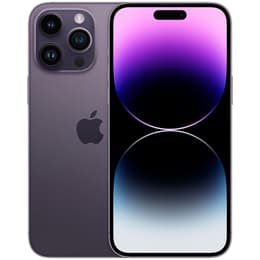


iPhone 13 Pro Vs iPhone 14 Pro Max

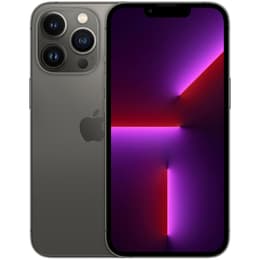
iPhone 13 Pro
iPhone 13 Pro
Starting at

Refurbished price:313.00

Versus €1,149.00 new

See options
iPhone 14 Pro Max
iPhone 14 Pro Max
Starting at

Refurbished price:446.00

Versus €1,489.00 new

See options

Ratings

The iPhone 13 Pro, released in September 2021, and the iPhone 14 Pro Max, launched in September 2022, represent two generations of Apple's high-end smartphone offerings. While both operate on the iOS platform and share a premium build, the iPhone 14 Pro Max introduces a larger display with a redesigned notification area, an upgraded camera system, and enhanced internal components. These differences cater to varying user preferences regarding screen size, photographic capabilities, and overall device interaction.

Scores

Durability

When considering the practical lifespan of these devices, both the iPhone 13 Pro and iPhone 14 Pro Max offer robust software support and durable construction, though with some distinctions.

  • Software Longevity: The iPhone 13 Pro, having launched with iOS 15, is compatible with the current iOS 26 and is expected to receive major software updates until approximately 2028. The iPhone 14 Pro Max, released a year later with iOS 16, is also compatible with iOS 26 and is anticipated to receive software support for an additional year, likely until 2029.
  • Physical Durability: Both models feature a Ceramic Shield front cover, designed to offer enhanced drop performance. They also carry an IP68 rating for dust and water resistance.
  • Repairability: The iPhone 13 Pro received an iFixit repairability score of 5 out of 10, indicating that while display and battery replacements are relatively manageable, other components can be more challenging to access or replace. The iPhone 14 Pro Max received a similar iFixit score of 6 out of 10, with the Pro models generally retaining a more complex internal design compared to the standard iPhone 14, particularly concerning rear glass replacement and software restrictions on parts.

Year of Release

2021

2022

Compatible with latest Update

Yes

Yes

OS

iOS

iOS

Foldable

No

No

Performance

The performance of these two devices is driven by their respective internal processors, impacting everything from app responsiveness to demanding tasks.

  • Processing Power: The iPhone 13 Pro is equipped with a capable processor that handles everyday applications and multitasking smoothly. The iPhone 14 Pro Max features a newer generation processor, which offers a modest increase in processing speed and graphical performance. This translates to slightly faster app loading times and a more fluid experience in graphically intensive games or professional applications on the newer model.
  • Multitasking and Storage: Both devices come with 6GB of RAM, providing ample capacity for running multiple applications simultaneously without significant slowdowns. Both also offer a range of storage options, from 128GB up to 1TB, catering to users with varying needs for media and application storage.
  • Battery Behavior: The iPhone 13 Pro offers strong battery performance, often lasting a full day for many users. The iPhone 14 Pro Max, despite having a slightly smaller battery capacity than its direct predecessor (the 13 Pro Max), demonstrates improved battery life in real-world usage tests, often lasting several hours longer due to enhanced power efficiency from its newer processor and display technology.

Memory (GB)

6 GB

6 GB

Screen quality

The visual experience on both the iPhone 13 Pro and iPhone 14 Pro Max is characterized by high-quality displays, though the newer model introduces some notable advancements.

  • Display Technology and Size: The iPhone 13 Pro features a 6.1-inch Super Retina XDR OLED display, while the iPhone 14 Pro Max boasts a larger 6.7-inch Super Retina XDR OLED display. Both utilize OLED technology, providing deep blacks and vibrant colors.
  • Brightness and Refresh Rate: Both displays support ProMotion technology, offering an adaptive refresh rate up to 120Hz for smooth scrolling and responsive interactions. The iPhone 13 Pro's refresh rate ranges from 10Hz to 120Hz, while the iPhone 14 Pro Max can drop as low as 1Hz, contributing to its power efficiency. The iPhone 14 Pro Max also achieves higher peak brightness levels, especially outdoors (up to 2000 nits), making content more visible in bright sunlight compared to the iPhone 13 Pro's peak of 1200 nits HDR.
  • User Interface Elements: A key differentiator for the iPhone 14 Pro Max is the introduction of the Dynamic Island, which replaces the traditional notch and dynamically adapts to display alerts, notifications, and background activities. The iPhone 14 Pro Max also features an Always-On Display, allowing users to see essential information without fully waking the screen.

Resolution

1170 x 2532

1290 x 2796

Screen type

Super Retina XDR OLED

LTPO Super Retina XDR OLED

Audiovisual

Both devices offer advanced camera systems, but the iPhone 14 Pro Max brings significant upgrades, particularly to its main sensor and video capabilities.

  • Main Camera System: The iPhone 13 Pro features a triple 12MP camera system, including wide, ultra-wide, and telephoto lenses. The iPhone 14 Pro Max elevates this with a 48MP main sensor, which uses pixel binning to produce highly detailed 12MP photos, and also enables a 2x optical quality zoom option. Both have a 3x optical telephoto lens.
  • Low-Light and Video Performance: The iPhone 14 Pro Max benefits from a larger main sensor and the Photonic Engine, which generally results in improved low-light photography and better detail retention compared to the iPhone 13 Pro. For video, the iPhone 14 Pro Max introduces Action Mode for enhanced stabilization during movement and supports Cinematic Mode in 4K, whereas the iPhone 13 Pro's Cinematic Mode is limited to 1080p.
  • Front Camera and Features: Both models feature a 12MP TrueDepth front camera. The iPhone 14 Pro Max's front camera adds autofocus and a wider aperture, leading to sharper selfies and better low-light performance. Both support features like Photographic Styles and ProRes video recording, though the 13 Pro's ProRes is limited to 1080p at 30fps on 128GB models.

Main camera

12 megapixels

48 megapixels

Front camera

12 megapixels

12 megapixels

Miscellaneous

Beyond core performance and display, several practical elements differentiate the user experience between these two iPhone models.

  • Connectivity and Ports: Both devices support 5G cellular connectivity, Wi-Fi, and Bluetooth. The iPhone 14 Pro Max features Bluetooth 5.3, a slight upgrade from the iPhone 13 Pro's Bluetooth 5.0, potentially offering more stable and efficient connections with accessories. Both continue to use the Lightning port for charging and data transfer.
  • Sensors and Security: Both models rely on Face ID for secure authentication. The iPhone 14 Pro Max introduces additional safety features such as Crash Detection and Emergency SOS via Satellite, which can automatically alert emergency services in severe situations or when off-grid.
  • Physical Characteristics: The iPhone 14 Pro Max is a larger and heavier device, weighing 240g with dimensions of 160.7 x 77.6 x 7.85 mm, compared to the iPhone 13 Pro's 204g and 146.7 x 71.5 x 7.65 mm. This size difference impacts one-handed usability and pocketability, with the 14 Pro Max offering a more expansive viewing area.

Weight

203 g

120 g

Screen size (in)

6.1

6.7

Network

5G

5G

SIM card

Physical SIM + eSIM

Physical SIM + eSIM

Carrier compatibility

Unlocked

Unlocked

Connector

Lightning

Lightning

The iPhone 13 Pro and iPhone 14 Pro Max both deliver a premium smartphone experience, but cater to slightly different user priorities. Users often praise the iPhone 13 Pro for its robust performance and excellent camera system, which remains highly capable for most photographic needs. Its battery life was also a significant improvement for its generation. Some users, however, noted its repairability challenges.

The iPhone 14 Pro Max is frequently lauded for its expansive display, the innovative Dynamic Island, and its significantly upgraded main camera, which offers greater detail and improved low-light performance. Its extended battery life is also a common point of praise, making it suitable for heavy users. Criticisms sometimes revolve around its larger size and weight, which might not appeal to all users.

Users prioritizing a more compact form factor with strong performance and a highly capable camera system may find the iPhone 13 Pro well-suited to their needs. Those who value the largest possible display, cutting-edge camera technology, the Dynamic Island interface, and the longest possible battery life will likely lean towards the iPhone 14 Pro Max. Both devices offer a premium experience, and choosing a quality-assured refurbished option for either model presents an eco-friendly alternative for consumers.

See all articles

Our recent comparisons