

Compare models
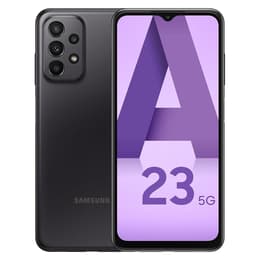
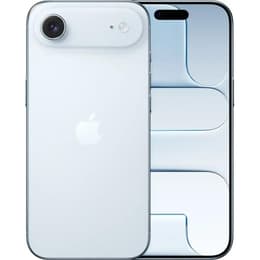
Galaxy A23 5G Vs iPhone Air
- 1-year minimum warranty
- Free delivery on all orders
- Free 30-day returns
Differences at a glance
The Samsung Galaxy A23 5G (2022) and the Apple iPhone Air (2025) represent entirely different approaches to smartphone design, operating on Android and iOS platforms respectively. While the Galaxy A23 5G focuses on providing essential connectivity and everyday functionality, the iPhone Air introduces a radically thin profile and premium hardware architecture. These distinct choices highlight contrasting goals in modern mobile engineering.
Available Models
Colour
Storage (GB)
Scores
Durability
When evaluating the longevity and support lifecycle of these two devices, distinct differences emerge regarding release timelines, software maintenance windows, and hardware durability profiles.
- Release timeline and software support: The Galaxy A23 5G arrived in 2022 running Android, while the iPhone Air launched in late 2025 operating on iOS. The iPhone Air benefits from a longer remaining software support window due to its more recent release date, whereas the older Galaxy model approaches the later stages of its official update cycle.
- Build resilience and repairs: The iPhone Air utilizes a titanium frame and reinforced glass materials designed to withstand daily wear, while the Galaxy A23 5G relies on a plastic-centric build with standard glass protection. Both models feature standard repair paths through authorized service providers, though parts availability varies by device age.
- Practical lifespan: Users can expect steady day-to-day operation from both phones, but the more advanced internal hardware configuration of the newer Apple device provides greater headroom for future application requirements over time.
Year of Release
2022
2025
Compatible with latest Update
Yes
Yes
OS
Android
iOS
Foldable
No
No
Performance
System responsiveness and hardware capabilities differ significantly between the two models, shaping how each handles everyday tasks, demanding applications, and background multitasking.
- Processing capability and multitasking: The iPhone Air handles intensive applications, high-end gaming, and rapid multitasking smoothly thanks to its high-performance processor and generous RAM allocation. The Galaxy A23 5G manages routine messaging, web browsing, and casual apps reliably with its mid-range processor, though demanding tasks will show occasional loading delays.
- Storage configurations: The iPhone Air offers high-capacity storage tiers starting at larger baselines without expandable options, whereas the Galaxy A23 5G provides modest internal storage paired with a microSD card slot for straightforward media expansion.
- Battery behavior: The Galaxy A23 5G incorporates a high-capacity battery that easily stretches through a full day of mixed use, while the ultra-thin profile of the iPhone Air houses a smaller power cell that typically requires a daily recharge under heavier workloads.
Screen quality
Display characteristics vary notably in panel technology, maximum brightness output, and motion smoothness during daily viewing and media consumption.
- Display technology and clarity: The iPhone Air features a vibrant OLED display delivering deep contrast levels, sharp resolution, and wide color reproduction. The Galaxy A23 5G employs a standard LCD panel that provides clear text and adequate color representation for everyday viewing.
- Outdoor visibility and brightness: The iPhone Air reaches exceptionally high peak brightness levels for clear visibility under direct sunlight. The Galaxy A23 5G offers sufficient brightness for indoor environments, though outdoor legibility in bright daylight requires manual adjustments.
- Refresh rate and scrolling: Both devices support a 120 Hz refresh rate, ensuring smooth scrolling through web pages, social media feeds, and system menus across both the Android and iOS interfaces.
Resolution
1080 x 2408
2736x1260
Screen type
PLS LCD
Super Retina XDR
Audiovisual
Optics and media output capabilities differ greatly, reflecting the streamlined single-lens approach of one device versus the multi-lens configuration of the other.
- Photography performance: The iPhone Air utilizes a high-resolution primary camera paired with advanced image processing to deliver detailed everyday photos and strong low-light performance. The Galaxy A23 5G features a versatile quad-lens layout including macro and ultra-wide options, providing functional versatility for casual snapshots despite lower overall detail capture in dim settings.
- Video recording quality: Video capture on the iPhone Air benefits from advanced stabilization and cinematic recording features, making it well-suited for crisp home videos. The Galaxy A23 5G records stable standard-definition video adequate for casual sharing.
- Audio output: The iPhone Air utilizes a streamlined speaker setup tailored for compact dimensions, while the Galaxy A23 5G features a standard loudspeaker alongside a traditional 3.5mm headphone jack for wired audio connections.
Main camera
50 megapixels
48 megapixels
Front camera
8 megapixels
18 megapixels
Miscellaneous
Practical physical characteristics, connectivity standards, and daily usability features define how each device integrates into various routines and environments.
- Connectivity and ports: The iPhone Air supports advanced wireless standards including Wi-Fi 7 and utilizes a USB-C port alongside modern eSIM technology. The Galaxy A23 5G offers 5G connectivity, standard Wi-Fi, physical nano-SIM card slots, and expandable storage flexibility.
- Physical dimensions and handling: The iPhone Air stands out for its exceptionally slim and lightweight titanium construction, making it effortless to carry. In contrast, the Galaxy A23 5G features a thicker plastic build that adds noticeable weight and substance in the hand.
- Security features: The iPhone Air relies on advanced facial recognition technology for secure authentication, while the Galaxy A23 5G uses a side-mounted physical fingerprint sensor integrated into the power button.
Weight
197 g
165 g
Screen size (in)
6.6
6.5
Network
5G
5G
SIM card
Physical SIM
eSIM
Carrier compatibility
Unlocked
Unlocked
Connector
USB-C + Jack 3.5mm
USB-C
What the community thinks
Community discussions and user feedback indicate distinct preferences for each device depending on individual daily requirements. Users frequently praise the iPhone Air for its remarkably slim, featherlight form factor, vibrant display quality, and smooth system performance. However, some user reviews note that its battery endurance and single-lens camera setup represent compromises given its slim profile. On the other hand, owners of the Galaxy A23 5G often highlight its reliable all-day battery longevity, expandable storage convenience, and straightforward everyday reliability as major practical advantages.
When deciding between these two options, user priorities serve as the main guide. Users who prioritize an ultra-lightweight modern design, advanced processing power, and a high-quality OLED screen will find the iPhone Air well-suited to their needs. Conversely, users who prioritize dependable day-long battery life, expandable storage, and a traditional headphone jack may prefer the practical approach of the Galaxy A23 5G. For buyers exploring sustainable purchasing choices, quality-assured refurbished options provide an eco-friendly alternative for acquiring either model without supporting additional manufacturing waste.