

iPhone

Compare models
Differences at a glance
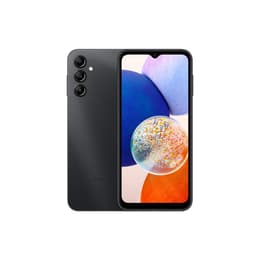
The Samsung Galaxy A14, released in early 2023, and the Xiaomi Redmi Note 14 Pro, launched in late 2024 or early 2025, represent different generations within the Android smartphone landscape. While both devices aim to provide a comprehensive smartphone experience, the Redmi Note 14 Pro, as a newer model, introduces several advancements in display technology, camera capabilities, and overall performance. Both operate on the Android platform, offering a wide ecosystem of applications and services, but with distinct user interfaces and update policies.
Colour
Storage
The expected lifespan and software support differ between these two devices, largely due to their respective release timelines.
Year of Release
OS
Foldable
Performance capabilities vary between the two devices, reflecting their different hardware generations and target user experiences.
The visual experience is a key differentiator, with the Redmi Note 14 Pro offering a more advanced display.
Resolution
Camera systems on both devices cater to different photography needs, with the Redmi Note 14 Pro offering a more advanced setup.
Front camera
Beyond core features, several practical elements contribute to the overall user experience of each smartphone.
Weight
Screen size (in)
Network
SIM card
Carrier compatibility
User feedback for the Samsung Galaxy A14 often highlights its strong battery life and reliable main camera performance in well-lit conditions as key advantages. Many appreciate Samsung's commitment to software updates for its segment. However, common criticisms point to its less powerful processor, which can lead to slower performance for demanding users, and a display that struggles with brightness outdoors. The secondary cameras are also frequently noted as being less impactful.
For the Xiaomi Redmi Note 14 Pro (drawing insights from its predecessor, the Redmi Note 13 Pro, and early information), users frequently praise its vibrant AMOLED display with a high refresh rate, the capable 200MP main camera, and its fast charging capabilities. The overall system responsiveness for daily tasks is generally well-received. Some common concerns include the utility of its auxiliary cameras, potential for bloatware, and occasional reports of heating during intensive use.
Users prioritizing extended battery life and a dependable main camera for casual photography in good lighting, along with a strong software update commitment for an older device, may find the Samsung Galaxy A14 well-suited to their needs. This device is a practical choice for those who value simplicity and longevity for essential smartphone functions.
Conversely, individuals who prioritize a superior visual experience with a high-refresh-rate AMOLED display, a more versatile and higher-resolution camera system with OIS, and faster charging will likely lean towards the Xiaomi Redmi Note 14 Pro. This device caters to users seeking a more modern and feature-rich experience, capable of handling more demanding applications and media consumption. For those looking to make an informed and sustainable choice, considering a quality-assured refurbished option for either model can provide an eco-friendly alternative.