

Galaxy A14 Vs iPhone 13

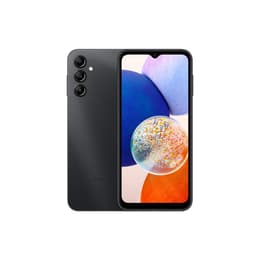
Galaxy A14
Galaxy A14
Starting at

Refurbished price:97.00

Versus €269.00 new

See options
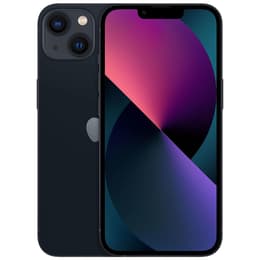
iPhone 13
iPhone 13
Starting at

Refurbished price:234.00

Versus €769.00 new

See options

Ratings

The Samsung Galaxy A14 and the Apple iPhone 13 represent distinct offerings in the smartphone market, catering to different user ecosystems and priorities. The Galaxy A14, released in 2023, operates on the Android platform, while the iPhone 13, launched in 2021, runs on iOS. These devices primarily differentiate themselves through their operating systems, overall performance capabilities, and display technologies, influencing daily user experience.

Scores

Durability

When considering the long-term usability of these smartphones, several factors contribute to their expected practical lifespan, including software support and physical resilience.

  • Release Timeline and OS Support: The iPhone 13, released in September 2021, typically receives iOS updates for approximately 5-6 years from its launch, meaning it is expected to receive updates until around late 2026 or 2027. The Galaxy A14, with its 5G model released in January 2023 and 4G LTE model in February 2023, generally receives two major Android OS updates and four years of security updates. This suggests the iPhone 13 may offer a longer period of software feature updates, while the A14 will maintain security for a considerable duration.
  • Software Longevity: Users prioritizing the latest software features for an extended period may find the iPhone 13's update policy more aligned with their needs. The Galaxy A14's update commitment ensures it remains functional and secure, but new feature rollouts might cease sooner compared to the iPhone.
  • Repairability and Build: The iPhone 13 features a Ceramic Shield front cover and an IP68 rating for water and dust resistance, contributing to its durability. The Galaxy A14, constructed with a plastic back and sides, does not specify advanced display protection or official water resistance ratings, suggesting it may be more susceptible to physical damage from drops or water exposure.

Year of Release

2023

2021

Compatible with latest Update

No

Yes

OS

Android

iOS

Foldable

No

No

Performance

The performance of a smartphone is crucial for daily tasks, from navigating applications to engaging in demanding activities like gaming.

  • Processor Capabilities: The iPhone 13 is equipped with a powerful processor that handles demanding applications and multitasking with notable smoothness and efficiency. This results in quick app loading times and a fluid user experience, even with graphically intensive games. In contrast, the Galaxy A14's processor is designed for everyday tasks and general use. While it capably manages social media, web browsing, and light gaming, users may observe occasional delays when launching more intensive applications or switching between many apps simultaneously.
  • Storage Options: The iPhone 13 offers internal storage options starting from 128GB, with higher capacities available, providing ample space for apps, photos, and videos without external expansion. The Galaxy A14 comes with various storage configurations, typically starting from 64GB or 128GB, and includes a microSD card slot for expandable storage up to 1TB. This allows users to significantly increase storage capacity for media and documents.
  • Battery Behavior: The iPhone 13 features a battery designed to last through a full day of typical use, with some users reporting it can extend further depending on usage patterns. Its efficient processor contributes to optimized power consumption. The Galaxy A14 houses a larger battery capacity, often providing up to two days of moderate use or a full day under heavy usage, though its charging speed is slower compared to some alternatives.

Memory (GB)

4 GB

4 GB

Screen quality

The display is a primary interface for smartphone interaction, and the quality of the screen significantly impacts the viewing experience.

  • Display Technology and Clarity: The iPhone 13 features a 6.1-inch Super Retina XDR OLED display, known for its deep blacks, vibrant colors, and high contrast ratio. This OLED technology provides excellent visual fidelity for media consumption and general use. The Galaxy A14, on the other hand, utilizes a 6.6-inch PLS LCD display. While it offers a large viewing area and a clear Full HD+ resolution, LCD technology typically does not achieve the same level of contrast or true black representation as OLED.
  • Resolution and Brightness: Both devices offer Full HD+ resolutions, providing sharp images and text. The iPhone 13's OLED display can reach higher peak brightness levels, especially for HDR content, making it more comfortable to view in bright outdoor conditions. The Galaxy A14's LCD screen provides adequate brightness for most indoor and outdoor scenarios, though it may struggle more under direct sunlight.
  • Refresh Rate: The iPhone 13 has a standard 60Hz refresh rate, offering smooth scrolling and animations. The 5G variant of the Galaxy A14 features a 90Hz refresh rate, which provides a slightly smoother visual experience during scrolling and gaming compared to a 60Hz display. The 4G LTE model of the A14 typically has a 60Hz refresh rate.

Resolution

1080 x 2408

1170 x 2532

Screen type

PLS LCD

Super Retina XDR OLED

Audiovisual

Camera capabilities are a key consideration for many users, influencing how they capture and share moments.

  • Rear Camera Systems: The iPhone 13 features a dual 12-megapixel camera system, including a wide and an ultra-wide lens. It excels in computational photography, offering features like Cinematic Mode for video with shallow depth of field and improved low-light performance due to larger sensors and sensor-shift optical image stabilization. The Galaxy A14 typically comes with a triple rear camera setup, often featuring a 50-megapixel main sensor, a 5-megapixel ultrawide lens (on some variants), and 2-megapixel macro and depth sensors. The 50MP main sensor can capture detailed images in good lighting conditions.
  • Photography Performance: The iPhone 13 generally produces consistent and color-accurate photos with strong dynamic range, performing well across various lighting conditions, including challenging low-light environments. Its video recording capabilities, including 4K at 60fps and Cinematic Mode, are particularly robust. The Galaxy A14 performs well in bright daylight, capturing good detail with its main sensor. However, its performance in low-light conditions is less consistent, and some users note that image processing can sometimes over-saturate colors. Video recording on the A14 is typically limited to 1080p at 30fps.
  • Front Camera and Audio: Both devices feature capable front-facing cameras for selfies and video calls. The iPhone 13 has a 12-megapixel TrueDepth camera with advanced features like Face ID. The Galaxy A14 has a 13-megapixel front camera that performs well in good lighting. For audio, the iPhone 13 offers clear stereo speakers and good microphone quality for calls and video recording. The Galaxy A14 provides a standard audio experience, suitable for media consumption and communication.

Main camera

50 megapixels

12 megapixels

Front camera

13 megapixels

12 megapixels

Miscellaneous

Beyond core features, several practical elements contribute to the overall user experience and device utility.

  • Connectivity and Ports: Both the iPhone 13 and Galaxy A14 support 5G connectivity, enabling faster mobile data speeds where available. The iPhone 13 uses a Lightning port for charging and data transfer, while the Galaxy A14 features a USB-C port, which is a more universal standard. A notable difference is the presence of a 3.5mm headphone jack on the Galaxy A14, which is absent on the iPhone 13. Both support Wi-Fi 6 (iPhone 13) or Wi-Fi 5 (A14) and Bluetooth for wireless accessories.
  • Biometric Security: The iPhone 13 relies on Face ID for secure facial recognition, offering a convenient and robust unlocking method. The Galaxy A14 typically features a side-mounted fingerprint sensor for biometric authentication, providing a quick and reliable way to unlock the device.
  • Design and Handling: The iPhone 13 has a more compact design with a 6.1-inch display, weighing around 174 grams. It features a premium build with flat edges, an aluminum frame, and a glass back. The Galaxy A14 is a larger device with a 6.6-inch display, weighing approximately 201-202 grams. Its construction primarily uses plastic for the back and frame, which contributes to its larger size and different in-hand feel.

Weight

201 g

173 g

Screen size (in)

6.6

6.1

Network

4G

5G

SIM card

Dual Physical SIM

Physical SIM + eSIM

Carrier compatibility

Unlocked

Unlocked

User feedback often highlights the iPhone 13's consistent performance, high-quality camera, and seamless iOS ecosystem as its primary strengths. Many appreciate its reliable battery life and the longevity of software updates. Criticisms sometimes point to the lack of a high refresh rate display and the proprietary Lightning port. Conversely, the Galaxy A14 is frequently praised for its large display, impressive battery life, and the inclusion of a headphone jack and expandable storage, making it a practical choice for everyday users. Some users note that its performance can be modest for demanding tasks and that its camera struggles in low-light conditions.

For users who prioritize a powerful and fluid user experience, advanced camera capabilities, and a long software support lifespan within the Apple ecosystem, the iPhone 13 remains a strong contender. Its robust performance and premium build are well-suited for those who engage in intensive tasks or value high-quality photography and videography. On the other hand, individuals seeking a larger display, extensive battery life, and the flexibility of Android with expandable storage and a headphone jack may find the Galaxy A14 to be a more suitable option. It caters well to users who need a reliable device for communication, media consumption, and general productivity without requiring top-tier processing power.

Both devices offer distinct advantages, and choosing between them depends on individual preferences for operating system, performance demands, and specific feature requirements. Exploring quality-assured refurbished options for either model can provide an eco-friendly alternative, extending the life of these devices and offering a sustainable choice for consumers.
See all articles

Our recent comparisons