
iPhone 13 Vs Xiaomi Redmi Note 14 Pro

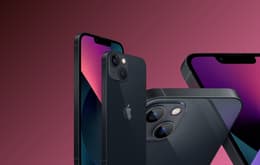
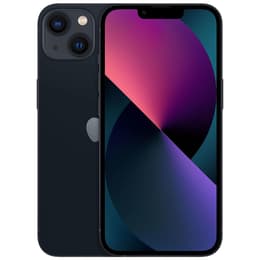
iPhone 13
iPhone 13
Starting at

Refurbished price:235.00

Versus €769.00 new

See options
Xiaomi Redmi Note 14 Pro
Starting at

Refurbished price:259.77

Versus €349.99 new

See options

Ratings

The iPhone 13, released in September 2021, and the Xiaomi Redmi Note 14 Pro, launched in late 2024 or early 2025, represent distinct approaches to smartphone design and functionality. While the iPhone 13 operates on Apple's iOS ecosystem, the Redmi Note 14 Pro runs on Android with Xiaomi's HyperOS interface. These devices cater to different user preferences, with the iPhone 13 offering a refined user experience and the Redmi Note 14 Pro focusing on advanced specifications often found in higher-tier devices.

Scores

Durability

When considering the long-term usability of a smartphone, factors like software support and physical resilience are key. The iPhone 13 and the Xiaomi Redmi Note 14 Pro offer different timelines and levels of durability.

  • Software Longevity: The iPhone 13, released in 2021, typically receives iOS updates for approximately five to six years from its launch, extending its software support well into the future. The Redmi Note 14 Pro, being a newer device from 2024/2025, is expected to receive up to three major Android operating system upgrades, ensuring it stays current with the latest features and security patches for several years.
  • Physical Durability: The iPhone 13 features a Ceramic Shield front cover and an IP68 rating for water and dust resistance, allowing it to withstand submersion in up to 6 meters of water for 30 minutes. Drop tests indicate good overall resilience, though using a protective case is recommended for optimal protection. The Redmi Note 14 Pro series is equipped with Corning Gorilla Glass Victus 2 for enhanced screen protection and boasts an IP69 rating, suggesting a high level of resistance to dust and high-pressure water jets.
  • Repairability: Both devices are designed with modern smartphone construction, which can present challenges for user-level repairs. Information on specific repairability scores for the Redmi Note 14 Pro is less widely available, but the iPhone 13's design is comparable to its predecessors in terms of repair complexity.

Year of Release

2021

2025

OS

iOS

Android

Foldable

No

No

Performance

The performance of a smartphone dictates its responsiveness and ability to handle various tasks, from everyday browsing to demanding applications and gaming. Both the iPhone 13 and the Xiaomi Redmi Note 14 Pro are designed to deliver smooth user experiences.

  • Processing Power: The iPhone 13 is powered by a robust processor that efficiently manages system operations and application demands. This allows for fluid navigation, quick app launches, and consistent performance even with multiple applications running simultaneously. The Redmi Note 14 Pro features a current-generation processor built on a 4nm process, which provides a balance of powerful performance and energy efficiency, making it well-suited for multitasking and gaming.
  • Multitasking and Storage: The iPhone 13 comes with 4GB of RAM and is available with internal storage options of 128GB, 256GB, or 512GB. The Redmi Note 14 Pro offers more RAM options, typically 8GB or 12GB, paired with internal storage choices of 128GB, 256GB, or 512GB. The higher RAM in the Redmi Note 14 Pro can contribute to smoother transitions between a large number of open applications.
  • Battery Behavior: The iPhone 13 is equipped with a battery that provides up to 19 hours of video playback, with around 10 hours and 33 minutes in web browsing tests, indicating reliable power for a full day of typical use. The Redmi Note 14 Pro houses a larger battery, typically around 5100mAh to 5500mAh, and supports 45W fast charging, allowing for quicker power replenishment.

Memory (GB)

4 GB

8 GB

Screen quality

The display is a primary interface for smartphone interaction, and both devices offer distinct visual experiences tailored to their respective ecosystems.

  • Display Technology and Resolution: The iPhone 13 features a 6.1-inch Super Retina XDR OLED display, providing deep blacks and vibrant colors with a resolution of 2532 x 1170 pixels. The Redmi Note 14 Pro sports a larger 6.67-inch AMOLED panel with a resolution of 1220 x 2712 pixels, offering a spacious viewing area. Both technologies deliver rich and detailed visuals.
  • Brightness and Refresh Rate: The iPhone 13 offers a typical brightness of 800 nits, peaking at 1200 nits for HDR content, ensuring good visibility in various lighting conditions. Its display operates at a standard 60Hz refresh rate. The Redmi Note 14 Pro stands out with a peak brightness of up to 3000 nits, providing exceptional clarity even in bright outdoor environments, and features a 120Hz refresh rate for smoother scrolling and more fluid animations.
  • Color and Protection: Both displays support wide color gamuts for accurate color reproduction. The iPhone 13 includes True Tone technology for adaptive white balance. The Redmi Note 14 Pro's display is protected by Corning Gorilla Glass Victus 2 and incorporates features like 1920 Hz PWM dimming and TUV Rheinland Low Blue Light certification, which can contribute to eye comfort.

Resolution

1170 x 2532

1080x2400

Audiovisual

Camera capabilities are a significant consideration for many smartphone users, and both the iPhone 13 and the Xiaomi Redmi Note 14 Pro offer advanced photographic and videographic features.

  • Rear Camera System: The iPhone 13 is equipped with a dual 12MP camera system, comprising a main wide-angle lens with a f/1.6 aperture and sensor-shift optical image stabilization, and an ultra-wide lens with a 120-degree field of view. The Redmi Note 14 Pro features a triple rear camera setup, including a high-resolution 50MP main sensor with f/1.5 aperture and optical image stabilization, an 8MP ultrawide camera, and a 2MP auxiliary lens.
  • Photography Features: The iPhone 13 excels in computational photography with features like Smart HDR 4, Night mode, Deep Fusion, and Photographic Styles, which enhance image quality across various scenarios. The Redmi Note 14 Pro leverages AI-powered imaging algorithms for faster startup speeds, clearer snapshots, and smart features like object selection for removal and enhanced portrait beautification.
  • Video Recording and Audio: Both devices support 4K video recording, with the iPhone 13 offering HDR video with Dolby Vision up to 4K at 60fps and a Cinematic mode for shallow depth-of-field effects at 1080p. The Redmi Note 14 Pro records 4K video at 24/30fps and 1080p at various frame rates. For audio, the iPhone 13 provides stereo speakers, while the Redmi Note 14 Pro features Dolby Atmos dual speakers for an immersive sound experience.

Front camera

12 megapixels

32 MP

Miscellaneous

Beyond core performance and display, several practical features contribute to the overall user experience and daily convenience of a smartphone.

  • Connectivity and Ports: Both the iPhone 13 and the Redmi Note 14 Pro support 5G cellular connectivity, along with modern Wi-Fi 6 and Bluetooth 5.0 standards for wireless communication. The iPhone 13 utilizes Apple's proprietary Lightning port for charging and data transfer. In contrast, the Redmi Note 14 Pro features a more universally adopted USB-C port.
  • Biometric Security and Navigation: The iPhone 13 relies on Face ID for secure facial recognition and authentication. The Redmi Note 14 Pro typically incorporates a fingerprint sensor, often in-display or side-mounted, alongside face recognition capabilities. Both devices include standard navigation and positioning systems like GPS.
  • Design and Handling: The iPhone 13 has dimensions of 146.7 x 71.5 x 7.65 mm and weighs 174g, offering a compact and manageable form factor. It features an aluminum frame and glass back. The Redmi Note 14 Pro is slightly larger and heavier, measuring 162.3 x 74.4 x 8.4 mm and weighing 190g, providing a more expansive screen experience.

Weight

173 g

180 g

Screen size (in)

6.1

6.67

Network

5G

4G

SIM card

Physical SIM + eSIM

Dual Physical SIM

Carrier compatibility

Unlocked

Unlocked

User sentiment for the iPhone 13 often highlights its consistent performance, reliable camera system, and the seamless integration within the Apple ecosystem. Many users appreciate its compact size and the longevity of iOS software updates. Common criticisms sometimes point to the 60Hz display refresh rate, which some find less fluid compared to higher refresh rate screens on other devices, and the continued use of the Lightning port.

For the Xiaomi Redmi Note 14 Pro, user feedback frequently praises its vibrant, high refresh rate AMOLED display and its capable camera system, particularly the high-megapixel main sensor. The larger battery capacity and fast charging capabilities are also often cited as significant advantages. Potential concerns might revolve around the software experience, as Android updates and the HyperOS interface can vary in user preference compared to iOS.

Users prioritizing a compact device with a highly optimized software experience and long-term software support may find the iPhone 13 well-suited to their needs. Those who value a larger, high refresh rate display, faster charging, and a versatile camera system with a higher megapixel count might lean towards the Xiaomi Redmi Note 14 Pro. Both devices offer compelling features for different user profiles. For those seeking an eco-friendly alternative, considering a quality-assured refurbished option for either model can be a sustainable choice.


See all articles

Our recent comparisons