
Galaxy A14 Vs iPhone 15

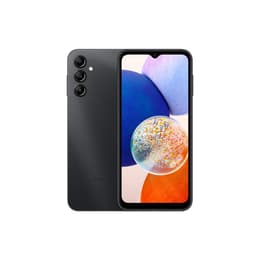
Galaxy A14
Galaxy A14
Starting at

Refurbished price:97.00

Versus €269.00 new

See options
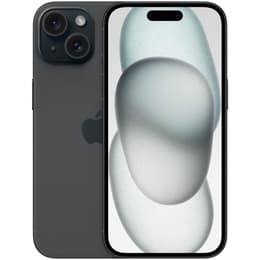
iPhone 15
iPhone 15
Starting at

Refurbished price:394.00

Versus €879.00 new

See options

Ratings

The Samsung Galaxy A14, released in early 2023, and the Apple iPhone 15, launched in late 2023, represent distinct offerings within the smartphone market. While the Galaxy A14 operates on the Android platform, providing a feature-rich experience, the iPhone 15 runs on Apple's iOS, known for its integrated ecosystem. These devices cater to different user priorities, with the iPhone 15 offering advanced features and performance, and the Galaxy A14 focusing on core smartphone functionalities.

Scores

Durability

The longevity of a smartphone is influenced by its build, software support, and ease of repair. Both devices offer different approaches to durability and long-term usability.

  • Software Support: The Samsung Galaxy A14 launched with Android 13 and is expected to receive two major OS upgrades, bringing it up to Android 15, along with four years of security updates until 2027. [17, 23, 30, 37] The iPhone 15, introduced with iOS 17, benefits from Apple's reputation for extended software support, typically receiving updates for many years, ensuring access to the latest features and security enhancements. [1]
  • Physical Durability: The Galaxy A14 features a plastic back and frame, which can offer some resilience against drops, though it lacks an official IP rating for dust and water resistance. [27, 34] The iPhone 15 incorporates an aluminum design with a Ceramic Shield front and a color-infused glass back, providing enhanced protection, and carries an IP68 rating for dust and water resistance. [9, 15, 28]
  • Repairability: The Galaxy A14 has a notable repairability score of 8 out of 10, indicating that it is relatively straightforward to disassemble, and its battery is secured with an adhesive pull pouch for easier replacement. [14, 22, 38, 45] The iPhone 15 initially received a lower repairability score, but this was later promoted to 7 out of 10 due to improvements in repair processes and the ability to calibrate parts directly on the device. [3, 32, 36]

Year of Release

2023

2023

Compatible with latest Update

No

Yes

OS

Android

iOS

Foldable

No

No

Performance

Performance varies significantly between these two models, reflecting their different design philosophies and target audiences.

  • Everyday Responsiveness: The Galaxy A14, powered by an octa-core processor, handles typical daily tasks such as browsing, social media, and light applications efficiently. [2, 41] Users generally find its performance respectable for its category. [2] The iPhone 15, featuring a more advanced processor, delivers smooth and responsive performance across a wider range of activities, including demanding applications and graphics-intensive games. [9, 29]
  • Multitasking and Storage: The Galaxy A14 offers various RAM configurations and includes a microSD card slot for expandable storage up to 1TB, which is beneficial for users who need ample space for media and files. [7, 8, 27] The iPhone 15 comes with a fixed amount of internal storage and does not support external memory expansion, but its system is optimized for efficient multitasking with its available memory. [4, 9, 15, 28]
  • Battery Endurance: The Galaxy A14 is equipped with a 5000 mAh battery, providing substantial power that can last up to two days with moderate use or a full day under heavy usage. [13] The iPhone 15, with its integrated battery, offers up to 20 hours of video playback and 80 hours of audio playback, with real-world usage tests showing around 25-26 hours of continuous use. [26, 31] Both support wired charging, with the iPhone 15 also supporting wireless charging. [5, 18, 19]

Memory (GB)

4 GB

6 GB

Screen quality

The visual experience on these devices is shaped by their display technology, resolution, and brightness capabilities.

  • Display Technology and Clarity: The Samsung Galaxy A14 features a 6.6-inch PLS LCD display with a Full HD+ resolution (1080x2408 pixels), offering clear visuals for everyday content consumption. [7, 8, 17] The iPhone 15 sports a 6.1-inch Super Retina XDR OLED display, providing deep blacks, vibrant colors, and a high resolution of 2556x1179 pixels for a sharp viewing experience. [1, 6, 28]
  • Refresh Rate and Smoothness: The Galaxy A14 (5G model) benefits from a 90Hz refresh rate, contributing to smoother scrolling and a more fluid visual experience compared to standard 60Hz displays. [7, 10, 17] The iPhone 15 maintains a 60Hz refresh rate, which is standard, but its optimized software ensures smooth animations and transitions. [1, 9, 19]
  • Brightness and Outdoor Visibility: The Galaxy A14's display reaches a peak brightness of around 480-500 nits, which can sometimes make outdoor viewing challenging in bright sunlight. [10, 34] The iPhone 15 offers significantly higher brightness levels, with a typical brightness of 1000 nits, a peak HDR brightness of 1600 nits, and an impressive peak outdoor brightness of 2000 nits, ensuring excellent visibility in various lighting conditions. [1, 28]

Resolution

1080 x 2408

1179 x 2556

Screen type

PLS LCD

Super Retina XDR OLED

Audiovisual

Camera capabilities differ between the two phones, impacting the quality and versatility of photos and videos.

  • Rear Camera System: The Galaxy A14 is equipped with a triple rear camera setup, including a 50-megapixel main sensor, a 2-megapixel macro lens, and a 2-megapixel depth sensor, suitable for capturing everyday moments. [7, 17, 27] The iPhone 15 features an advanced dual-camera system with a 48-megapixel main camera that includes 2x telephoto zoom capabilities, alongside a 12-megapixel ultra-wide camera, offering more detailed and versatile photography options. [9, 15, 19]
  • Photography Performance: The Galaxy A14 performs well in good lighting conditions for general photography. The iPhone 15 excels in various lighting scenarios, including low-light environments, and provides advanced computational photography features for improved image quality.
  • Video Recording: The Galaxy A14 supports video recording at 1080p resolution at 30 frames per second. [17] The iPhone 15 offers higher-quality video recording, capable of capturing 4K resolution at 60 frames per second, providing more detail and smoother motion for video content. [19]
  • Front Camera: For selfies and video calls, the Galaxy A14 has a 13-megapixel front camera. [7, 17] The iPhone 15 features a 12-megapixel front camera, which also supports 4K video recording. [9, 19]

Main camera

50 megapixels

48 megapixels

Front camera

13 megapixels

12 megapixels

Miscellaneous

Beyond core features, several practical elements contribute to the overall user experience and device utility.

  • Connectivity and Ports: Both devices support 5G connectivity for fast mobile data. The Galaxy A14 includes a 3.5mm headphone jack, a feature absent on the iPhone 15, and uses a USB-C port for charging and data transfer. [17, 27] The iPhone 15 also features a USB-C port, marking a shift from Apple's proprietary Lightning connector, and supports Wi-Fi 6 and Bluetooth 5.3. [1, 9, 15]
  • Biometric Security: The Galaxy A14 incorporates a side-mounted fingerprint sensor for secure unlocking and authentication. [17, 42] The iPhone 15 utilizes Face ID, Apple's facial recognition technology, for secure access. [1]
  • Design and Handling: The Galaxy A14 has a larger form factor and a plastic build, contributing to its weight of around 201-202 grams. [17, 27] The iPhone 15 is more compact and lighter at 171 grams, with a premium aluminum and glass construction. [9, 28] The iPhone 15 also introduces the Dynamic Island, a dynamic area around the front camera that displays alerts and activities. [15, 28]
  • Additional Features: The iPhone 15 includes satellite connectivity for emergency services, offering an extra layer of safety in remote areas. [6, 15]

Weight

201 g

171 g

Screen size (in)

6.6

6.1

Network

4G

5G

SIM card

Dual Physical SIM

eSIM

Carrier compatibility

Unlocked

Unlocked

Choosing between the Samsung Galaxy A14 and the iPhone 15 involves weighing different priorities. Users who value an expansive display, a long-lasting battery, and the flexibility of expandable storage, all within a more accessible ecosystem, may find the Galaxy A14 well-suited to their needs. Its strong repairability score also makes it an appealing option for those who prefer easier maintenance. [14, 22, 38, 45]

Conversely, individuals prioritizing a premium build, advanced camera capabilities, a vibrant OLED display with high brightness, and a streamlined user experience with long-term software support will likely lean towards the iPhone 15. Its enhanced performance and integrated features, such as Face ID and satellite connectivity, cater to users seeking a more sophisticated smartphone experience. [1, 9, 15, 28]

Ultimately, the decision depends on individual preferences for operating system, performance demands, and specific feature requirements. Both devices offer reliable smartphone experiences, and for those considering a more sustainable choice, quality-assured refurbished options are available for both models.

See all articles

Our recent comparisons