

Xiaomi Redmi 14C Vs Xiaomi Redmi Note 11

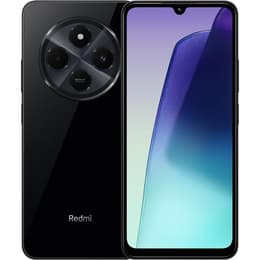
Xiaomi Redmi 14C
Xiaomi Redmi 14C
Starting at

Refurbished price:128.20

Versus €189.00 new

See options
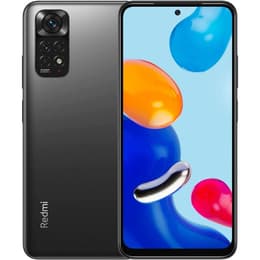
Xiaomi Redmi Note 11
Starting at

Refurbished price:108.00

Versus €249.99 new

See options

Ratings

The Xiaomi Redmi 14C (released in 2024) and the Xiaomi Redmi Note 11 (launched in 2022) are both smartphones designed for everyday use. While the Redmi 14C is a more recent offering, the Redmi Note 11, despite its earlier release, introduced features that set a benchmark for its category. Key differences lie in their display technology, processing power, and camera versatility, catering to varying user preferences.

Scores

Durability

When considering the long-term usability of these devices, their release timelines and software support are important factors.

  • Release Timeline: The Redmi 14C, released in 2024, benefits from a more recent launch, positioning it to receive software updates for a longer duration compared to the Redmi Note 11, which was released in 2022.
  • Software Longevity: The Redmi 14C ships with HyperOS based on Android 14 and is expected to receive two major Android updates and four years of security patches, extending its support until at least August 2028. The Redmi Note 11, originally on Android 11 with MIUI 13, has received updates to HyperOS based on Android 13, but its update cycle is nearing its conclusion due to its earlier release.
  • Practical Lifespan: Both devices are constructed with durable materials typical for their segments. The Redmi 14C offers an IP52 rating for dust and splash resistance, contributing to its resilience in daily scenarios. Users seeking the longest possible software support and the latest Android features will find the Redmi 14C to be a more current option.

Year of Release

2024

2022

Compatible with latest Update

Yes

No

OS

Android

Android

Foldable

No

No

Performance

The performance of these smartphones is influenced by their internal components, affecting how smoothly they handle daily tasks and applications.

  • Processing Capabilities: The Redmi 14C is powered by a MediaTek Helio G81 Ultra processor, which is designed for balanced performance and efficiency, suitable for social media, messaging, video streaming, and casual gaming. The Redmi Note 11 features a Qualcomm Snapdragon 680 processor, built on a 6nm process, offering efficient performance for everyday use and responsive navigation.
  • Multitasking and Storage: The Redmi 14C comes with various RAM configurations, including virtual RAM expansion up to 16GB, which aids in smoother system performance and app switching. It uses eMMC 5.1 storage. The Redmi Note 11 offers LPDDR4X RAM and UFS 2.2 storage, which generally provides faster app loading and file transfer speeds compared to eMMC. Both devices support expandable storage via microSD cards.
  • Battery Behavior: The Redmi 14C houses a 5160mAh battery with 18W fast charging support, providing decent endurance for casual users, though heavy multitasking may lead to more frequent charging. The Redmi Note 11 is equipped with a 5000mAh battery and supports faster 33W Pro fast charging, allowing for quicker power-ups.

Memory (GB)

4 GB

4 GB

Screen quality

The visual experience on these devices differs primarily due to their display technology and resolution.

  • Display Technology and Resolution: The Redmi 14C features a 6.88-inch IPS LCD panel with HD+ resolution (720x1640 pixels). In contrast, the Redmi Note 11 boasts a 6.43-inch AMOLED display with a sharper FHD+ resolution (1080x2400 pixels), offering deeper blacks and more vibrant colors.
  • Brightness and Refresh Rate: The Redmi 14C offers a 120Hz refresh rate for smoother scrolling and a peak brightness of 600 nits. The Redmi Note 11 provides a 90Hz refresh rate and can reach a peak brightness of 1000 nits, enhancing visibility in bright conditions.
  • Viewing Experience: While the Redmi 14C offers a larger screen size and a higher refresh rate for fluid motion, its HD+ resolution on an LCD panel may result in less crisp visuals compared to the Redmi Note 11's smaller, but higher-resolution AMOLED display, which delivers a more immersive and color-accurate viewing experience. The Redmi Note 11 also includes Corning Gorilla Glass 3 for added screen protection.

Resolution

720 x 1640

1080 x 2400

Screen type

IPS LCD

AMOLED

Audiovisual

Both smartphones offer camera systems capable of capturing everyday moments, with some distinctions in their configurations and features.

  • Rear Camera System: The Redmi 14C features a 50MP main rear camera with an f/1.8 aperture, accompanied by an auxiliary lens that primarily serves as a depth sensor. The Redmi Note 11 comes with a more versatile quad-camera setup, including a 50MP main sensor (f/1.8), an 8MP ultra-wide lens (f/2.2) for broader scenes, a 2MP macro camera for close-ups, and a 2MP depth sensor.
  • Photography Performance: In daylight, the Redmi 14C's main camera captures detailed photos, with features like HDR and portrait modes. The Redmi Note 11's quad-camera system provides more options for different shooting scenarios, with its ultra-wide lens expanding creative possibilities. Both devices record video at up to 1080p at 30 frames per second.
  • Front Camera and Audio: For selfies, the Redmi 14C has a 13MP front camera with an f/2.0 aperture, including night mode support and a soft light ring for improved low-light results. The Redmi Note 11 also features a 13MP front camera with an f/2.4 aperture. Both phones include a 3.5mm headphone jack. The Redmi 14C has a mono bottom-firing speaker, while the Redmi Note 11 offers dual speakers for a more immersive audio experience.

Main camera

50 megapixels

50 megapixels

Front camera

13 megapixels

13 megapixels

Miscellaneous

Beyond core specifications, several practical elements contribute to the overall user experience of these devices.

  • Connectivity and Ports: Both the Redmi 14C and Redmi Note 11 support dual SIM 4G LTE and Wi-Fi 5 (802.11ac). The Redmi 14C features Bluetooth 5.4, a slightly newer standard than the Redmi Note 11's Bluetooth 5.0. Both utilize a USB Type-C port for charging and data transfer and retain a 3.5mm headphone jack. Neither device supports 5G connectivity in their standard versions.
  • Security and Sensors: Both smartphones include a side-mounted fingerprint sensor for secure unlocking and support AI Face Unlock. They also feature essential sensors like accelerometers, ambient light sensors, and proximity sensors. The Redmi Note 11 additionally includes an IR blaster, allowing it to function as a universal remote control.
  • Design and Build: The Redmi 14C measures approximately 171.88 x 77.80 x 8.22mm and weighs between 204-211g, featuring a plastic frame and a flat-edged design. The Redmi Note 11 is slightly more compact and lighter at 159.87 x 73.87 x 8.09mm and 179g, also with a flat frame design. The Redmi 14C offers an IP52 rating for dust and splash resistance.

Weight

207 g

179 g

Screen size (in)

6.88

6.43

Network

4G

4G

SIM card

Dual Physical SIM

Dual Physical SIM

Carrier compatibility

Unlocked

Unlocked

The Xiaomi Redmi 14C and Redmi Note 11 cater to users with distinct priorities, reflecting their different release periods and design philosophies. User feedback for the Redmi 14C often highlights its large display with a high refresh rate and its extended software support as positive aspects, making it a suitable choice for those who prioritize a modern software experience and smooth visual scrolling. However, some users note its HD+ resolution and the efficiency of its processor as areas where it offers a more basic experience, particularly for demanding applications or prolonged heavy use.

Conversely, the Redmi Note 11 is frequently praised for its vibrant AMOLED display with FHD+ resolution, offering superior visual clarity and color reproduction. Its faster charging capability and more versatile quad-camera setup are also commonly appreciated. Criticisms sometimes point to its older Android version at launch and the eventual end of its software update cycle.

Users prioritizing a larger, smoother display and the latest Android version with longer update support may find the Redmi 14C well-suited to their needs. This device is a solid option for students or casual users who value a current software experience and a big screen for media consumption. On the other hand, individuals who prioritize a sharper, more vibrant display, faster charging, and a more comprehensive camera system for varied photography will likely lean towards the Redmi Note 11. This makes it a strong contender for users who consume a lot of media or enjoy capturing diverse photos, even if it means a slightly older software foundation. Both models are available as quality-assured refurbished options, providing an eco-friendly alternative for consumers.


See all articles

Our recent comparisons





