
Xiaomi 13T Vs Xiaomi Redmi Note 14 Pro

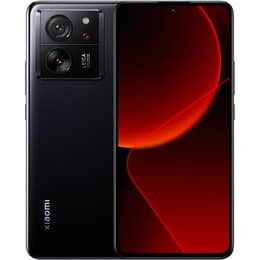
Xiaomi 13T
Xiaomi 13T
Starting at

Refurbished price:183.00

Versus €630.00 new

See options
Xiaomi Redmi Note 14 Pro
Starting at

Refurbished price:260.77

Versus €349.99 new

See options

Ratings

The Xiaomi 13T, released in September 2023, and the Xiaomi Redmi Note 14 Pro, which became available in early 2025, represent distinct offerings within Xiaomi's smartphone lineup. While both devices aim to deliver a comprehensive user experience, they diverge in their core focus, with the 13T emphasizing refined camera capabilities and a high refresh rate display, and the Redmi Note 14 Pro prioritizing a high-resolution main camera and enhanced durability features. Both run on the Android operating system, offering a familiar software environment.

Scores

Durability

When considering the long-term usability of these devices, several factors contribute to their expected practical lifespan.

  • Release Timeline and Software Support: The Xiaomi 13T, launched in September 2023, typically receives four major Android operating system updates, with users already seeing an update to Android 15 by April 2025. The Redmi Note 14 Pro, released in early 2025, is expected to receive up to three major Android upgrades, starting with Android 14 and HyperOS. This suggests the Xiaomi 13T may offer a slightly longer period of official software support.
  • Physical Durability: Both devices offer robust protection against environmental elements. The Xiaomi 13T features an IP68 rating for dust and water resistance and is protected by Corning Gorilla Glass 5 on its front display. The Redmi Note 14 Pro elevates this with an IP68 rating (for its 5G and Pro+ 5G variants) and incorporates Corning Gorilla Glass Victus 2 for superior scratch and drop resistance on its display. Additionally, the Redmi Note 14 Pro includes an internal 'All-star Armor Structure' with reinforced aluminum and energy-absorbing foam for enhanced impact resistance.
  • Repairability and Practical Lifespan: While specific repairability scores can vary, both devices are designed with modern smartphone construction. The Redmi Note 14 Pro's advanced durability features, such as Gorilla Glass Victus 2 and internal reinforcements, suggest it is built to withstand daily wear and tear more effectively, potentially contributing to a longer practical lifespan for users prone to accidental drops.

Performance

The performance of a smartphone is crucial for daily tasks, from navigating applications to engaging in demanding activities like gaming.

  • Processing Power: The Xiaomi 13T is equipped with a processor designed to handle various tasks efficiently, providing smooth operation for everyday applications and responsive multitasking. The Redmi Note 14 Pro, depending on the specific variant, may feature a MediaTek Dimensity 7300 Ultra or a MediaTek Helio G100 Ultra. The Dimensity 7300 Ultra variant generally offers capable performance for most users, handling casual games and daily apps without noticeable delays. However, some users have noted that the Helio G100 Ultra variant might struggle with more graphically intensive games or demanding tasks.
  • Multitasking and Storage: Both devices offer ample RAM configurations, with the Xiaomi 13T available in 8GB or 12GB options and the Redmi Note 14 Pro also offering 8GB or 12GB. The Xiaomi 13T utilizes UFS 3.1 storage, contributing to faster app loading and data transfer speeds. The Redmi Note 14 Pro typically comes with UFS 2.2 storage, which is generally sufficient for most users but may be slightly slower than UFS 3.1. Neither device generally offers expandable storage, meaning users should consider their storage needs at the time of purchase.
  • Battery Behavior: The Xiaomi 13T houses a 5000mAh battery, which generally provides a full day of mixed usage, though heavy users might find themselves needing to recharge by evening. It supports 67W wired fast charging, allowing for a full charge in under an hour. The Redmi Note 14 Pro features a larger 5500mAh battery (or 5110mAh in some Pro+ variants), often delivering reliable all-day power. Charging speeds for the Redmi Note 14 Pro are typically 45W, though some Pro+ models boast 120W fast charging.

Memory (GB)

8 GB

8 GB

Screen quality

The display is a primary interface for smartphone interaction, and both devices offer vibrant viewing experiences.

  • Display Technology and Resolution: Both the Xiaomi 13T and the Redmi Note 14 Pro feature 6.67-inch AMOLED displays, known for their deep blacks and vibrant colors. The Xiaomi 13T offers a resolution of 1220 x 2712 pixels (1.5K) with a pixel density of 446 ppi. The Redmi Note 14 Pro also comes with a 1.5K resolution (1220 x 2712 pixels or 2400x1080 pixels depending on the source) and a similar pixel density, ensuring sharp visuals.
  • Brightness and Smoothness: The Xiaomi 13T boasts a high refresh rate of 144Hz, providing exceptionally smooth scrolling and fluid animations, along with a peak brightness of 2600 nits for good outdoor visibility. The Redmi Note 14 Pro offers a 120Hz refresh rate, which still delivers a very smooth experience, and an even higher peak brightness of 3000 nits, making it highly visible even in direct sunlight. Both displays support HDR10+ and Dolby Vision for enhanced media consumption.
  • Design and Protection: The Xiaomi 13T features a flat display protected by Corning Gorilla Glass 5. The Redmi Note 14 Pro often comes with a curved AMOLED display, which can offer a more immersive viewing experience and a modern aesthetic, protected by the more advanced Corning Gorilla Glass Victus 2. Both include high PWM dimming rates to reduce eye strain.

Audiovisual

Both smartphones offer capable camera systems, though with different approaches to imaging.

  • Rear Camera Systems: The Xiaomi 13T features a versatile triple camera setup co-engineered with Leica, comprising a 50MP main sensor with optical image stabilization (OIS), a 50MP telephoto lens offering 2x optical zoom, and a 12MP ultrawide lens. This configuration is praised for producing detailed images with vibrant colors and strong low-light performance, especially with its dedicated Night mode. The Redmi Note 14 Pro typically sports a 200MP main sensor with OIS, an 8MP ultrawide camera, and a 2MP macro lens. The high-resolution main sensor excels at capturing highly detailed photos, particularly in good lighting, and allows for effective digital zoom without significant loss of quality.
  • Video Recording Capabilities: The Xiaomi 13T supports 4K video recording at 30 frames per second (fps) across its main and telephoto lenses, with good stabilization and color reproduction. For the Redmi Note 14 Pro, video capabilities vary significantly by region and variant. While some sources indicate 4K@30fps recording, user feedback and other specifications suggest that some global or 4G versions may be limited to 1080p at 60fps, with criticisms regarding the lack of 4K and overall video quality.
  • Front Camera and Audio: The Xiaomi 13T is equipped with a 20MP front-facing camera, capable of capturing good selfies with accurate skin tones. The Redmi Note 14 Pro features a 32MP or 20MP front camera, also delivering capable self-portraits. Both devices generally offer stereo speakers for an enhanced audio experience during media consumption.

Miscellaneous

Beyond core performance and display, several practical features contribute to the overall user experience.

  • Connectivity and Ports: Both smartphones support 5G connectivity, ensuring fast mobile data speeds where available. The Xiaomi 13T supports Wi-Fi 6 and Bluetooth 5.4, while the Redmi Note 14 Pro typically features Wi-Fi (802.11a/b/g/n/ac) and Bluetooth 5.3 or 5.4. Both devices utilize a USB-C port for charging and data transfer. The Xiaomi 13T does not include a 3.5mm headphone jack, a common trend in modern smartphones. Some variants of the Redmi Note 14 Pro also omit the headphone jack.
  • Biometric Security and Additional Features: For secure unlocking, the Xiaomi 13T features an under-display optical fingerprint sensor. The Redmi Note 14 Pro also includes an in-screen fingerprint sensor and AI Face Unlock. The Xiaomi 13T comes with an NFC chip for mobile payments and an infrared (IR) blaster for controlling home electronics. The Redmi Note 14 Pro also includes NFC in some variants.
  • Physical Design and Handling: The Xiaomi 13T has dimensions of 162.2 x 75.7 x 8.49mm and weighs between 193g and 197g. The Redmi Note 14 Pro is similarly sized at approximately 162.3 x 74.4 x 8.24mm and weighs around 190g, offering a comparable in-hand feel. The choice between a flat display on the 13T and a curved display on the Redmi Note 14 Pro can influence handling and aesthetic preference.

Screen size (in)

6.67

6.67

Network

5G

4G

SIM card

Dual Physical SIM

Dual Physical SIM

Carrier compatibility

Unlocked

Unlocked

Choosing between the Xiaomi 13T and the Xiaomi Redmi Note 14 Pro depends largely on individual priorities and usage patterns. Both devices offer compelling features, but cater to slightly different user profiles.

The Xiaomi 13T is often praised by users for its balanced performance, excellent display with a high 144Hz refresh rate, and a versatile camera system with Leica tuning that delivers strong photographic results, particularly in low light. Some users have noted its battery life as being average for power users, requiring an evening charge. Its software longevity, with a promise of four major OS updates, is also a significant advantage for those who keep their devices for longer periods.

Conversely, the Redmi Note 14 Pro receives commendation for its impressive 200MP main camera, which captures highly detailed stills, and its enhanced durability features, including Gorilla Glass Victus 2 and an IP68 rating. The display's high peak brightness is also a frequently highlighted positive. However, user feedback indicates some inconsistencies, particularly regarding video recording capabilities, with some variants lacking 4K support and experiencing performance issues. Performance for demanding games can also be a point of criticism for certain versions.

Users prioritizing a refined and consistent camera experience, especially with a dedicated telephoto lens and strong low-light performance, alongside a very high refresh rate display and longer software support, may find the Xiaomi 13T well-suited to their needs. Those who value a high-resolution main camera for detailed still photography, superior display brightness, and advanced physical durability features might lean towards the Redmi Note 14 Pro. It is important for potential buyers to consider the specific variant of the Redmi Note 14 Pro, as specifications, particularly for the processor and video recording, can differ across regions. Regardless of the choice, opting for a quality-assured refurbished option for either device can be an eco-friendly alternative.


See all articles

Our recent comparisons