

Galaxy A14 Vs Xiaomi 12T

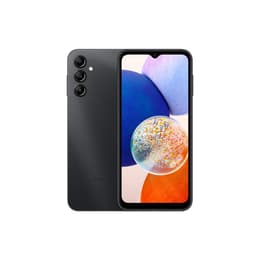
Galaxy A14
Galaxy A14
Starting at

Refurbished price:97.00

Versus €269.00 new

See options
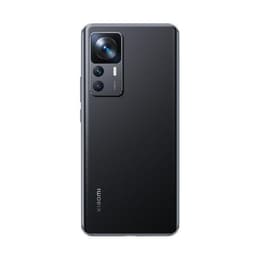
Xiaomi 12T
Xiaomi 12T
Starting at

Refurbished price:134.00

Versus €649.00 new

See options

Ratings

The Samsung Galaxy A14, released in early 2023, and the Xiaomi 12T, launched in late 2022, are both Android smartphones offering distinct experiences. While the Galaxy A14 focuses on delivering essential smartphone features with a strong emphasis on battery life and software support, the Xiaomi 12T aims for a more performance-oriented approach with a superior display and faster charging capabilities.

Scores

Durability

The longevity of a smartphone is influenced by its build quality, software support, and ease of repair. Both devices offer a reasonable lifespan, though with different strengths.

  • Software Updates: The Samsung Galaxy A14, launched with Android 13, is expected to receive two major Android OS updates, bringing it up to Android 15, and four years of security updates, extending support until 2027. The Xiaomi 12T, initially running Android 12, is promised three major Android OS updates, also reaching Android 15, and four years of security patches, with support expected until October 2026.
  • Repairability: The Galaxy A14 has a notable repairability score of 8 out of 10, indicating it is relatively easy to disassemble. Its battery is secured with an adhesive pull pouch, simplifying replacement, and camera lenses can be replaced without extensive disassembly. Specific repairability scores for the Xiaomi 12T are not widely available, but its construction includes a Gorilla Glass 5 front and a glass back, which can be more challenging to repair than plastic.
  • Build Materials: The Galaxy A14 features a plastic polycarbonate back and frame, contributing to its durability against minor impacts. The Xiaomi 12T combines a Gorilla Glass 5 front with a glass back and a plastic frame, offering a more premium feel but potentially less resilience to drops than a full plastic build.

Year of Release

2023

2022

Compatible with latest Update

No

Yes

OS

Android

Android

Foldable

No

No

Performance

Performance is a key differentiator, impacting how smoothly applications run and how responsive the overall user experience feels.

  • Processing Power: The Xiaomi 12T is equipped with a processor that delivers strong performance, allowing for smooth handling of demanding applications and graphics-intensive games. Users can expect a fluid experience even with multiple apps open. In contrast, the Samsung Galaxy A14's processor provides solid everyday performance for its segment, suitable for general tasks like browsing, social media, and light gaming. However, some users have noted occasional lags and stutters with animations and when multitasking heavily.
  • Multitasking and Storage: The Xiaomi 12T typically comes with 8GB of RAM and offers storage options of 128GB or 256GB, providing ample space and efficient multitasking capabilities. The Galaxy A14 is available with 4GB, 6GB, or 8GB of RAM and 64GB or 128GB of internal storage, with the added benefit of expandable storage via a microSD card, which can be useful for users with large media libraries.
  • Gaming Experience: For mobile gamers, the Xiaomi 12T offers a more capable experience, handling titles like Genshin Impact on higher settings with good frame rates. The Galaxy A14 can manage basic mobile gaming, but graphically demanding games may experience reduced performance.

Memory (GB)

4 GB

8 GB

Screen quality

The display is the primary interface for interaction, and both devices offer different visual experiences.

  • Display Technology and Clarity: The Xiaomi 12T features a 6.67-inch AMOLED display, known for its vibrant colors, deep blacks, and excellent contrast, providing a rich and detailed viewing experience. The Samsung Galaxy A14 utilizes a 6.6-inch PLS LCD panel with a 1080x2408 (FHD+) resolution, offering clear visuals and good color reproduction for an LCD.
  • Refresh Rate and Smoothness: The Xiaomi 12T boasts a 120Hz refresh rate, contributing to smoother scrolling and a more fluid user interface, which is particularly noticeable during gaming or fast-paced content. The Galaxy A14 offers a 90Hz refresh rate, providing a smoother experience than standard 60Hz displays, though not as fluid as the 120Hz of the 12T.
  • Brightness for Outdoor Use: The Xiaomi 12T has a peak brightness of 900 nits, making it easier to view content outdoors, even in sunny conditions. The Galaxy A14's display peaks at around 500 nits, which can make it challenging to read in direct sunlight, a common characteristic for phones in its category.

Resolution

1080 x 2408

1220 x 2712

Screen type

PLS LCD

AMOLED

Audiovisual

Camera capabilities are a significant factor for many users, and these devices offer different photographic strengths.

  • Rear Camera System: The Xiaomi 12T features a versatile triple-camera setup, including a 108MP main sensor with optical image stabilization (OIS), an 8MP ultrawide lens, and a 2MP macro lens. The main camera is praised for its detail and performance in various lighting conditions, including night shots. The Samsung Galaxy A14 also has a triple-camera system with a 50MP main sensor, a 2MP macro, and a 2MP depth sensor. Its main camera performs well in daylight, capturing good details and skin tones, but it lacks an ultrawide lens.
  • Video Recording: The Xiaomi 12T is capable of recording video at 4K resolution at 30 frames per second, offering higher detail for video content. The Galaxy A14 records video at 1080p resolution at 30 frames per second for both its rear and front cameras, which is suitable for casual video capture.
  • Front Camera and Special Features: For selfies, the Xiaomi 12T includes a 20MP front-facing camera. The Galaxy A14 has a 13MP front camera, which delivers good results in well-lit conditions and offers decent edge detection for portrait mode.

Main camera

50 megapixels

108 megapixels

Front camera

13 megapixels

20 megapixels

Miscellaneous

Beyond core features, several practical elements contribute to the overall user experience.

  • Battery and Charging: Both smartphones are equipped with a 5000mAh battery, designed to provide a full day of use. However, charging speeds differ significantly. The Xiaomi 12T supports rapid 120W wired charging, capable of fully charging the device in approximately 20 minutes. The Samsung Galaxy A14 supports 15W wired charging, taking around two hours for a full charge.
  • Connectivity and Ports: Both devices support 5G connectivity. The Galaxy A14 includes a 3.5mm headphone jack and a USB-C 2.0 port. The Xiaomi 12T features a USB-C port but omits the headphone jack. It also supports Wi-Fi 6 and Bluetooth 5.3.
  • Biometric Security and Design: The Xiaomi 12T incorporates an in-display optical fingerprint sensor for secure unlocking. The Galaxy A14 features a side-mounted fingerprint sensor integrated into the power button. The Xiaomi 12T also carries an IP53 rating for dust and splash resistance, offering a degree of protection against environmental elements.

Weight

201 g

220 g

Screen size (in)

6.6

6.67

Network

4G

5G

SIM card

Dual Physical SIM

Dual Physical SIM

Carrier compatibility

Unlocked

Unlocked

Choosing between the Samsung Galaxy A14 and the Xiaomi 12T depends largely on individual priorities and usage patterns. User feedback often highlights the Galaxy A14's strong battery life and reliable software support as key advantages, making it a practical choice for those who prioritize longevity and essential functionality. Some users, however, note that its performance can feel sluggish with heavier use and that the display struggles in bright outdoor conditions.

The Xiaomi 12T is frequently praised for its powerful performance, vibrant AMOLED display with a high refresh rate, and exceptionally fast charging. Criticisms sometimes point to its battery life not always matching expectations despite the large capacity, and the secondary cameras not always living up to the main sensor's capabilities.

Users who prioritize a smooth, responsive experience for demanding applications, mobile gaming, and enjoy a high-quality display for media consumption will likely find the Xiaomi 12T better suited to their needs. Its rapid charging is also a significant convenience for those who need to power up quickly. Conversely, individuals seeking a dependable smartphone for everyday communication, social media, and light tasks, with excellent software longevity and a more repairable design, may lean towards the Samsung Galaxy A14. Its inclusion of a headphone jack and expandable storage can also be deciding factors for some. Both devices offer a pathway to sustainable tech consumption through quality-assured refurbished options, providing an eco-friendly alternative to buying new.


See all articles

Our recent comparisons