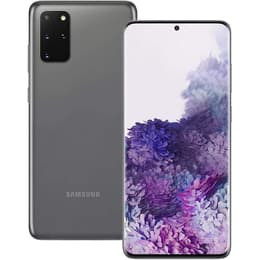
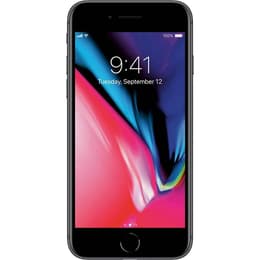


Galaxy S20+ 5G Vs iPhone 8

Galaxy S20+ 5G
Galaxy S20+ 5G
Starting at

Refurbished price:191.00

Versus €590.00 new

See options
iPhone 8
iPhone 8
Starting at

Refurbished price:91.00

Versus €299.00 new

See options

Ratings

The Samsung Galaxy S20 Plus 5G, released in March 2020, and the Apple iPhone 8, launched in September 2017, represent distinct approaches to smartphone design and functionality from different generations. While both devices offer a complete smartphone experience, they differ significantly in their operating systems, display technology, and camera capabilities. The Galaxy S20 Plus 5G operates on Android, providing a customizable interface, whereas the iPhone 8 runs on Apple's iOS, known for its integrated ecosystem.

Scores

Durability

The practical lifespan of a smartphone is often influenced by its release timeline and ongoing software support, which vary between these two devices.

  • Release and Support: The Galaxy S20 Plus 5G, launched in March 2020, benefits from a more recent release, offering a longer period of expected software and security updates compared to the iPhone 8, which was released in September 2017. The iPhone 8's major iOS updates concluded with iOS 16, though it continues to receive security patches.
  • Durability Features: Both devices feature glass backs and aluminum frames. The Galaxy S20 Plus 5G offers IP68 dust and water resistance, allowing submersion up to 1.5 meters for 30 minutes. The iPhone 8 has an IP67 rating, providing protection against dust and water immersion up to 1 meter for 30 minutes.
  • Longevity Expectations: Users prioritizing the latest software features and extended compatibility with new applications may find the Galaxy S20 Plus 5G more suitable due to its newer platform. The iPhone 8, while still functional for many tasks, will gradually encounter limitations with newer app versions and features that require more recent iOS iterations.

Year of Release

2020

2017

Compatible with latest Update

No

No

OS

Android

iOS

Foldable

No

No

Performance

Performance differences between these two smartphones are notable, primarily due to the generational gap in their internal components and operating system optimizations.

  • Processing Power: The Galaxy S20 Plus 5G features a more advanced processor, enabling smoother operation for demanding applications, complex multitasking, and graphic-intensive gaming. The iPhone 8, while providing a responsive experience for everyday tasks, may exhibit slower loading times and less fluid performance with newer, resource-intensive apps.
  • Multitasking and Storage: With 12GB of RAM, the Galaxy S20 Plus 5G handles numerous open applications and transitions between them with greater efficiency. The iPhone 8, equipped with 2GB of RAM, is capable of multitasking but may require apps to reload more frequently. Both devices offer various internal storage options, and the Galaxy S20 Plus 5G also includes a microSD card slot for expandable storage.
  • Battery Behavior: The Galaxy S20 Plus 5G houses a 4500 mAh battery, which generally provides ample power for a full day of typical use, though enabling the 120Hz display refresh rate can impact its duration. The iPhone 8 has an 1821 mAh battery, and users often report needing to charge it more frequently, especially with heavy usage or as the battery ages.

Memory (GB)

8 GB

2 GB

Screen quality

The visual experience offered by these two devices differs significantly, primarily due to advancements in display technology and design philosophy.

  • Display Technology and Size: The Galaxy S20 Plus 5G features a 6.7-inch Dynamic AMOLED 2X display, providing deep blacks, vibrant colors, and high contrast. The iPhone 8 has a smaller 4.7-inch Retina HD IPS LCD, which offers accurate color reproduction and good viewing angles.
  • Resolution and Clarity: The Galaxy S20 Plus 5G boasts a resolution of 1440x3200 pixels, resulting in a very sharp and detailed image. The iPhone 8's display has a resolution of 1334x750 pixels, which is clear for its size but less pixel-dense than the S20 Plus 5G.
  • Refresh Rate and Brightness: A key differentiator is the Galaxy S20 Plus 5G's 120Hz refresh rate, which provides a noticeably smoother scrolling and animation experience, though it can be set to 60Hz to conserve battery. The iPhone 8 operates at a standard 60Hz refresh rate. Both devices offer sufficient brightness for outdoor visibility, with the iPhone 8 featuring True Tone technology for automatic white balance adjustment.

Resolution

1440 x 3200

750 x 1334

Screen type

Dynamic AMOLED 2X

Retina IPS LCD

Audiovisual

The camera systems of the Galaxy S20 Plus 5G and the iPhone 8 reflect different eras of smartphone photography, with the former offering greater versatility and advanced features.

  • Rear Camera System: The Galaxy S20 Plus 5G is equipped with a versatile quad-camera setup, including a 12MP wide lens, a 64MP telephoto lens with 3x hybrid optical zoom and up to 30x digital zoom, a 12MP ultrawide lens, and a DepthVision camera. This allows for a wide range of photographic styles, from expansive landscapes to detailed distant subjects. The iPhone 8 features a single 12MP wide camera with optical image stabilization, capable of capturing clear everyday photos.
  • Photography Features: The Galaxy S20 Plus 5G offers advanced features like Night mode for improved low-light performance, Single Take for capturing multiple formats from one shot, and enhanced zoom capabilities. The iPhone 8 provides features such as Auto HDR and Live Photos.
  • Video Recording and Front Camera: The Galaxy S20 Plus 5G can record video at up to 8K resolution at 24 frames per second, along with 4K at higher frame rates, and has a 10MP front camera. The iPhone 8 records 4K video at up to 60 frames per second and includes a 7MP front camera.

Main camera

12 megapixels

12 megapixels

Front camera

10 megapixels

7 megapixels

Miscellaneous

Beyond core performance and camera, several practical elements differentiate these two devices, impacting daily usability and connectivity.

  • Connectivity Standards: The Galaxy S20 Plus 5G supports 5G cellular networks, offering faster data speeds in compatible areas, alongside Wi-Fi 6 (802.11ax) and Bluetooth 5.0. The iPhone 8 is limited to 4G LTE connectivity and supports Wi-Fi 5 (802.11ac) and Bluetooth 5.0.
  • Ports and Biometrics: The Galaxy S20 Plus 5G utilizes a USB-C port for charging and data transfer and features an in-display fingerprint sensor for secure unlocking. The iPhone 8 uses Apple's proprietary Lightning connector and incorporates a physical home button with Touch ID for fingerprint recognition. Neither device includes a traditional 3.5mm headphone jack.
  • Design and Handling: The Galaxy S20 Plus 5G has a larger form factor, measuring 161.9 x 73.7 x 7.8 mm and weighing 188 grams, offering a more expansive screen experience. The iPhone 8 is more compact at 138.4 x 67.3 x 7.3 mm and lighter at 148 grams, making it easier for one-handed use.

Weight

188 g

148 g

Screen size (in)

6.7

4.7

Network

5G

4G

SIM card

Physical SIM + eSIM

Physical SIM

Carrier compatibility

Unlocked

Unlocked

Connector

USB-C

Lightning

User sentiment for the Galaxy S20 Plus 5G often highlights its impressive display, versatile camera system, and overall strong performance, particularly when utilizing its 5G capabilities. Some users note that the 120Hz refresh rate, while enhancing the visual experience, can lead to more frequent charging. The iPhone 8 is frequently praised for its compact size, consistent iOS experience, and reliable performance for general use. However, common criticisms revolve around its aging design, the conclusion of major iOS updates, and battery degradation over time, often requiring users to charge it multiple times a day after extended use.

Users prioritizing a modern, expansive display, advanced multi-lens camera capabilities, and future-ready 5G connectivity will find the Galaxy S20 Plus 5G well-suited to their needs. It offers a powerful platform for demanding applications and media consumption. Conversely, individuals who prefer a smaller, more traditional smartphone design, value the simplicity and long-term security updates of the iOS ecosystem, and primarily engage in everyday tasks like communication, web browsing, and casual photography may lean towards the iPhone 8. For those seeking a sustainable choice, both models are available as quality-assured refurbished options, extending their lifecycle and reducing electronic waste.


See all articles

Our recent comparisons






