

Galaxy S20 FE Vs iPhone SE (2020)

Galaxy S20 FE
Galaxy S20 FE
Starting at

Refurbished price:151.00

Versus €779.00 new

See options
iPhone SE (2020)
iPhone SE (2020)
Starting at

Refurbished price:91.35

Versus €319.00 new

See options

Ratings

The Samsung Galaxy S20 FE (Fan Edition) and the Apple iPhone SE 2020 are both smartphones released in 2020, offering distinct experiences within their respective ecosystems. While the Galaxy S20 FE runs on Android with Samsung's One UI, the iPhone SE 2020 operates on Apple's iOS. These devices cater to different user preferences, primarily differing in screen size, camera versatility, and overall design philosophy.

Scores

Durability

The longevity of a smartphone is often determined by its release timeline, software support, and physical durability.

  • Release Timeline: The iPhone SE 2020 was announced in April 2020 and released shortly after, in April 2020. [1, 6, 8] The Samsung Galaxy S20 FE was released later in the same year, in October 2020. [5, 9, 14] This difference in release means the iPhone SE 2020 has been available for a slightly longer period.
  • Software Support: Apple typically provides major iOS updates for 5-7 years from an iPhone's release. [20, 29, 31] The iPhone SE 2020, originally shipped with iOS 13.4, has received updates to subsequent iOS versions, including iOS 26. [6] The Galaxy S20 FE, launched with Android 10, was committed to three major Android updates and five years of security patches. [13] Samsung officially ended software support for the Galaxy S20 FE in October 2025, after five years. [13, 16] This means the iPhone SE 2020 is expected to receive software updates for a longer duration than the Galaxy S20 FE.
  • Durability Features: Both devices offer a degree of water and dust resistance. The iPhone SE 2020 has an IP67 rating, indicating protection against dust and immersion in up to 1 meter of water for 30 minutes. [8, 10] The Galaxy S20 FE features an IP68 rating, providing protection against dust and immersion in up to 1.5 meters of water for 30 minutes. [3, 14] The iPhone SE 2020 features an aluminum frame and glass back, while the Galaxy S20 FE has a plastic back and an aluminum frame. [10, 3]

Year of Release

2020

2020

Compatible with latest Update

No

Yes

OS

Android

iOS

Foldable

No

No

Performance

Performance in smartphones is influenced by the internal processing unit, available memory, and how efficiently the software utilizes these resources for daily tasks and demanding applications.

  • Processing Power: The iPhone SE 2020 is equipped with a powerful processor that enables smooth operation across various applications and tasks. [3, 8] This allows it to handle demanding apps and multitasking effectively. The Galaxy S20 FE, depending on the region, came with different processors. Both variants generally offer strong performance for everyday use and gaming. [21, 25]
  • Multitasking and Storage: The iPhone SE 2020 typically comes with 3GB of RAM, while the Galaxy S20 FE offers 6GB or 8GB of RAM. [18, 11] More RAM generally allows for more applications to be kept open in the background without needing to reload. Both devices offer various internal storage options, including 64GB, 128GB, and 256GB. [1, 10, 18] The Galaxy S20 FE also includes a microSD card slot for expandable storage, a feature not present on the iPhone SE 2020. [14]
  • Battery Behavior: The iPhone SE 2020 has a smaller battery capacity of 1,821 mAh, which for heavy users may require more frequent charging. [3, 17] The Galaxy S20 FE features a larger 4,500 mAh battery, generally providing longer usage times between charges. [3, 17] Both phones support wireless charging. [3]

Memory (GB)

6 GB

3 GB

Screen quality

The display is a primary interface for smartphone interaction, and its quality significantly impacts the user experience.

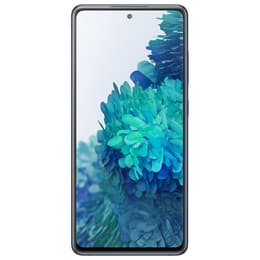
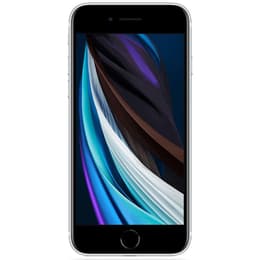
  • Display Technology and Size: The iPhone SE 2020 features a 4.7-inch IPS LCD display. [3, 10] This display technology offers good color reproduction and viewing angles. The Galaxy S20 FE has a larger 6.5-inch Super AMOLED display, which typically provides deeper blacks and more vibrant colors compared to LCD panels. [3, 9, 18]
  • Resolution and Clarity: The iPhone SE 2020 has a resolution of 750x1334 pixels, resulting in a pixel density of 326 pixels per inch (ppi). [3, 10] The Galaxy S20 FE offers a higher resolution of 1080x2400 pixels, with a pixel density of 405 ppi, providing a sharper image on its larger screen. [3, 9, 18]
  • Refresh Rate and Brightness: A notable difference is the refresh rate; the Galaxy S20 FE features a 120Hz refresh rate, which contributes to smoother scrolling and a more fluid visual experience. [3, 9] The iPhone SE 2020 has a standard 60Hz refresh rate. [27] Both displays offer good brightness levels for outdoor visibility, with the iPhone SE 2020 reaching 625 nits peak brightness. [8, 10]

Resolution

1080 x 2400

750 x 1334

Screen type

Super AMOLED

Retina IPS LCD

Audiovisual

Camera capabilities are a significant factor for many users, encompassing both still photography and video recording.

  • Rear Camera System: The iPhone SE 2020 features a single 12-megapixel wide-angle rear camera with optical image stabilization. [3, 10] The Galaxy S20 FE offers a more versatile triple-lens rear camera setup, including a 12-megapixel wide lens, an 8-megapixel telephoto lens with 3x optical zoom, and a 12-megapixel ultrawide lens. [3, 15] This provides more photographic flexibility with different focal lengths.
  • Photography Performance: Both phones are capable of taking good photos in various conditions. The Galaxy S20 FE's wider sensor aperture and larger pixel sizes allow it to capture more light, which can be beneficial in low-light scenarios. [7] The iPhone SE 2020 relies heavily on computational photography to enhance its single camera's output. [7]
  • Video Recording and Front Camera: Both devices support 4K video recording. The Galaxy S20 FE can record 4K at 60 frames per second (fps) on its rear cameras and features a 32-megapixel front-facing camera that can also record 4K video. [7, 15, 23] The iPhone SE 2020 records 4K video up to 60fps with its rear camera, but its 7-megapixel front camera is limited to 1080p video recording. [3, 7, 8, 23] The Galaxy S20 FE also offers additional video features like super slow-motion and enhanced stabilization. [7]

Main camera

12 megapixels

12 megapixels

Front camera

32 megapixels

7 megapixels

Miscellaneous

Beyond core features, several practical elements contribute to the overall user experience and daily convenience.

  • Connectivity: The Galaxy S20 FE was available in both 4G and 5G variants, offering faster cellular speeds with the 5G model. [14, 17] The iPhone SE 2020 is limited to 4G LTE connectivity. [3] Both devices support Wi-Fi and Bluetooth for wireless connections. [17]
  • Ports and Biometrics: The iPhone SE 2020 uses a Lightning port for charging and data transfer, while the Galaxy S20 FE features a USB-C port. [24] Neither phone includes a traditional 3.5mm headphone jack. [17, 12] For security, the iPhone SE 2020 utilizes Touch ID, an integrated fingerprint sensor in its home button. [3] The Galaxy S20 FE features an in-display fingerprint sensor. [3, 12]
  • Design and Handling: The iPhone SE 2020 retains a classic iPhone design with a physical home button and larger bezels, making it a more compact device at 138.4 x 67.3 x 7.3 mm and weighing 148 grams. [1, 6, 8] The Galaxy S20 FE is a larger device, measuring 159.8 x 74.5 x 8.4 mm and weighing 190 grams, offering a more expansive screen experience. [18]

Weight

190 g

148 g

Screen size (in)

6.5

4.7

Network

4G

4G

SIM card

Dual Physical SIM

Physical SIM + eSIM

Carrier compatibility

Unlocked

Unlocked

Users often praise the Samsung Galaxy S20 FE for its versatile camera system, vibrant Super AMOLED display with a high refresh rate, and generally strong battery life. [3, 15, 21] Its expandable storage is also a frequently appreciated feature. [14] However, some users have noted concerns regarding the plastic back's feel and, for some regional variants, the performance of the Exynos processor compared to the Snapdragon version. [21, 25, 34] The iPhone SE 2020 is commonly lauded for its compact form factor, powerful processor, and the long-term software support characteristic of Apple devices. [3, 20, 29] Criticisms often revolve around its smaller, lower-resolution LCD display, the single rear camera's lack of versatility, and its comparatively shorter battery life. [3, 7, 26]

Users prioritizing a larger, more immersive display with a high refresh rate, a versatile multi-lens camera system, and longer battery life may find the Galaxy S20 FE well-suited to their needs. Its expandable storage also appeals to those who require more space for media and apps. Conversely, users who prefer a compact device for one-handed use, appreciate the consistent performance and extended software longevity of iOS, and are content with a capable single camera will likely lean towards the iPhone SE 2020. Both devices, when considered as quality-assured refurbished options, offer an eco-friendly alternative for consumers looking to make informed purchasing decisions.


See all articles

Our recent comparisons