

Compare models

Google Pixel 7 Vs iPhone 17 Pro Max

  • 1-year minimum warranty
  • Free delivery on all orders
  • Free 30-day returns
Google Pixel 7
Starting at

Refurbished price:€200.00

Versus €729.00 new

See options
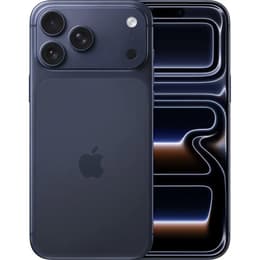
iPhone 17 Pro Max
Starting at

Refurbished price:€1,054.00

Versus €1,489.00 new

See options

Differences at a glance

The Google Pixel 7 (2022) and the iPhone 17 Pro Max (2025) represent two distinct approaches to modern smartphone design, platform ecosystems, and generational timelines. While the Google Pixel 7 serves as a streamlined everyday Android device, the iPhone 17 Pro Max functions as a large-format flagship running iOS with advanced processing capabilities. These devices differ significantly in physical scale, software environments, and feature sets, catering to entirely different user preferences.

Available Models

Colour

Storage

Scores

Durability

When evaluating the lifecycle expectations and build resilience of both devices, differences emerge regarding release timelines, software update commitments, and structural durability standards.

  • Software Support and Longevity: The iPhone 17 Pro Max benefits from Apple's extended platform support window, ensuring multi-year operating system upgrades. The Google Pixel 7 also receives long-term security updates, though its overall timeline reflects an earlier release year.
  • Repairability and Build Integrity: Both manufacturers incorporate robust glass and metal construction, with the iPhone utilizing reinforced front and back shielding materials. Professional repair networks support both models for common component replacements like screens and batteries.
  • Expected Lifespan: Users can anticipate several years of reliable daily service from either handset, though the later release date of the iPhone 17 Pro Max provides an extended window of active software relevance.

Year of Release

2022

2025

Compatible with latest Update

Yes

Yes

OS

Android

iOS

Foldable

No

No

Performance

Performance capabilities and daily operational behavior vary considerably, driven by distinct hardware architectures, memory configurations, and battery optimization strategies.

  • Multitasking and Responsiveness: The iPhone 17 Pro Max handles demanding applications, intensive gaming, and complex background tasks smoothly with its high-capacity RAM and current-generation processor architecture. The Google Pixel 7 manages everyday navigation, social media, and standard productivity apps reliably using its custom processor and balanced memory allocation.
  • Storage Configurations: Storage tiers vary across models, with the iPhone offering higher maximum capacities suited for large media libraries, while the Pixel provides standard storage choices for average daily use.
  • Battery Behavior: The iPhone 17 Pro Max features a large physical footprint that accommodates extended battery endurance during heavy usage scenarios. The Google Pixel 7 relies on a moderately sized battery that typically sustains a standard day of mixed use, though intensive tasks result in faster depletion.

Screen quality

Display characteristics differ notably in physical dimensions, panel technology, peak luminance levels, and visual fluidity during motion.

  • Panel Technology and Resolution: The iPhone 17 Pro Max utilizes an expansive OLED screen with high pixel density and deep contrast ratios. The Google Pixel 7 features a smaller OLED display with sharp resolution suited for everyday viewing.
  • Brightness and Outdoor Legibility: The iPhone 17 Pro Max reaches exceptionally high peak brightness levels for clear visibility under direct sunlight. The Google Pixel 7 maintains adequate outdoor visibility through high-brightness mode adjustments.
  • Refresh Rate and Fluidity: The iPhone 17 Pro Max incorporates adaptive refresh technology scaling up to 120Hz for smooth scrolling and animations. The Google Pixel 7 operates at a fixed 90Hz refresh rate, offering responsive visual transitions.

Resolution

1080 x 2400

2868x1320

Screen type

AMOLED

Super Retina XDR

Audiovisual

Media capture systems and audio-visual output diverge based on lens configurations, computational photography processing, and internal speaker output.

  • Camera Array Versatility: The iPhone 17 Pro Max equips a triple-lens system with high-resolution main, ultra-wide, and dedicated telephoto capabilities for optical zoom flexibility. The Google Pixel 7 relies on a dual-lens setup combining a primary wide sensor and an ultra-wide lens, supplemented by computational photography features.
  • Video and Low-Light Performance: Both devices deliver stable video recording and capable low-light capture, with the iPhone offering advanced professional video codecs and high-resolution stabilization.
  • Media and Audio Output: Stereo speaker configurations on both models provide clear sound reproduction for calls and media consumption, supported by sensitive multi-microphone arrays for voice recording.

Main camera

50 megapixels

48 megapixels

Front camera

10.8 megapixels

18 megapixels

Miscellaneous

Practical daily usability elements, including physical dimensions, connectivity standards, and biometric security methods, define the physical interaction with each phone.

  • Physical Dimensions and Handling: The iPhone 17 Pro Max is a substantial, heavier device designed for two-handed operation and a large viewing area. The Google Pixel 7 offers a more compact, lighter form factor that fits comfortably in one hand and standard pockets.
  • Connectivity and Ports: Both models support rapid 5G cellular networks, modern Wi-Fi standards, and Bluetooth connectivity. The iPhone 17 Pro Max utilizes a USB-C port for charging and data transfer, matching the standard port type used by the Google Pixel 7.
  • Biometric Security: The iPhone 17 Pro Max relies on facial recognition technology, whereas the Google Pixel 7 provides both under-display fingerprint sensing and facial unlock options.

Weight

197 g

233 g

Screen size (in)

6.3

6.9

Network

5G

5G

SIM card

Physical SIM + eSIM

eSIM

Carrier compatibility

Unlocked

Unlocked

Connector

USB-C + Jack 3.5mm

USB-C

What the community thinks

User feedback and community discussions highlight distinct advantages for each device depending on individual workflow requirements. Owners of the Google Pixel 7 frequently praise its clean software interface, compact form factor, and reliable everyday camera processing. Common discussions note that its battery capacity requires more frequent attention during heavy usage periods. Conversely, users of the iPhone 17 Pro Max often emphasize appreciation for its expansive display, robust processing headroom, and extended battery endurance, though some note that its large physical dimensions and heavier weight require adjustment during one-handed use.

When deciding between these options, user priorities serve as the primary guide. Users prioritizing a compact footprint, lightweight handling, and a straightforward software experience often find the Google Pixel 7 well-suited to their needs. Meanwhile, users prioritizing maximum screen workspace, advanced multi-lens camera versatility, and long-term processing power typically lean toward the iPhone 17 Pro Max. For consumers seeking a sustainable choice, exploring a quality-assured refurbished option provides an eco-friendly alternative that extends device lifecycles without compromising performance standards.