

iPhone 11 Pro Vs iPhone SE (2020)

iPhone 11 Pro
iPhone 11 Pro
Starting at

Refurbished price:181.00

Versus €809.00 new

See options
iPhone SE (2020)
iPhone SE (2020)
Starting at

Refurbished price:92.25

Versus €319.00 new

See options

Ratings

The iPhone 11 Pro (released September 2019) and the iPhone SE 2020 (released April 2020) are both smartphones from Apple, offering distinct experiences despite sharing the same core processor. The primary differences lie in their display technology, camera systems, and overall design philosophy, catering to different user preferences.

Scores

Durability

When considering the longevity of these devices, both the iPhone 11 Pro and iPhone SE 2020 offer comparable software support and repairability, though their release timelines create a slight difference in their practical lifespan.

  • Release Timeline: The iPhone 11 Pro was released in September 2019, while the iPhone SE 2020 followed in April 2020. This approximately seven-month difference means the iPhone SE 2020 may receive major iOS updates for a slightly longer period.
  • Software Longevity: Both models are expected to receive major iOS updates until at least iOS 26, which was released in 2025. While major OS updates might conclude around late 2025 or 2026 for both, security updates often continue for several years beyond that.
  • Repairability: Both the iPhone 11 Pro and iPhone SE 2020 received a repairability score of 6 out of 10 from iFixit. This indicates that common repairs, such as screen and battery replacements, are relatively straightforward, though the glass back on both models can be challenging to replace.

Year of Release

2019

2020

Compatible with latest Update

Yes

Yes

OS

iOS

iOS

Foldable

No

No

Performance

Despite their different market positioning, both the iPhone 11 Pro and iPhone SE 2020 are equipped with the same powerful processor, leading to similar performance capabilities in many real-world scenarios.

  • Processing Power: Both devices feature a current-generation processor that handles demanding applications and multitasking smoothly. This means users can expect fluid navigation, quick app launches, and efficient performance across a wide range of tasks, including gaming.
  • Multitasking and Responsiveness: The efficient architecture of the processor, combined with iOS optimization, allows both phones to manage multiple applications in the background effectively. Users generally report a responsive experience, even with several apps open simultaneously.
  • Storage Options: The iPhone 11 Pro was available with storage options up to 512GB, while the iPhone SE 2020 offered up to 256GB. Both provide ample space for apps, photos, and videos, depending on the chosen configuration.

Memory (GB)

4 GB

3 GB

Screen quality

The display is a significant differentiator between these two iPhone models, impacting the visual experience and overall device footprint.

  • Display Technology and Size: The iPhone 11 Pro features a 5.8-inch Super Retina XDR OLED display, offering deep blacks, vibrant colors, and excellent contrast. In contrast, the iPhone SE 2020 has a smaller 4.7-inch Retina HD IPS LCD display, which provides good color accuracy but does not match the contrast levels of an OLED panel.
  • Resolution and Clarity: The iPhone 11 Pro boasts a higher resolution of 2436 x 1125 pixels at 458 pixels per inch (ppi), resulting in a sharper image. The iPhone SE 2020 offers a resolution of 1334 x 750 pixels at 326 ppi, which is still clear for most content but less dense than the Pro model.
  • Brightness and Features: The iPhone 11 Pro's OLED screen can reach higher peak brightness levels, especially for HDR content, making it more suitable for outdoor viewing. Both displays include True Tone technology for automatic white balance adjustment and Haptic Touch for responsive feedback.

Resolution

1125 x 2436

750 x 1334

Screen type

Super Retina XDR OLED

Retina IPS LCD

Audiovisual

The camera systems present one of the most notable distinctions between the iPhone 11 Pro and the iPhone SE 2020, offering different capabilities for photography and videography.

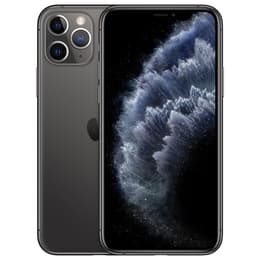
  • Rear Camera System: The iPhone 11 Pro features a versatile triple-camera setup, including a 12MP Wide, 12MP Ultra Wide, and 12MP Telephoto lens, providing optical zoom capabilities and a broader range of photographic options. The iPhone SE 2020 is equipped with a single 12MP Wide camera.
  • Photography Features: The iPhone 11 Pro includes advanced features like Night Mode for improved low-light performance and Deep Fusion for enhanced detail in various lighting conditions, which are absent on the iPhone SE 2020. Both support Portrait Mode, though the 11 Pro benefits from its multiple lenses for more sophisticated depth effects.
  • Video Recording: Both phones are capable of recording 4K video at up to 60 frames per second, offering cinematic video stabilization. The iPhone 11 Pro's additional lenses provide more flexibility for zooming during video capture. The front-facing camera on the 11 Pro is 12MP with 4K video recording, while the SE 2020 has a 7MP front camera with 1080p video.

Main camera

12 megapixels

12 megapixels

Front camera

12 megapixels

7 megapixels

Miscellaneous

Beyond core performance and display, several other features contribute to the overall user experience and differentiate these two iPhone models.

  • Connectivity: Both devices support 4G LTE and Wi-Fi 6 for fast wireless connectivity. Neither model includes 5G capabilities.
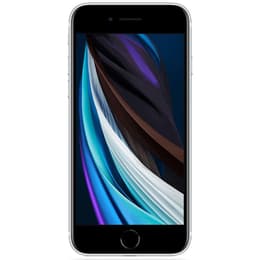
  • Authentication: The iPhone 11 Pro utilizes Face ID for secure facial recognition, enabling unlocking and secure payments. The iPhone SE 2020 retains the classic Home button with Touch ID, offering fingerprint-based authentication.
  • Design and Build: The iPhone 11 Pro features a more premium build with a stainless steel frame and a textured matte glass back, contributing to its 188-gram weight. It also boasts an IP68 rating for water and dust resistance. The iPhone SE 2020 has an aerospace-grade aluminum frame and a glass back, weighing 148 grams, and carries an IP67 rating for water and dust resistance.

Weight

188 g

148 g

Screen size (in)

5.8

4.7

Network

4G

4G

SIM card

Physical SIM + eSIM

Physical SIM + eSIM

Carrier compatibility

Unlocked

Unlocked

Connector

Lightning

Lightning

The iPhone 11 Pro and iPhone SE 2020, while sharing a powerful processor, cater to different user priorities through their distinct feature sets. User feedback often highlights the iPhone 11 Pro's superior display and versatile camera system as major advantages. Many users appreciate the vibrant OLED screen and the flexibility offered by the triple-lens camera, especially for low-light photography and optical zoom. The iPhone SE 2020, on the other hand, is frequently praised for its compact form factor and the familiarity of Touch ID, appealing to those who prefer a smaller device with a classic design. Criticisms for the SE 2020 often revolve around its smaller LCD display and less capable camera in comparison to more premium models, particularly the absence of Night Mode. For the iPhone 11 Pro, some users might find its size and weight less convenient for one-handed use compared to the SE 2020.

Users prioritizing a premium visual experience, advanced photography features, and a larger screen will find the iPhone 11 Pro well-suited to their needs. Its OLED display and comprehensive camera system make it ideal for media consumption and creative pursuits. Conversely, users who value a compact design, the convenience of Touch ID, and a device that is easy to handle with one hand may prefer the iPhone SE 2020. Both devices offer robust performance for everyday tasks thanks to their shared processor. For those seeking an eco-friendly and quality-assured alternative, both the iPhone 11 Pro and iPhone SE 2020 are available as refurbished options, providing a sustainable choice for consumers.


See all articles

Our recent comparisons





